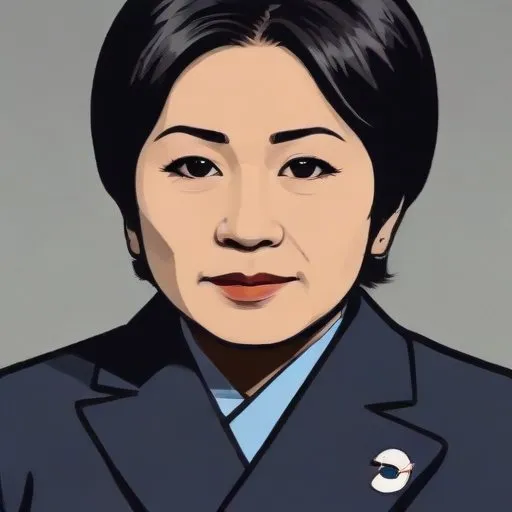
Zenk Suzuki: A Japanese Politician of Unwavering Diplomacy
A Legacy of Stability and International Cooperation
Zenk Suzuki, the 70th Prime Minister of Japan, is best remembered for his leadership during a period of political turbulence and his remarkable diplomatic skills, which earned him a reputation as a master of international relations. From 1980 to 1982, Suzuki navigated Japan through a critical phase, characterized by frequent cabinet reshuffles and factional politics within the ruling Liberal Democratic Party (LDP).
Early Life and Education
Born on January 11, 1911, in Yamada, Iwate Prefecture, Suzuki was the eldest son of a fishery owner. He graduated from Tokyo University of Fisheries in 1935, laying the foundation for a career that would take him from local politics to the highest echelons of national leadership.
Rise to Prominence
Suzuki's political journey began in 1948 when he joined the Liberal Party, which eventually merged with another right-of-center party to form the LDP in 1955. He held various ministerial positions, including Minister of Health from 1965 to 1966 and Minister of Agriculture and Fisheries from 1976 to 1977. Suzuki's diplomatic prowess was evident in his ability to chair the LDP's executive council ten times, winning him widespread support within the party.
Prime Ministership and International Relations
Following the sudden death of Prime Minister Masayoshi Ohira in 1980, Suzuki took the reins as the Prime Minister of Japan. His tenure was marked by a landslide victory for the LDP, thanks in part to the sympathy vote generated by Ohira's passing. Suzuki's diplomatic skills played a crucial role in fostering stronger relations with the United States, as evident in the 1988 summit with President Ronald Reagan.
Personal Life and Legacy
Suzuki's family has continued to play an active role in Japanese politics. His daughter, Chikako Aso, is married to Taro Aso, who served as Prime Minister from 2008 to 2009, while his son, Shunichi Suzuki, is a member of the Diet. Suzuki passed away on July 19, 2004, at the age of 93, leaving behind a legacy of stability and international cooperation.
Awards and Honors
Suzuki was honored with the Grand Cordon of the Order of the Chrysanthemum, a testament to his outstanding contributions to Japanese politics and diplomacy.
Impact on Modern Japan
Zenk Suzuki's leadership and diplomatic skills had a lasting impact on modern Japan, setting a precedence for effective international relations and cooperation. His legacy continues to inspire Japanese politicians and diplomats, serving as a reminder of the importance of strong global partnerships.
FAQ
What were Zenkō Suzukis accomplishments as Prime Minister of Japan?
During his term as the 70th Prime Minister of Japan from 1980 to 1982, Zenkō Suzuki worked to strengthen Japans economy and international relations, including normalized relations with China. He also played a key role in the G7 summit in 1982.
What was Zenkō Suzukis early life and education like?
Born on January 11, 1911, in Yamada, Iwate Prefecture, Japan, Zenkō Suzuki came from a family of politicians. He graduated from the University of Tokyo with a degree in law and later worked as a bureaucrat before entering politics.
What were Zenkō Suzukis contributions to Japanese politics?
Zenkō Suzuki was a key figure in Japanese politics, serving as a member of the House of Representatives and holding various cabinet positions, including Minister of Agriculture, Forestry, and Fisheries, and Minister of International Trade and Industry.
What awards and honors did Zenkō Suzuki receive?
Zenkō Suzuki was awarded the Grand Cordon of the Order of the Paulownia Flowers and the Grand Cordon of the Order of the Rising Sun with Paulownia Flowers for his contributions to Japanese politics and economy.
What is Zenkō Suzukis legacy in Japan?
Zenkō Suzukis legacy in Japan is one of economic growth and international cooperation. He is remembered as a skilled politician who worked to strengthen Japans position on the global stage.