


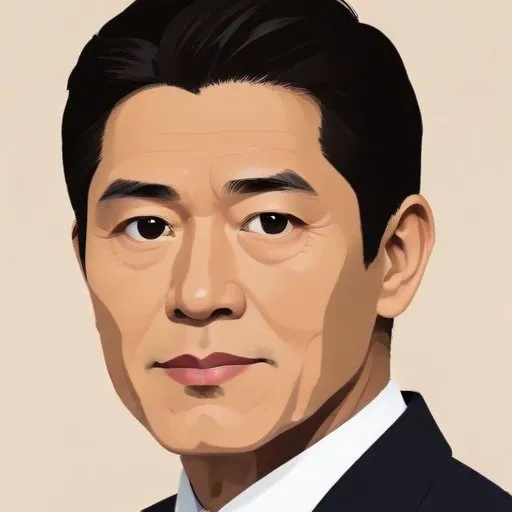
A Japanese lawyer and politician who served as the 76th Prime Minister of Japan, known for his efforts to reform the country's political system and promote international cooperation. He played a key role in shaping Japan's post-Cold War foreign policy.
Toshiki Kaifu, the 77th Prime Minister of Japan, was born on January 2, 1931, in Nagoya City, as the eldest of six brothers. His family's business, Nakamura Photo Studio, was established by his grandfather in the Meiji era and was situated next to the Matsuzakaya flagship department store.
Kaifu's academic journey began at Aichi Prefectural Asahigaoka Senior High School, where he took the entrance exam alongside eleven other students. Although nine of his classmates were accepted, Kaifu was not among them. This setback did not deter him, and he eventually gained admission to Chuo University and Waseda University.
Kaifu's political career took off in 1960 when he was elected to the National Diet as a member of the Liberal Democratic Party (LDP). At the time, he was the youngest member of the Diet, marking the beginning of a 48-year tenure that would span 16 terms.
Before ascending to the prime ministership, Kaifu served as education minister and played a crucial role in shaping Japan's education policy. His commitment to clean leadership and reform earned him the respect of his peers, who elected him as the leader of the LDP in 1989.
In August 1989, Kaifu became the 76th Prime Minister of Japan, succeeding Sosuke Uno. During his tenure, he oversaw significant policy shifts, including the termination of Japan's economic sanctions against China following the 1989 Tiananmen Square protests and massacre.
Kaifu's diplomatic efforts culminated in his historic visit to China on August 10, 1991, making him the first leader of a major country to break China's diplomatic isolation. This visit was accompanied by a significant aid package, including 949.9 million in loans and an additional 1.5 million in emergency aid following flood damage.
Kaifu's remarkable career was marked by his commitment to education, clean leadership, and diplomatic engagement. As the last surviving former Prime Minister of Japan who served in the 1980s, his legacy continues to shape the country's political landscape.
Kaifu's leadership and diplomatic efforts had a profound impact on Japan's relationships with its neighbors and the global community. His commitment to education and clean leadership continues to inspire future generations of Japanese politicians and citizens.
Kaifu's leadership style and policies can be compared to those of his contemporaries, such as Takeshita Noboru and Sosuke Uno. While each of these leaders faced unique challenges, Kaifu's emphasis on education and diplomatic engagement set him apart as a visionary leader.
Although Kaifu's quotes are not widely recorded, his actions and policies spoke louder than words. His commitment to clean leadership and education continues to resonate with the Japanese people and inspire future leaders.
Kaifu's life and career were shaped by the tumultuous events of the 20th century, from Japan's wartime era to its post-war reconstruction. His leadership and diplomacy played a significant role in shaping Japan's place in the modern world.
As a testament to his enduring legacy, Kaifu's story serves as a reminder of the importance of education, diplomacy, and clean leadership in shaping a nation's destiny.
88 Years Old
A Japanese journalist-turned-politician who served as Prime Minister of Japan from 1993 to 1994, known for his efforts to reform the country's political system and economy.
Born in 1919
Served as Prime Minister of Japan from 1991 to 1992, known for his efforts to revitalize the country's economy and his role in shaping Japan's post-Cold War foreign policy.
69 Years Old
The 62nd Prime Minister of Japan, a lawyer-turned-politician who led the country from 2011 to 2012, known for his efforts to rebuild Japan after the devastating Fukushima nuclear disaster. He's also recognized for increasing the country's consumption tax to tackle its massive debt.
79 Years Old
The 61st Prime Minister of Japan, a lawyer-turned-politician who led the country during the 2011 Fukushima Daiichi nuclear disaster, implementing reforms and advocating for renewable energy. He's known for his efforts to phase out nuclear power and promote sustainable energy.
79 Years Old
A Japanese engineer-turned-politician who served as Prime Minister of Japan from 2009 to 2010, known for his efforts to reform the country's economy and politics.
71 Years Old
The first Japanese leader to visit Pearl Harbor, he strengthened Japan's economy and international relations through bold policies and diplomatic efforts. He's known for his nationalist views and efforts to revise Japan's pacifist constitution.
85 Years Old
A Japanese target shooter turned politician who served as the country's 92nd Prime Minister, known for his brief yet tumultuous tenure marked by scandals and controversies.
