


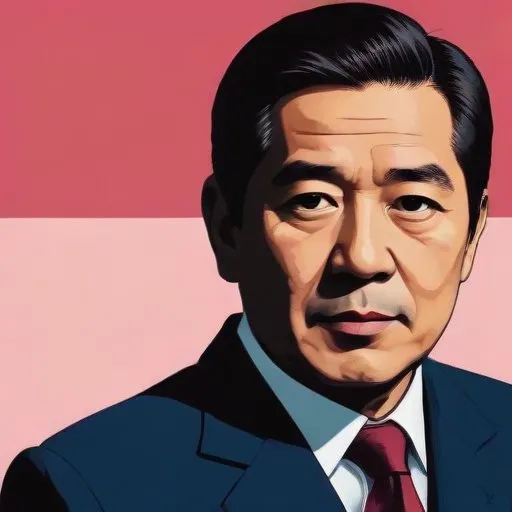
The 62nd Prime Minister of Japan, a lawyer-turned-politician who led the country from 2011 to 2012, known for his efforts to rebuild Japan after the devastating Fukushima nuclear disaster. He's also recognized for increasing the country's consumption tax to tackle its massive debt.
Yoshihiko Noda, born on May 20, 1957, is a Japanese politician who served as the Prime Minister of Japan and Leader of the Democratic Party of Japan from 2011 to 2012. He is a member of the Constitutional Democratic Party of Japan and a member of the House of Representatives in the Diet, Japan's national legislature.
Noda was born in Funabashi, Chiba Prefecture, to a family of modest means. His father was a paratrooper in the Japan Self-Defense Forces, and his parents were too poor to afford a wedding reception. Despite these humble beginnings, Noda went on to graduate from Chiba Prefectural Funabashi Senior High School in 1975 and later from Waseda University with a B.A. degree in Political Science in 1980.
After completing his education, Noda was accepted into the prestigious Matsushita Institute, founded by Konosuke Matsushita, the founder of Panasonic, to groom future civic leaders of Japan. During his time at the institute, Noda worked part-time reading household gas meters in his native Chiba Prefecture, which helped him connect with his future constituents and prepared him for a run for office.
In 1987, at the age of 29, Noda was first elected to the assembly of Chiba Prefecture. He then entered national politics in 1993, when he was elected to the Diet for the first time, representing Chiba's Lower House District 4th as a member of the now-defunct Japan New Party. He later joined the Democratic Party of Japan (DPJ) and served as its Diet affairs chief.
In 2011, Noda was elected as the President of the Democratic Party of Japan, succeeding Naoto Kan, and became the Prime Minister of Japan on September 2, 2011. During his tenure, Noda focused on addressing Japan's economic challenges, including the country's high public debt and declining birth rate.
Following a severe loss for the DPJ in the December 2012 general election, Noda conceded defeat and announced his resignation as party leader, triggering a leadership election that was won by Banri Kaieda. Noda was succeeded by Shinzo Abe, President of the Liberal Democratic Party, as Prime Minister on December 26, 2012.
After leaving office, Noda has continued to be involved in politics, serving as a member of the House of Representatives and playing a key role in the Constitutional Democratic Party of Japan.
Noda's legacy is marked by his efforts to address Japan's economic challenges and his commitment to social welfare and education. Despite facing significant political challenges during his tenure, Noda remains a respected figure in Japanese politics, known for his dedication to public service and his willingness to take on difficult issues.
71 Years Old
The first Japanese leader to visit Pearl Harbor, he strengthened Japan's economy and international relations through bold policies and diplomatic efforts. He's known for his nationalist views and efforts to revise Japan's pacifist constitution.
79 Years Old
The 61st Prime Minister of Japan, a lawyer-turned-politician who led the country during the 2011 Fukushima Daiichi nuclear disaster, implementing reforms and advocating for renewable energy. He's known for his efforts to phase out nuclear power and promote sustainable energy.
84 Years Old
The 56th Prime Minister of Japan, serving from 2001 to 2006, known for his economic reforms, privatization of the postal system, and bold foreign policy initiatives. He's also famous for his flamboyant hairstyle and love of Elvis Presley music.
85 Years Old
A Japanese target shooter turned politician who served as the country's 92nd Prime Minister, known for his brief yet tumultuous tenure marked by scandals and controversies.
79 Years Old
A Japanese engineer-turned-politician who served as Prime Minister of Japan from 2009 to 2010, known for his efforts to reform the country's economy and politics.
Born in 1919
Served as Prime Minister of Japan from 1991 to 1992, known for his efforts to revitalize the country's economy and his role in shaping Japan's post-Cold War foreign policy.
88 Years Old
A Japanese journalist-turned-politician who served as Prime Minister of Japan from 1993 to 1994, known for his efforts to reform the country's political system and economy.
Born in 1924
Japanese soldier-turned-politician who served as Prime Minister of Japan from 1994 to 1996, known for his apology for Japan's wartime atrocities and efforts to improve relations with neighboring countries.
