


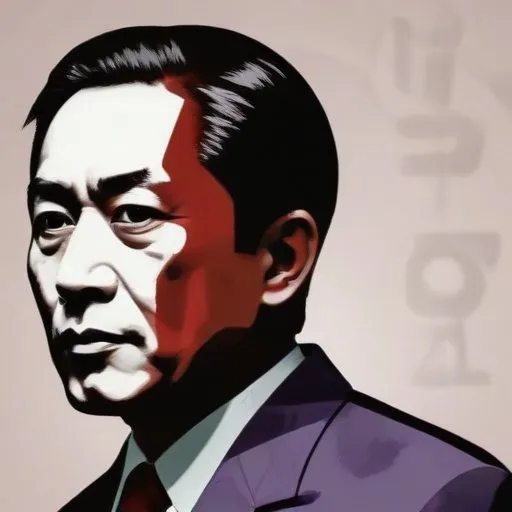
A Japanese engineer-turned-politician who served as Prime Minister of Japan from 2009 to 2010, known for his efforts to reform the country's economy and politics.
Yukio Hatoyama is a Japanese politician who made history as the first Prime Minister from the modern Democratic Party of Japan, serving from 2009 to 2010. During his tenure, he led the party to a landslide victory in the 2009 general election, ending the Liberal Democratic Party's (LDP) decade-long dominance.
Born on February 11, 1947, in Bunky, Tokyo, Hatoyama comes from a prominent Japanese political family, often likened to the Kennedy family of the United States. His paternal great-grandfather, Kazuo Hatoyama, was the speaker of the House of Representatives of the Diet of Japan during the Meiji era and later served as the president of Waseda University.
First elected to the House of Representatives in 1986, Hatoyama became President of the DPJ in May 2009. He led the party to a historic victory in the 2009 general election, defeating the long-governing LDP. This monumental win marked a significant shift in Japanese politics, with the DPJ securing 308 out of 480 seats in the House of Representatives.
During his prime ministerial tenure, Hatoyama focused on decentralizing power, reducing bureaucracy, and increasing transparency. He also aimed to improve Japan's relationships with its East Asian neighbors and accelerate the country's economic recovery. Despite facing opposition from within his own party, Hatoyama remained committed to his vision for a more inclusive and equitable Japan.
In 2012, Hatoyama announced his retirement from politics. However, he continued to maintain a strong online presence, using social media platforms like Twitter to share his outspoken political views.
In 2015, Hatoyama generated controversy when he visited Crimea and claimed that the annexation by the Russian Federation was constitutional. He also falsely claimed that Ukraine and NATO would launch a nuclear strike against Russia in 2023. These statements drew widespread criticism, both domestically and internationally.
In 2020, Hatoyama formed the Kyowa Party, marking his return to Japanese politics. This move was seen as a bid to revitalize his career and rebuild his reputation, which had been tarnished by the controversy surrounding his Crimea visit.
Yukio Hatoyama's legacy is complex and multifaceted. While his prime ministerial tenure was marked by controversy and criticism, his contribution to Japanese politics cannot be denied. He will be remembered as a trailblazer who challenged the status quo and paved the way for a more diverse and inclusive political landscape in Japan.
79 Years Old
The 61st Prime Minister of Japan, a lawyer-turned-politician who led the country during the 2011 Fukushima Daiichi nuclear disaster, implementing reforms and advocating for renewable energy. He's known for his efforts to phase out nuclear power and promote sustainable energy.
69 Years Old
The 62nd Prime Minister of Japan, a lawyer-turned-politician who led the country from 2011 to 2012, known for his efforts to rebuild Japan after the devastating Fukushima nuclear disaster. He's also recognized for increasing the country's consumption tax to tackle its massive debt.
71 Years Old
The first Japanese leader to visit Pearl Harbor, he strengthened Japan's economy and international relations through bold policies and diplomatic efforts. He's known for his nationalist views and efforts to revise Japan's pacifist constitution.
75 Years Old
A Japanese economist and politician who served as the Minister of State for Economic and Fiscal Policy, known for implementing economic reforms and stimulus packages to revitalize Japan's economy. He is also a prominent advocate for structural reforms and fiscal discipline.
