


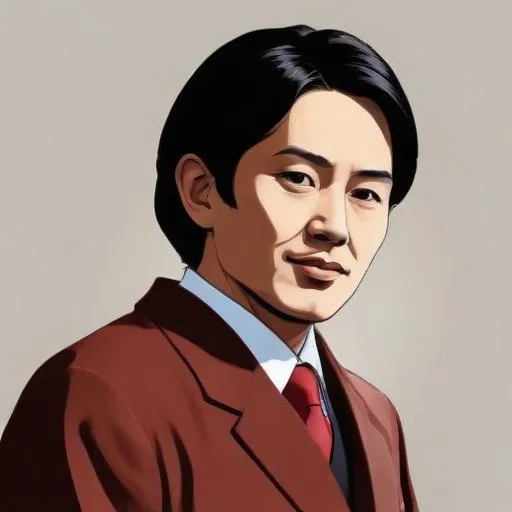
A Japanese economist and politician who served as the Minister of State for Economic and Fiscal Policy, known for implementing economic reforms and stimulus packages to revitalize Japan's economy. He is also a prominent advocate for structural reforms and fiscal discipline.
Heiz Takenaka, a renowned Japanese economist and retired politician, is best known for his pivotal role in shaping Japan's economic policy during the early 2000s. As the Minister of State for Economic and Fiscal Policy from 2001 to 2005, Takenaka spearheaded the country's economic revival, earning him the reputation as one of the most influential figures in Japanese economic history.
Born on March 3, 1951, in Wakayama City, Japan, Takenaka was the second son of a shoe seller. He developed an interest in economics at an early age and pursued his passion at Hitotsubashi University, where he graduated with a BA in Economics in 1973. During his university days, he was an avid mandolin player and met his future wife, a student at Tsuda College, through his mandolin club.
After completing his undergraduate degree, Takenaka joined the Development Bank of Japan (DBJ) and later transferred to its Institute for Capital Investment Studies in 1977. He then took a year-long sabbatical to study at Harvard University and the University of Pennsylvania, researching capital investment in the United States. His research culminated in the publication of the book Development Studies and Capital Expenditure Economics in 1984, which won the prestigious Suntory Liberal Arts Prize.
Takenaka's academic career spans across various institutions, including the Ministry of Finance, Osaka University, and Harvard University, where he taught as an associate professor. He eventually earned his Ph.D. from Osaka University and became a professor at Keio University SFC Shonan Fujisawa Campus.
In 2001, Takenaka was handpicked by Prime Minister Junichiro Koizumi to serve as the Minister of State for Economic and Fiscal Policy. During his tenure, he played a crucial role in shaping Japan's economic policy, particularly in the areas of privatization and postal reform. His efforts led to the passage of the Postal Privatization Law in 2005, a landmark legislation that paved the way for Japan's economic growth.
Takenaka's contributions to Japan's economic revival have been widely recognized. He is credited with helping to pull Japan out of its economic stagnation in the early 2000s and setting the stage for the country's subsequent growth. Today, he serves as a professor at Keio University and an advisor to various academic institutions and companies.
Takenaka's influence extends beyond the realm of economics and politics. He has been a vocal advocate for social and environmental issues, and his philanthropic efforts have focused on promoting education and cultural exchange between Japan and other countries.
Takenaka is known for his humility and down-to-earth demeanor. In his free time, he enjoys playing the mandolin and reading classical literature. One of his famous quotes is, "Economics is not just about numbers; it's about people's lives."
In conclusion, Heiz Takenaka's contributions to Japan's economic revival have earned him a place in the annals of Japanese history. His dedication to public service, his commitment to social and environmental causes, and his passion for education and cultural exchange have made him a respected figure both domestically and internationally.
72 Years Old
The first Japanese leader to visit Pearl Harbor, he strengthened Japan's economy and international relations through bold policies and diplomatic efforts. He's known for his nationalist views and efforts to revise Japan's pacifist constitution.
69 Years Old
The 62nd Prime Minister of Japan, a lawyer-turned-politician who led the country from 2011 to 2012, known for his efforts to rebuild Japan after the devastating Fukushima nuclear disaster. He's also recognized for increasing the country's consumption tax to tackle its massive debt.
79 Years Old
The 61st Prime Minister of Japan, a lawyer-turned-politician who led the country during the 2011 Fukushima Daiichi nuclear disaster, implementing reforms and advocating for renewable energy. He's known for his efforts to phase out nuclear power and promote sustainable energy.
79 Years Old
A Japanese engineer-turned-politician who served as Prime Minister of Japan from 2009 to 2010, known for his efforts to reform the country's economy and politics.
