


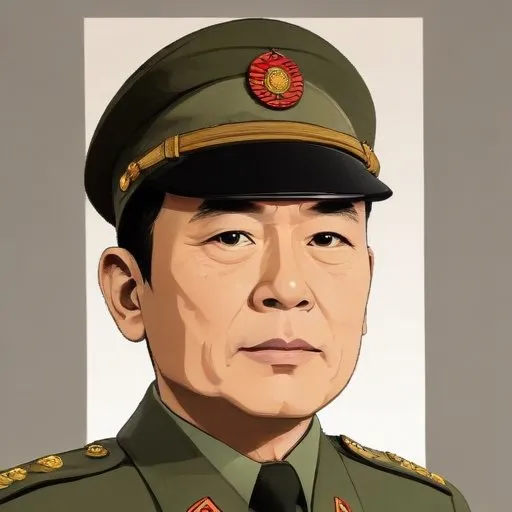
Japanese soldier-turned-politician who served as Prime Minister of Japan from 1994 to 1996, known for his apology for Japan's wartime atrocities and efforts to improve relations with neighboring countries.
Tomiichi Murayama, born on March 3, 1924, is a Japanese politician who etched his name in history as the first socialist leader in nearly fifty years to become the Prime Minister of Japan from 1994 to 1996. He is most remembered for his courageous speech, "On the occasion of the 50th anniversary of the War's end," where he publicly apologized for Japan's past colonial rule and aggression.
Murayama's early life was marked by hardship and resilience. Born in Ōita Prefecture, Japan, he was the sixth son of eleven children to a fisherman father. After his father's passing at the age of fourteen, Murayama took on small jobs to support his family, including delivering newspapers.
Despite the challenges, he pursued his education, graduating from Ōita Municipal High School in 1938. He then moved to Tokyo and worked at a printing factory during the day, while studying at the Tokyo Municipal School of Commerce at night. In 1943, he enrolled in Meiji University as a philosophy student, but his education was interrupted when he was mobilized in 1944 and assigned to work in the Ishikawajima shipyards.
Later that year, Murayama was drafted into the Imperial Army and assigned to the 72nd Infantry of the 23rd Brigade of the 23rd Division as a private second class. He was demobilized following Japan's surrender with the rank of officer candidate, finishing the war as a cadet with the rank of sergeant.
After the war, Murayama graduated from Meiji University in 1946 and started his career as a politician. He became the general secretary of the Japan Socialist Party in 1948 and rose through the ranks, eventually becoming the party's leader and changing its name to the Social Democratic Party of Japan in 1996.
Murayama's apology speech in 1995 was a watershed moment in Japanese history, marking a significant departure from the country's previous stance on its wartime past. His apology was seen as a crucial step towards reconciliation with Japan's neighboring countries, particularly South Korea and China.
Today, Murayama is the oldest living former prime minister of Japan, and the only living former Japanese prime minister born in the Taishō era. His legacy serves as a testament to the power of accountability and apology in promoting regional peace and cooperation.
Through his unwavering commitment to accountability and apology, Tomiichi Murayama has left an indelible mark on Japanese history, paving the way for a more harmonious and cooperative relationship with its neighbors.
84 Years Old
The 56th Prime Minister of Japan, serving from 2001 to 2006, known for his economic reforms, privatization of the postal system, and bold foreign policy initiatives. He's also famous for his flamboyant hairstyle and love of Elvis Presley music.
71 Years Old
The first Japanese leader to visit Pearl Harbor, he strengthened Japan's economy and international relations through bold policies and diplomatic efforts. He's known for his nationalist views and efforts to revise Japan's pacifist constitution.
69 Years Old
The 62nd Prime Minister of Japan, a lawyer-turned-politician who led the country from 2011 to 2012, known for his efforts to rebuild Japan after the devastating Fukushima nuclear disaster. He's also recognized for increasing the country's consumption tax to tackle its massive debt.
79 Years Old
The 61st Prime Minister of Japan, a lawyer-turned-politician who led the country during the 2011 Fukushima Daiichi nuclear disaster, implementing reforms and advocating for renewable energy. He's known for his efforts to phase out nuclear power and promote sustainable energy.
90 Years Old
The 91st Prime Minister of Japan, serving from 2007 to 2008, known for his efforts to address climate change and improve Japan's relations with its Asian neighbors. He's also remembered for his unexpected resignation after only a year in office.
Born in 1919
Served as Prime Minister of Japan from 1991 to 1992, known for his efforts to revitalize the country's economy and his role in shaping Japan's post-Cold War foreign policy.
88 Years Old
A Japanese journalist-turned-politician who served as Prime Minister of Japan from 1993 to 1994, known for his efforts to reform the country's political system and economy.
