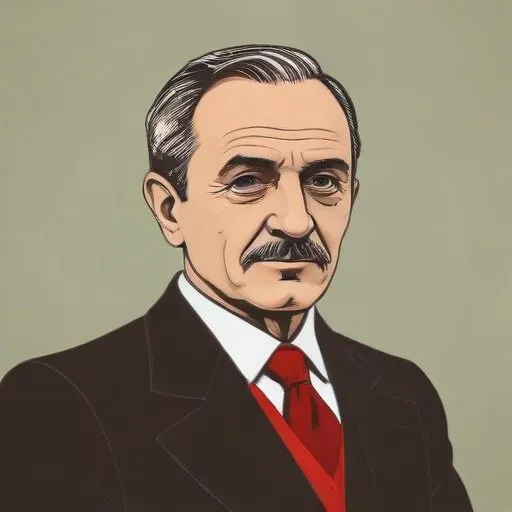
Silvio Gesell: The German-Argentine Economist Behind Freiwirtschaft and Market Socialism
A Pioneer of Alternative Economics
Silvio Gesell is renowned for founding Freiwirtschaft, a revolutionary economic model that championed market socialism and monetary reform. This German-Argentine economist, merchant, and philosopher dedicated his life to challenging conventional economic thinking, leaving an indelible mark on the world of economics and beyond.
Early Life and Education
Born on March 17, 1862, in Malmedy, Belgium, to a Walloon mother and a German father, Gesell was the seventh of nine children. He attended the public Brgerschule in Sankt Vith and later studied at Gymnasium in Malmedy. Financial constraints forced him to abandon his university aspirations, and instead, he worked for the Deutsche Reichspost, the postal system of the German Empire.
A Life of Entrepreneurship and Publishing
Gesell's entrepreneurial spirit led him to work as a merchant in Berlin, Mlaga, Spain, and later in Buenos Aires, Argentina. In 1887, he opened a franchise of his brother's business in Argentina, where he experienced the devastating effects of the 1890 depression. This event sparked his interest in the structural problems of the monetary system, leading him to write his first publication,
Die Reformation des Mnzwesens als Brcke zum sozialen Staat (The Reformation of the Monetary System as a Bridge to a Social State) in 1891.
Founding Freiwirtschaft and Key Publications
In 1900, Gesell founded the magazine
Geldund Bodenreform (Monetary and Land Reform), which, despite its short-lived existence, laid the groundwork for his Freiwirtschaft movement. During his time in Argentina, he co-founded
Der Physiokrat with Georg Blumenthal, another publication that was eventually shut down due to censorship.
Philosophical Contributions and Beliefs
Gesell's work was deeply rooted in his philosophical convictions. He believed that the current economic system was inherently flawed, perpetuating inequality and concentration of wealth. His Freiwirtschaft model aimed to create a more just and equitable society by reforming the monetary system, abolishing interest rates, and promoting decentralization.
Career Highlights and Major Works
- Nervus Rerum, a seminal work that outlined his vision for a reformed monetary system
- T, a treatise on the principles of Freiwirtschaft
- Participation in the Bavarian Soviet Republic, where he was detained and later acquitted of treason
Influence on Modern Society and Legacy
Gesell's ideas have had a lasting impact on alternative economic thinking, inspiring movements such as the Swiss WIR Economic Circle and the German Regional Currency Movement. His work continues to influence modern debates on monetary reform, decentralization, and social justice.
Personal Milestones and Key Life Events
- 1887: Relocated to Buenos Aires, Argentina, where he opened a franchise of his brother's business
- 1891: Published Die Reformation des Mnzwesens als Brcke zum sozialen Staat, his first major work
- 1914: Participated in the Bavarian Soviet Republic and was later detained and acquitted of treason
Gesell's remarkable life and work serve as a testament to his unwavering commitment to creating a more equitable society. His pioneering spirit and unorthodox ideas continue to inspire and challenge economists, philosophers, and social reformers around the world.
FAQ
What were Silvio Gesells economic theories?
Silvio Gesell was an economist who developed the theory of Freigeld, or free money, which proposed the abolition of interest and the introduction of a national credit system. He believed that this system would stimulate economic growth and reduce inequality.
What was Silvio Gesells critique of capitalism?
Silvio Gesell was critical of capitalism, arguing that it created inequality and exploited the working class. He believed that his economic theories offered a more equitable and just alternative to traditional capitalist systems.
What was Silvio Gesells influence on economic thought?
Silvio Gesells economic theories influenced a range of thinkers, including anarchists, socialists, and libertarians. His ideas about free money and interest-free credit continue to be debated and explored by economists today.
What was Silvio Gesells role in the development of alternative currencies?
Silvio Gesell was a pioneer in the development of alternative currencies, proposing the use of stamp scrip, a type of local currency that would stimulate local economic activity.
What was Silvio Gesells legacy?
Silvio Gesells legacy is that of a visionary economist who challenged traditional economic thinking and proposed innovative solutions to economic problems. His ideas continue to inspire and influence economic reformers today.