


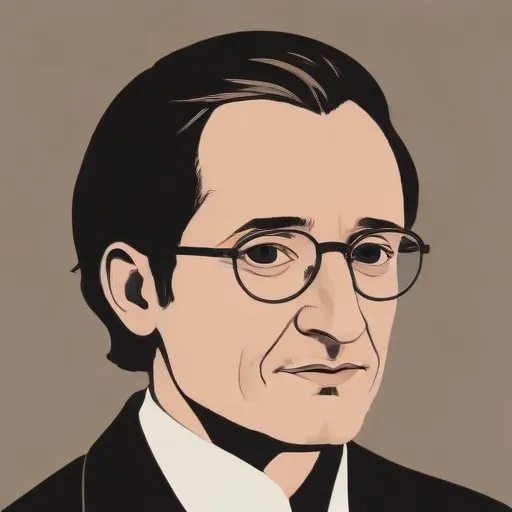
A 17th-century poet and hymn-writer who penned numerous sacred songs, many still sung in German churches today. His works are celebrated for their beauty and emotional depth.
Simon Dach, a German lyrical poet and hymnwriter, is renowned for his significant contributions to the world of poetry and music in the 17th century. With his works deeply rooted in classical education and theology, Dach's poetry and hymns continue to inspire and influence generations of scholars, poets, and musicians.
Born on July 29, 1605, in Memel, Duchy of Prussia (now Klaipeda, Lithuania), Simon Dach grew up in humble circumstances. Despite this, his father, a poorly paid court interpreter for Lithuanian, ensured that Simon received a classical education. He attended the Domschule of Königsberg (now Kaliningrad, Russia) and later studied at the Latin schools of Wittenberg and Magdeburg.
In 1626, Dach entered the University of Königsberg, where he studied theology and philosophy. Fearing the outbreak of the plague and the Thirty Years War, he left Magdeburg and returned to his Prussian homeland, settling in Königsberg, where he spent the rest of his life.
After earning his degree, Dach worked as a private tutor before being appointed as a Kollaborator teacher in 1633 and later as a corector of the Domschule cathedral school in Königsberg in 1636. In 1639, he was appointed to the Chair of Poetry at the Albertina University in Königsberg, a position he held until his death.
As part of his official duties, Dach created poems for various university celebrations, programs, debates, and funeral services of his colleagues, often writing in Latin or Greek. One of his notable works is the play Sorbuisa, written in 1644 to celebrate the centennial of the University of Königsberg.
Dach became a prominent figure in the Königsberg Circle, a group of poets, hymnists, and musicians who met at the summerhouse of organist and composer Heinrich Albert. This group, which included notable figures like George Weissel, Valentin Thilo, and Johann Franck, published eight books of poems and songs between 1638 and 1650, achieving great success. Dach contributed significantly to these publications, with approximately 200 poems and songs to his credit.
Simon Dach's contributions to poetry, hymnology, and music have left an indelible mark on the cultural landscape of 17th century Germany. His works, deeply rooted in classical education and theology, continue to inspire scholars, poets, and musicians today. As a prominent figure in the Königsberg Circle, Dach played a crucial role in shaping the literary and musical landscape of his time.
Dach's legacy extends beyond his own lifetime, with his poems and hymns influencing generations of artists and scholars. His work remains a testament to the power of classical education and the importance of cultural heritage, ensuring his place as one of the most significant lyrical poets and hymnwriters of the 17th century.
Born in 1597
A 17th-century master of words and music, known for establishing German as a literary language and creating the first German opera. His works blended poetry and music, paving the way for future generations of artists.
Born in 1609
A 17th-century doctor and poet who wrote about medicine, philosophy, and love, leaving a mark on German literary history. His poetry is still studied and admired today.
Born in 1616
A 17th-century master of German literature, known for his poignant and expressive works that explored the human condition, often incorporating themes of love, death, and morality.
Born in 1607
A 17th-century German poet and composer who wrote hymns that are still sung today, particularly during the Lutheran church services. His works are known for their lyricism and emotional depth.
