


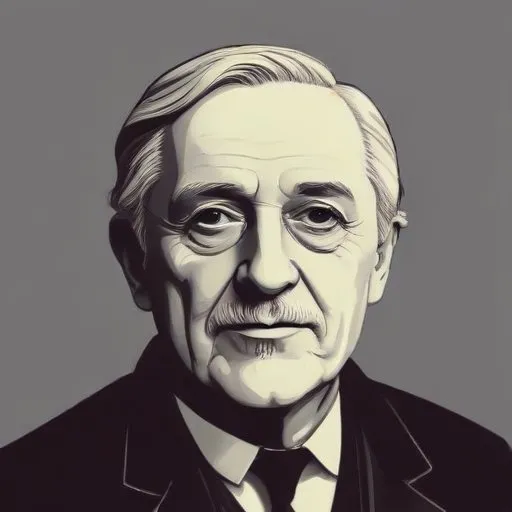
A 17th-century composer and poet who wrote operas, cantatas, and songs, and was a prominent figure in the development of German Baroque music. His works showcase a unique blend of Italian and German musical styles.
Heinrich Albert, a German composer and poet, is renowned for his enchanting song compositions that resonated with the hearts of many during the 17th century. As a prominent member of the Knigsberg Poetic Society, Albert's works were deeply influenced by the great Heinrich Schtz, and his legacy continues to inspire and delight music enthusiasts to this day.
Born on June 28, 1604, in Lobenstein, Principality of Reuss, Thuringia, Albert's early life was marked by a passion for music. He attended grammar school in Gera from 1619 to 1621 and later studied music with his cousin, Heinrich Schtz, in Dresden. Schtz, a revered composer, introduced Albert to the fundamentals of composition, which laid the foundation for his future success.
In compliance with his parents' wishes, Albert enrolled in law at the University of Leipzig in 1623. However, his studies were soon interrupted by the turmoil of the Thirty Years War. In 1626, Albert attempted to flee the conflict, moving to Knigsberg, but was taken captive by Swedish troops while on a diplomatic mission to Warsaw in 1627. Fortunately, he was released in 1628 and returned to Knigsberg, where he redirected his focus towards music and poetry.
By 1630, Albert had become a respected musician in Knigsberg and was appointed organist of the cathedral, a position he held until his untimely death in 1651. During his tenure, Albert composed numerous songs, many of which were influenced by his association with the Knigsberg Poetic Society.
Albert was an active member of the Knigsberg Poetic Society, a prestigious group of writers and intellectuals that included notable figures such as Simon Dach, Robert Roberthin, and Martin Opitz. The society would convene at the Krbishtte, an arbor in Albert's garden, where they would engage in lively discussions, share their works, and carve their literary pseudonyms into the gourds that Albert grew.
Heinrich Albert's contributions to music and poetry have left an indelible mark on the cultural landscape of the 17th century. His songs, infused with the spirit of the Knigsberg Poetic Society, continue to delight and inspire audiences today. Despite his untimely passing at the age of 47, Albert's legacy serves as a testament to the power of creative expression and the importance of fostering a community of like-minded individuals.
These works, representative of Albert's compositional style, showcase his mastery of melody and his ability to craft songs that are both beautiful and engaging.
Heinrich Albert's life was a testament to the transformative power of music and poetry. From his early days as a student of Heinrich Schtz to his later years as a respected composer and poet, Albert's dedication to his craft inspired generations of artists. Today, his works remain a testament to the enduring legacy of the Knigsberg Poetic Society and the indelible mark it left on the cultural landscape of the 17th century.
Born in 1585
A renowned Baroque composer and organist, known for his contributions to the development of the oratorio and passion genres, creating over 500 works that showcased his mastery of choral music.
Born in 1587
A renowned Baroque-era musician and teacher, known for his influential compositions and contributions to the development of the organ concerto.
Born in 1586
A renowned Baroque composer, he wrote sacred music, motets, and hymns, and was a prominent figure in the development of the German Protestant church music tradition.
Born in 1685
A master of Baroque music, he composed over 1,000 works, including orchestral suites, cantatas, and passions, that still inspire and influence musicians today. His innovative use of counterpoint and harmony raised the bar for classical music.
Born in 1660
A renowned Baroque-era organist and composer, known for his innovative and expressive works that bridged the gap between the Renaissance and Baroque styles. His compositions showcased exceptional mastery of counterpoint and harmony.
Born in 1663
A renowned Baroque-era organist and composer, known for his significant contributions to the development of the chorale cantata, a musical form that influenced later masters like Bach.
