


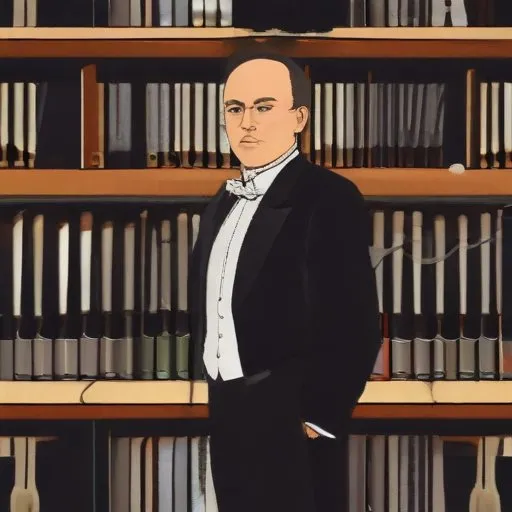
A renowned Baroque-era organist and composer, known for his significant contributions to the development of the chorale cantata, a musical form that influenced later masters like Bach.
Friedrich Wilhelm Zachow, a German musician and composer, left an indelible mark on the world of Baroque music. He is best remembered as George Frideric Handel's first music teacher, imparting his expertise to the young prodigy and setting him on the path to greatness.
Zachow was born on November 14, 1663, in Leipzig, Germany. His father, Heinrich Zachow, was a piper and one of Leipzig's town musicians, which exposed Friedrich to the world of music from a very young age. He likely received his initial training from his father and possibly from Johann Schelle, a prominent German composer, when the family moved to Eilenburg.
Zachow's talent and hard work earned him the position of Kantor and organist at Halle's Market Church in 1684, succeeding Samuel Ebart. During his tenure, he gained recognition for his dramatic cantatas, which showcased his mastery of vocal and keyboard music. His innovative approach, however, drew criticism from pietists in 1695, who deemed his music too elaborate and lengthy, accessible only to cantors and organists.
Zachow's teaching legacy extends far beyond Handel. He also instructed notable composers such as Gottfried Kirchhoff, Johann Philipp Krieger, and Johann Gotthilf Ziegler. His impact on Handel, in particular, was profound, teaching him to play the violin, organ, harpsichord, and oboe, as well as the intricacies of counterpoint. Handel'ssuccess was a testament to Zachow's effective teaching, and in gratitude, Handel became a benefactor to Zachow's widow and children after his passing in 1712.
Zachow's music continued to influence Handel's compositions, with Handel often drawing inspiration from his teacher's work. The cantata "Herr, wenn ich nur dich habe," featuring a unique harp solo, is a prime example of Zachow's lasting impact on Handel's music. Even after Zachow's passing, his legacy lived on, with J.S. Bach succeeding him as the Kantor and organist at Halle's Market Church in 1713.
Zachow's life may have been cut short, but his contributions to the world of Baroque music continue to resonate to this day, inspiring generations of musicians and composers.
Born in 1685
A master of Baroque music, he composed over 1,000 works, including orchestral suites, cantatas, and passions, that still inspire and influence musicians today. His innovative use of counterpoint and harmony raised the bar for classical music.
Born in 1685
A renowned Baroque composer and organist, famous for creating majestic orchestral suites, operas, and oratorios, including the iconic "Messiah" masterpiece.
Born in 1585
A renowned Baroque composer and organist, known for his contributions to the development of the oratorio and passion genres, creating over 500 works that showcased his mastery of choral music.
Born in 1701
A renowned 18th-century opera composer and tenor, known for his innovative and expressive works that bridged the gap between Baroque and Classical styles. His compositions showcased exceptional vocal writing and dramatic flair.
Born in 1714
A pioneering opera composer who revolutionized the art form with his innovative and expressive works, blending music and drama in a way that captivated audiences.
Born in 1714
A prominent composer of the Neapolitan School, he wrote over 80 operas and was a key figure in the transition between the Baroque and Classical periods. His music was known for its dramatic intensity and expressive melodies.
