


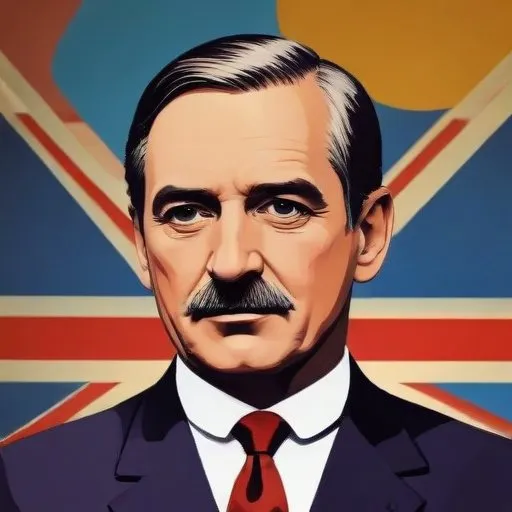
A British Conservative politician who served as a Member of Parliament for over 40 years, advocating for social and educational reforms. He was a vocal opponent of the Reform Act of 1832.
Sir Robert Inglis, 2nd Baronet, was a prominent English Conservative politician known for his unwavering high church views and unrelenting opposition to measures that threatened the Anglican Church. Throughout his political career, he fought tirelessly against Catholic Emancipation and Jewish relief, earning him a reputation as a fierce defender of Protestantism.
Born on January 12, 1786, Sir Robert Inglis was the son of Sir Hugh Inglis, a minor politician, and MP for Ashburton from 1802 to 1806. He married Mary Briscoe, daughter of John Briscoe and Susanna Harriot Hope, whose marriage had ended in scandal.
In 1820, Inglis succeeded to his father's baronetcy and began his political career. He served as MP for Dundalk (1824-1826), Ripon (1828-1829), and Oxford University (1829-1854). In 1824, he was appointed High Sheriff of Bedfordshire.
Inglis was fiercely opposed to measures that, in his view, weakened the Anglican Church. He spoke strongly against the Catholic Relief Bill of 1847, claiming it would allow Catholicism to grow in England and undermine Protestantism. When Robert Peel, a leading Tory MP, forced a byelection at Oxford University in 1829 on the issue of Catholic Emancipation, Inglis resigned from Ripon and, with the support of Ultra-Tories, defeated Peel.
In 1830, when Robert Grant, MP for Inverness Burghs, petitioned for Jewish relief, Inglis was violently opposed. He alleged that the Jews were an alien people, with no allegiance to England, and that to admit Jews to parliament would separate Christianity itself from the State.
Although Inglis's efforts to block Catholic Emancipation and Jewish relief ultimately failed, his unwavering commitment to the Anglican Church left a lasting impact on British politics. His legacy serves as a testament to the complexities of 19th-century British politics and the enduring power of religious conviction.
Born in 1788
A British politician who served as Prime Minister and is credited with establishing the modern police force and repealing the Corn Laws, a major trade restriction. He's also known for his role in shaping the Conservative Party.
Born in 1759
Prime Minister of the United Kingdom from 1783 to 1801 and 1804 to 1806, known for leading the country through the French Revolutionary and Napoleonic Wars.
Born in 1770
A skilled lawyer and politician who served as Prime Minister of the United Kingdom, known for his strong oratory skills and brief but influential tenure in office.
Born in 1762
The only British Prime Minister to be assassinated, he served from 1809 to 1812 and is known for his strong leadership during the Napoleonic Wars.
91 Years Old
A renowned snooker player turned sportscaster, known for his commentary and analysis of the sport, providing expert insights to audiences worldwide.
