


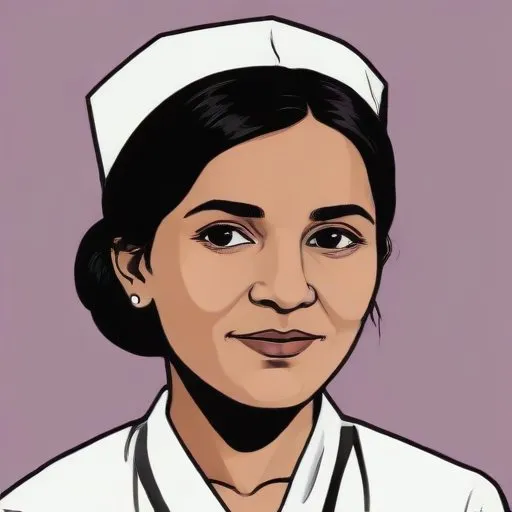
An Irish-born Indian social worker, author, and educator who played a crucial role in India's struggle for independence and is revered for her contributions to Indian education and women's empowerment.
Sister Nivedita, born Margaret Elizabeth Noble, was a pioneering Irish teacher, author, and social activist who dedicated her life to the upliftment of Indian women and children. She is renowned for establishing the first girls' school in Calcutta (now Kolkata) in 1898, which marked a significant milestone in the struggle for women's education in India.
Margaret Elizabeth Noble was born on October 28, 1867, in Dungannon, County Tyrone, Ireland, to Mary Isabel and Samuel Richmond Noble. Her father, a pastor, instilled in her the importance of serving humanity, which would later become the guiding principle of her life.
Tragedy struck early when her fiancé died soon after their engagement, leaving her heartbroken. However, this setback led her to search for a new purpose in life. In 1895, she met Swami Vivekananda in London, and his teachings had a profound impact on her.
In 1898, Sister Nivedita traveled to Calcutta, where she was initiated into the vow of Brahmacharya by Swami Vivekananda, who gave her the name Nivedita, meaning "Dedicated to God." This marked the beginning of her new life in India, where she would work tirelessly to improve the lives of women and children.
Sister Nivedita's school in Bagbazar, Calcutta, was a groundbreaking institution that provided education to girls who were previously denied this basic right. During the plague epidemic in Calcutta in 1899, she nursed and cared for the poor patients, earning her the respect and admiration of the local community.
Her association with the Ramakrishna Mission and her close relationships with Sarada Devi and other brother disciples of Swami Vivekananda further strengthened her resolve to work for the betterment of Indian society.
Sister Nivedita's selfless work and dedication to the cause of Indian nationalism led to her being regarded as a symbol of hope and inspiration for Indian women. Her epitaph, "Here lies Sister Nivedita who gave her all to India," is a testament to her unwavering commitment to the country and its people.
Today, Sister Nivedita's legacy continues to inspire generations of women and educators, and her school remains a beacon of hope for girls from underprivileged backgrounds.
Sister Nivedita's remarkable life and work serve as a testament to the power of selflessness, compassion, and dedication. Her legacy continues to inspire and educate, reminding us of the importance of serving humanity and making a positive impact on the world.
Born in 1861
A Bengali polymath who wrote extensively on love, nature, and humanity, creating a unique blend of Indian and Western literary styles, and was the first non-European to win the Nobel Prize in Literature.
Born in 1869
Indian freedom fighter, activist, and philosopher who led India to independence from British rule through non-violent civil disobedience, inspiring civil rights movements worldwide.
Born in 1847
A pioneering figure in women's rights and Indian independence, known for her tireless advocacy and influential writings that inspired generations of activists and thinkers.
Born in 1831
Founded the Theosophical Society, promoting spiritual growth and universal brotherhood through esoteric wisdom and Eastern philosophy. Known for her influential writings on mysticism and the occult.
Born in 1851
An Irish occultist and theosophist who played a key role in popularizing Eastern spirituality in the Western world, and was a leading figure in the Theosophical Society. They wrote extensively on esoteric topics, including the mysteries of life and death.
