


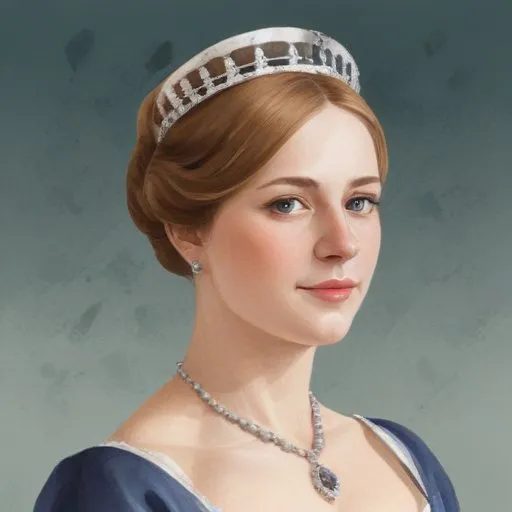
The queen consort of Frederick William I, known as the mother of Frederick the Great, was a key figure in 18th-century Prussian politics and a patron of the arts. She's infamous for her unhappy marriage and subsequent imprisonment.
Sophia Dorothea of Hanover was a woman of great stature, known for her impressive lineage, influential marriage, and remarkable offspring, particularly her son Frederick the Great, King Frederick II of Prussia. As the Queen in Prussia and Electress of Brandenburg, Sophia played a significant role in shaping the course of European history during the reign of her husband, King Frederick William I, from 1713 to 1740.
Born on 16 March 1687 O.S. in Hanover, Sophia was the only daughter of George Louis of Hanover, later King George I of Great Britain, and his wife, Sophia Dorothea of Celle. Her early life was marked by turmoil, with her parents' tumultuous marriage ending in divorce and her mother's imprisonment. Sophia was subsequently raised in Hanover under the supervision of her paternal grandmother, Sophia of Hanover, and educated by her Huguenot teacher Madame de Sacetot.
Sophia's marriage to her cousin, Crown Prince Frederick William of Prussia, heir apparent to the Prussian throne, was a strategic alliance arranged by her father. The couple wed on 28 November 1706, despite Sophia's initial reluctance. Although Frederick William had reportedly been attracted to Sophia since childhood, their marriage was marked by tension and power struggles.
As Queen in Prussia, Sophia played a significant role in promoting the arts and culture. Her husband, however, was notorious for his miserly nature, leading to a strained relationship between the couple. Sophia's influence was further limited by her husband's controlling behavior, which often confined her to the palace.
Sophia's greatest legacy lies in her son, Frederick the Great, who would go on to become one of the most influential monarchs in European history. Despite her own restricted role in politics, Sophia instilled in her son a love for learning and a strong sense of ambition, which would shape his future reign.
Sophia Dorothea of Hanover's life was a testament to the complex and often difficult role of women in monarchies during the 18th century. Despite the limitations placed upon her, Sophia played a significant role in shaping the course of European history through her marriage and her influential offspring. Her legacy serves as a reminder of the enduring power of women in shaping the course of human history.
Sophia Dorothea of Hanover's remarkable life serves as a fascinating chapter in the annals of European history. Through her marriage, motherhood, and influence, Sophia left an indelible mark on the continent, shaping the course of politics, culture, and society for generations to come.
Born in 1657
King of Prussia from 1701 to 1713, crowned himself king, and established Berlin as his capital, transforming Prussia into a major power. He's known for his cultural and economic reforms.
Born in 1712
Prussian king who ruled with Enlightenment values, promoting arts, education, and religious tolerance, while also being a skilled military strategist and expanding his kingdom through wars.
Born in 1683
King of Great Britain and Ireland from 1727 to 1760, known for his military victories, particularly the Battle of Dettingen, and his role in the War of the Austrian Succession.
