


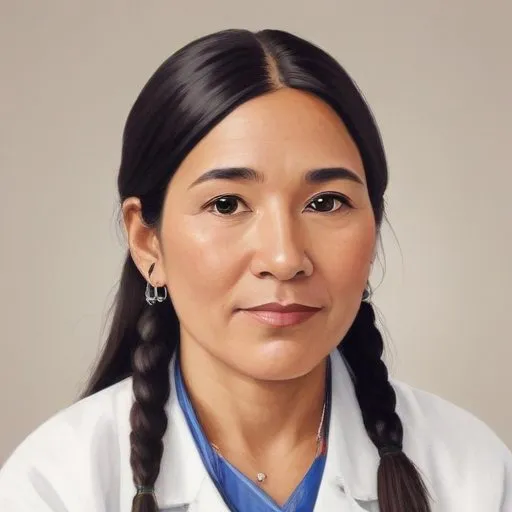
A pioneering Native American anthropologist, physician, and nutritionist who made significant contributions to the fields of public health and nutrition, particularly among Native American communities.
Sophie Bledsoe Aberle is a renowned American botanist and mycologist who made significant contributions to the field of mycology, particularly in the study of fungi in the southwestern United States. She is best known for her exhaustive research on the genus Ganoderma, commonly known as reishi mushrooms, and her work has been instrumental in shaping our understanding of these fascinating organisms.
Sophie Aberle was born on July 21, 1899, in New York City. Growing up in a family that encouraged her love for nature, Aberle developed an early interest in botany and mycology. She pursued her passion at the New York State College of Agriculture, where she earned her bachelor's degree in 1922. She furthered her education at the University of Michigan, earning her master's degree in 1924 and her Ph.D. in 1928.
Aberle's research focused on the taxonomy, ecology, and distribution of fungi in the southwestern United States. Her work on Ganoderma led to the discovery of several new species, and her research papers continue to be cited by mycologists today. Aberle was also an advocate for conservation, recognizing the importance of preserving natural habitats and promoting sustainable practices.
In 1929, Aberle married Dr. Frank Aberle, a geologist, and the couple had two children together. The family moved to New Mexico in 1930, where Aberle continued her research and built a reputation as a leading expert in mycology.
Aberle's work has had a lasting impact on the field of mycology, inspiring future generations of researchers and conservationists. Her contributions to our understanding of fungi have far-reaching implications for fields such as medicine, agriculture, and ecology.
Sophie Bledsoe Aberle's legacy extends beyond her research and publications. She paved the way for women in science, demonstrating that they too could make significant contributions to their fields. Her commitment to conservation and sustainability continues to inspire us today, as we face the challenges of climate change and environmental degradation.
Aberle was known for her kindness, humility, and generosity, often sharing her knowledge and expertise with colleagues and students. Her love for nature was contagious, inspiring those around her to appreciate the beauty and complexity of the natural world.
Sophie Bledsoe Aberle's remarkable life and work serve as a testament to the power of dedication, curiosity, and passion. Her contributions to mycology and conservation continue to enrich our understanding of the world around us, and her legacy will inspire future generations of scientists and nature lovers alike.
Born in 1858
Pioneering anthropologist and linguist who challenged prevailing racial and cultural stereotypes, establishing modern anthropology and contributing significantly to our understanding of human diversity and cultural relativity.
Born in 1901
A pioneering anthropologist and author who studied and wrote about diverse cultures, shedding light on human behavior and societal norms. Her groundbreaking work continues to influence modern anthropology and beyond.
Born in 1876
Pioneering anthropologist and ethnologist who explored the intersection of culture and psychology, shedding light on the complexities of human societies and behaviors.
Born in 1883
A pioneering anthropologist who studied Native American cultures, developing theories on cultural evolution and social organization. His work greatly advanced the field of anthropology.
Born in 1907
Pioneering anthropologist who developed the concept of "action anthropology," which emphasizes collaboration between researchers and the communities they study, and founded the journal Current Anthropology.
