


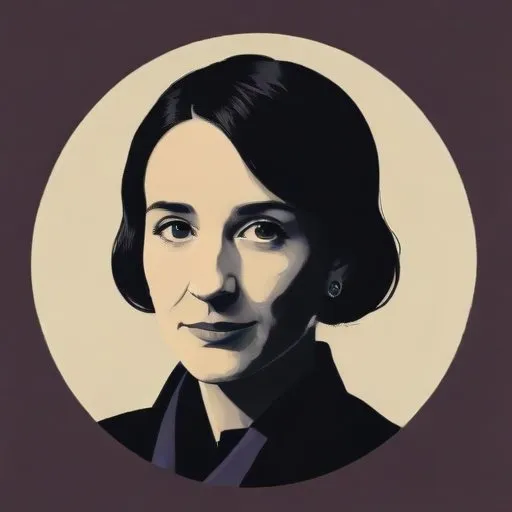
An Irish mathematician and academic who advocated for women's education and suffrage, making significant contributions to the development of mathematics and education in Ireland.
Sophie Bryant, an Anglo-Irish mathematician, educator, feminist, and activist, left an indelible mark on the world of academia and beyond. Known for being the first woman to receive a Doctor of Science (DSc) in England, she shattered glass ceilings and paved the way for future generations of women in STEM fields.
Born Sophie Willock in Dublin, Ireland on February 15, 1850, she was the daughter of Revd Dr. William Willock, a fellow and tutor at Trinity College, Dublin. Her father's influence played a significant role in shaping her educational journey, as she was largely educated at home under his guidance.
In 1863, her family moved to London, where her father became Professor of Geometry at the University of London. This move enabled Sophie to attend Bedford College, a pioneering institution for women's education. Her early exposure to mathematics and science laid the foundation for her future academic pursuits.
In 1875, Sophie Bryant began her teaching career, joining the staff of North London Collegiate School at the invitation of Frances Mary Buss. She later succeeded Buss as headmistress of the school, serving from 1895 to 1918. During her tenure, she promoted women's education and encouraged her students to pursue careers in mathematics and science.
In 1878, the University of London opened its degree courses to women, and Sophie was one of the first to take advantage of this opportunity. She earned a First-Class Honours degree in Mental and Moral Sciences (Philosophy) in 1881, followed by a Second-Class Honours degree in Mathematics. Her academic achievements did not stop there; in 1884, she became the first woman to be awarded a Doctor of Science degree in England.
Sophie Bryant's contributions to mathematics extended beyond her academic achievements. In 1882, she became the third woman to be elected to the London Mathematical Society, and the first active female member. She went on to publish her first paper with the Society in 1884. Alongside Charles Smith, she edited three volumes of Euclid's Elements of Geometry, a seminal work that remains a cornerstone of mathematical education to this day.
Sophie Bryant's philosophical outlook was deeply rooted in her commitment to women's education and empowerment. She believed that education was key to unlocking women's potential and promoting social change. Her work in mathematics and philosophy reflects her conviction that these disciplines should be accessible to women and that they have a vital role to play in shaping society.
Sophie Bryant's pioneering work has had a lasting impact on modern society. She served as a role model for women in STEM fields, demonstrating that they, too, could excel in these disciplines. Her efforts to promote women's education and empowerment have contributed to a more inclusive and equitable society.
Today, Sophie Bryant's legacy continues to inspire generations of women to pursue careers in mathematics, science, and education. Her courage, perseverance, and dedication to her craft have left an indelible mark on the world of academia and beyond.
Sophie Bryant's personal life was marked by both joy and tragedy. In 1869, she married Dr. William Hicks Bryant, a surgeon ten years her senior, who sadly passed away within a year of their marriage. Despite this setback, Sophie continued to pursue her academic and professional goals, driven by her passion for education and her commitment to making a difference.
Sophie Bryant's achievements were recognized during her lifetime, and she received several awards and honors for her contributions to mathematics and education. Her legacy continues to be celebrated today, inspiring future generations of women to pursue careers in STEM fields.
Sophie Bryant's life and work are a testament to the power of dedication, perseverance, and passion. Her groundbreaking achievements in mathematics and education have left a lasting impact on the world of academia and beyond. As we continue to strive for a more inclusive and equitable society, Sophie Bryant's legacy serves as a beacon of inspiration, reminding us of the importance of education and empowerment in shaping our collective future.
In conclusion, Sophie Bryant's remarkable life and achievements serve as a testament to the power of human potential. Her pioneering work in mathematics, education, and women's empowerment has left an indelible mark on history, inspiring future generations to strive for excellence and push the boundaries of what is possible.
Born in 1820
Pioneering nurse and statistician who revolutionized healthcare by introducing sanitation practices and data-driven decision making, becoming the founder of modern nursing.
Born in 1780
A pioneering female mathematician and astronomer who wrote influential books on celestial mechanics and was one of the first women to be recognized for her scientific contributions. Her work helped popularize complex scientific concepts for a broader audience.
Born in 1750
First female astronomer to receive a salary, discovered several comets and double stars, and assisted her brother William in his astronomical observations.
Born in 1759
A pioneering advocate for women's rights and education, this 18th-century thinker wrote influential works that shaped feminist philosophy and literature.
Born in 1797
Author of Gothic novels, particularly the iconic "Frankenstein", which has become a cultural phenomenon and influenced countless adaptations and reinterpretations.
Born in 1836
Pioneering female physician and politician who broke gender barriers in medicine and politics, becoming the first woman to achieve several notable milestones.
Born in 1830
Co-founder and early Mistress of Girton College, Cambridge University, a pioneering educator who fought for women's rights and access to higher education. She played a crucial role in establishing the first residential college for women in England.
Born in 1847
A pioneering suffragist and leading figure in the women's suffrage movement, fighting for women's right to vote in the UK. Her tireless efforts led to significant reforms and milestones in gender equality.
