


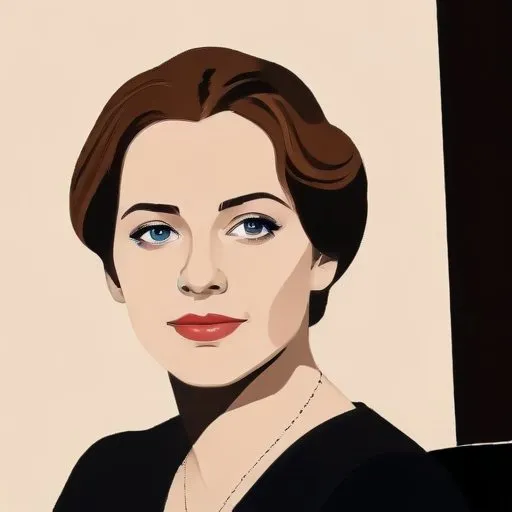
A renowned pianist and composer of the Romantic era, known for her virtuosic performances and compositions that blended classical and folk elements. Her music was praised by Liszt and Brahms.
Sophie Menter, a German pianist and composer, was renowned for her electrifying playing style, earning her the title "l'incarnation de Liszt" in Paris. She was considered one of the greatest piano virtuosos of her time, captivating audiences with her robust performances of Franz Liszt's piano music.
Menter was born on July 29, 1846, in Munich, Germany, to a family of musicians. Her father, Josef Menter, was a cellist, and her mother, Wilhelmine Menter née Diepold, was a singer. She began her piano studies with Siegmund Lebert and later with Friedrich Niest.
At just 15 years old, Menter made her concert debut, performing Carl Maria von Weber's Konzertstück for piano and orchestra with Franz Lachner conducting. Her early performances took her to Stuttgart, Frankfurt, and Switzerland, where she gained recognition for her exceptional talent.
In 1867, Menter's interpretation of Liszt's piano music at the Leipzig Gewandhaus earned her widespread acclaim. This led to her becoming a pupil of Liszt himself in 1869, after studying with Carl Tausig and Hans von Bülow.
In Berlin, Menter became acquainted with the famous pianist Carl Tausig, and her performances impressed American pianist Amy Fay, who wrote in her book "Music Study in Germany": "I envied her dreadfully... She plays everything by heart, and has a beautiful conception."
In 1881, Menter made her debut in England and was awarded honorary membership of the Royal Philharmonic Society two years later. She also became a professor of piano at the Saint Petersburg Conservatory in 1883, a position she held until 1886, when she left to continue her concert career.
Between 1872 and 1886, Menter was married to cellist David Popper, with whom she had a daughter, Celeste. After her death on February 23, 1918, in Stockdorf, near Munich, Menter's legacy continued to inspire future generations of pianists.
Sophie Menter's popularity and mastery of Liszt's piano music paved the way for other pianists to explore this repertoire. Her performances of Liszt's First Piano Concerto, which she premiered in Vienna in 1869, demonstrated her technical prowess and musicality.
Menter's contributions to the world of music are still celebrated today, and her name is synonymous with virtuosic piano playing and a deep understanding of Liszt's compositions.
Born in 1811
A virtuosic pianist and composer who revolutionized classical music with his technically demanding and emotionally expressive works, blending Hungarian folk influences with Romantic-era drama.
Born in 1810
A renowned Romantic-era composer and influential music critic, known for his expressive and emotionally charged works, including symphonies, piano music, and art songs.
Born in 1819
A renowned 19th-century pianist and composer, she was one of the first females to achieve recognition in a male-dominated field, creating over 60 pieces of music. Her compositions showcased romanticism and lyricism.
Born in 1833
A renowned pianist and composer, he crafted complex, expressive works that blended traditional and innovative techniques, leaving an indelible mark on classical music.
Born in 1844
A virtuosic violinist and composer, renowned for his technically demanding and expressive works that showcased his mastery of the instrument. His compositions continue to be celebrated for their beauty and lyricism.
Born in 1830
A renowned pianist and composer, known for his virtuosic performances and innovative interpretations of classical music, particularly his work with Richard Wagner.
Born in 1866
A renowned pianist, composer, and conductor who blurred the lines between classical and modern music, creating a unique fusion of styles and influencing generations of musicians to come.
Born in 1864
A renowned pianist and composer who bridged the Romantic and early 20th-century styles, known for his expressive performances and operas like "Tiefland".
