


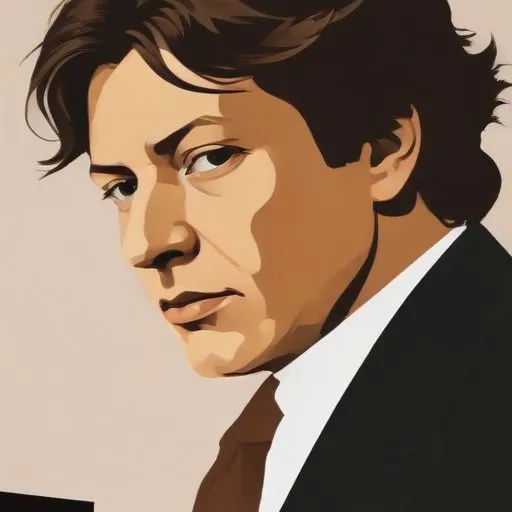
A renowned pianist, composer, and conductor who blurred the lines between classical and modern music, creating a unique fusion of styles and influencing generations of musicians to come.
Ferruccio Busoni was a renowned Italian composer, pianist, conductor, editor, writer, and teacher who left an indelible mark on the world of classical music. He is best known for his innovative and avant-garde compositions, as well as his virtuosic piano performances, which earned him international acclaim.
Busoni was born on April 1, 1866, in Empoli, Italy, to a family of professional musicians. His father, Ferdinando, was a clarinetist, and his mother, Anna, was a pianist. He began performing and composing at the age of seven, largely taught by his father. Busoni's prodigious talent led him to study at the Vienna Conservatory, where he later became a sought-after keyboard instructor and teacher of composition.
Busoni's early compositions reflected a late Romantic style, but after 1907, he developed a more individual and innovative approach, often incorporating elements of atonality. His work was heavily influenced by his travels, particularly his visits to America, which exposed him to North American indigenous tribal melodies. These influences can be heard in some of his most notable works, including his Piano Concerto and chamber music compositions.
Busoni was a dedicated teacher and mentor, influencing a generation of composers and pianists. His students included notable figures such as Kurt Weill and Stefan Wolpe. Through his writings on music, including his influential book Sketch of a New Esthetic of Music, Busoni helped shape the musical landscape of the early 20th century.
Busoni's groundbreaking compositions and teachings continue to inspire and challenge musicians today. His emphasis on innovation and experimentation paved the way for future generations of composers, ensuring his influence extends far beyond his own lifetime.
"The spirit of music lies not in the notes, but in the pauses between them."
Busoni's words continue to resonate with musicians and music lovers alike, serving as a testament to his enduring legacy.
Ferruccio Busoni's life and work spanned a period of great change and upheaval in the world of classical music. His innovative spirit and dedication to his craft helped shape the course of musical history, leaving behind a rich and diverse body of work that continues to inspire and influence musicians today.
Born in 1860
A visionary composer and conductor who expanded symphonic music's emotional depth and complexity, creating works of profound beauty and intensity.
Born in 1874
A pioneer of atonality and 12-tone serialism, revolutionizing classical music with innovative compositions that pushed boundaries of harmony and melody.
Born in 1881
A Hungarian musical genius who merged folk melodies with modernist techniques, creating a unique sound that transformed classical music.
Born in 1882
A Russian master of music, renowned for revolutionizing classical music with bold, avant-garde compositions that blended traditional and modern elements. His iconic works, such as "The Rite of Spring," continue to inspire and influence artists across genres.
Born in 1918
A renowned musician who blended jazz, classical, and Broadway styles, creating iconic works like West Side Story, and inspiring generations with his charismatic performances and innovative compositions.
Born in 1867
A renowned conductor who led the NBC Symphony Orchestra and was known for his intense performances and perfectionism, shaping the sound of classical music in the 20th century.
Born in 1873
A renowned Russian musician who composed iconic symphonies and piano concertos, and was also a skilled pianist and conductor, leaving a lasting legacy in classical music.
Born in 1903
A renowned pianist and composer, celebrated for his virtuosic technique and powerful performances of classical music, particularly Chopin and Rachmaninoff.
