


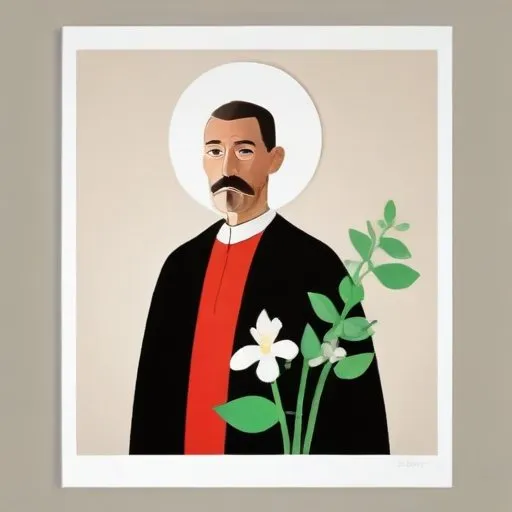
A Norwegian priest and botanist who traveled extensively, discovering and documenting numerous plant species, particularly in Scandinavia and the Arctic. His work contributed significantly to the field of botany.
Sren Christian Sommerfelt, a Norwegian priest and botanist, is best known for his groundbreaking research on spore plants, also known as cryptogams. His tireless efforts and passion for botany led to a wealth of knowledge on these obscure plants, making him one of Norway's most talented botanists of the 19th century.
Born on April 9, 1794, on the farm Sukkestad in Toten, Norway, Sommerfelt was the son of County Governor Christian Sommerfelt and Anna Sophie Hagerup. He showed a keen interest in botany from a young age and was sent to study at the University of Copenhagen when he was just 15 years old. Initially, he pursued theology, but later shifted his focus to science, which became his true calling.
Sommerfelt's love for botany was evident in his work, and he became a parish priest at Saltdal in Nordland in 1818, where he spent six years studying the local flora. His observations led to a comprehensive scientific work that showcased his expertise in botany. He went on to become the assistant pastor at Asker parish in Akershus and later the vicar of Ringebu parish in Oppland, all while continuing his research in botany.
Sommerfelt's most significant contribution to botany was his work on spore plants, which was a relatively unexplored area at the time. He conducted extensive research and collected numerous specimens, making him an authority on the subject. His knowledge spanned across higher and lower plants, earning him the distinction of being the last Norwegian botanist with equally good knowledge of all plant groups.
Despite his priestly duties, Sommerfelt continued to pursue his passion for botany, often conducting research in his spare time. His dedication and perseverance led to significant discoveries, which paved the way for future generations of botanists.
Sommerfelt married Jrgine Maria Krohn, daughter of Johan Jrgen Krohn, in 1818, and they had a life filled with love, family, and botanical pursuits. Sommerfelt passed away on December 29, 1838, in Ringebu, leaving behind a legacy that continues to inspire botanists and scientists to this day.
Through his work, Sommerfelt left an indelible mark on the field of botany, and his contributions remain an integral part of Norway's scientific heritage. His story serves as a testament to the power of passion, dedication, and hard work, inspiring future generations to follow in his footsteps.
Sren Christian Sommerfelt's remarkable story is a testament to the power of human curiosity and the importance of pursuing one's passion. His contributions to botany continue to inspire and educate, making him an integral part of Norway's rich scientific heritage.
Born in 1777
Danish physicist and chemist who discovered the principle of electromagnetism and founded the field of electromagnetism, making significant contributions to our understanding of electricity and magnetism.
Born in 1808
A pioneering figure in Norwegian literature, known for his romantic poetry and plays that explored national identity and social issues.
Born in 1813
A pioneering Norwegian novelist and feminist activist who wrote about women's rights and social issues in the 19th century, inspiring future generations of writers and activists.
Born in 1812
Collector and translator of Norwegian folktales, preserving cultural heritage through stories like "East of the Sun and West of the Moon".
