


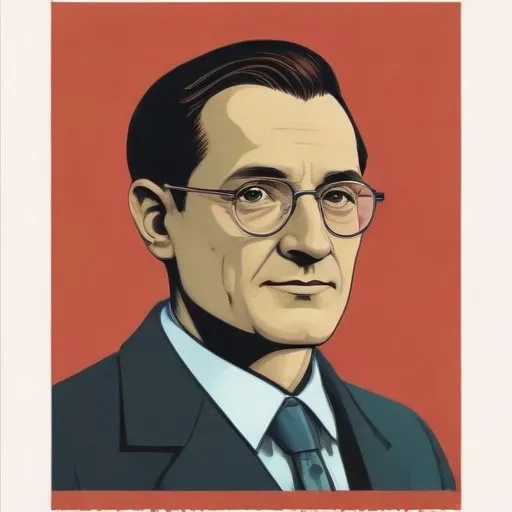
Danish physicist and chemist who discovered the principle of electromagnetism and founded the field of electromagnetism, making significant contributions to our understanding of electricity and magnetism.
Hans Christian Ørsted, a Danish physicist and chemist, is renowned for his groundbreaking discovery that electric currents produce magnetic fields, thereby establishing the fundamental connection between electricity and magnetism. This pioneering work earned him a permanent place in the annals of scientific history, with Ørsted's law and the oersted unit (Oe) bearing his name as a testament to his contribution.
Born on August 14, 1777, in Rudkøbing, Denmark, Ørsted developed an early fascination with science while working in his father's pharmacy. Alongside his brother, Anders, he received most of his education through self-study at home. In 1793, they moved to Copenhagen to take entrance exams for the University of Copenhagen, where both brothers excelled academically.
Ørsted earned his doctorate in 1799 for a dissertation based on the works of Immanuel Kant, titled "The Architectonics of Natural Metaphysics." In 1800, Alessandro Volta's invention of the voltaic pile inspired Ørsted to investigate the nature of electricity, leading to his first electrical experiments. A travel scholarship and public grant in 1801 enabled him to embark on a three-year journey across Europe, visiting science hubs in Berlin and Paris.
In Germany, Ørsted met Johann Wilhelm Ritter, a physicist who believed in the connection between electricity and magnetism. This idea resonated with Ørsted, who subscribed to Kantian thought regarding the unity of nature. Conversations with Ritter drew Ørsted into the study of physics, ultimately leading to his pivotal discovery.
In 1820, Ørsted observed that a magnetized needle was deflected when an electric current was passed nearby. This experiment demonstrated the direct correlation between electric currents and magnetic fields, forever changing the landscape of physics. The implications of Ørsted's discovery were profound, paving the way for subsequent breakthroughs in electromagnetism.
Ørsted's work not only earned him recognition in the scientific community but also influenced the development of modern technology. His discovery of electromagnetism has far-reaching applications in fields such as electrical engineering, telecommunications, and medicine. As a testament to his enduring legacy, the oersted unit (Oe) remains a fundamental unit of measurement in physics.
Ørsted was deeply influenced by Immanuel Kant's philosophical ideas, particularly the concept of the unity of nature. He believed that natural phenomena were interconnected and that understanding these relationships was key to advancing scientific knowledge.
Ørsted's discovery of electromagnetism marked a significant turning point in the history of physics, bridging the gap between electricity and magnetism. His work laid the foundation for later scientific breakthroughs, including the development of electromagnetic theory by James Clerk Maxwell. Today, Ørsted is remembered as a pioneering figure in the scientific community, whose contributions continue to shape our understanding of the natural world.
Born in 1701
A Swedish astronomer, physicist, and mathematician who developed the Celsius temperature scale, still widely used today to measure temperature. He also made significant contributions to astronomy, including the discovery of the aurora borealis.
Born in 1707
Developed the system of binomial nomenclature, which is still used today to classify and name living organisms. This system has had a profound impact on the fields of biology, ecology, and conservation.
Born in 1731
A pioneering scientist who discovered hydrogen and determined the density of the Earth, making significant contributions to the fields of chemistry and physics.
Born in 1743
Father of modern chemistry, discovered oxygen, and developed a systematic method of chemical nomenclature. He laid the foundation for modern chemistry and paved the way for future scientific discoveries.
Born in 1791
Pioneering scientist who discovered electromagnetic induction, formulated the laws of electrolysis, and invented the first electrical generator, revolutionizing our understanding of electricity and its applications.
Born in 1831
Developed groundbreaking theories that unified electricity and magnetism, and predicted the existence of radio waves, revolutionizing our understanding of the physical world.
