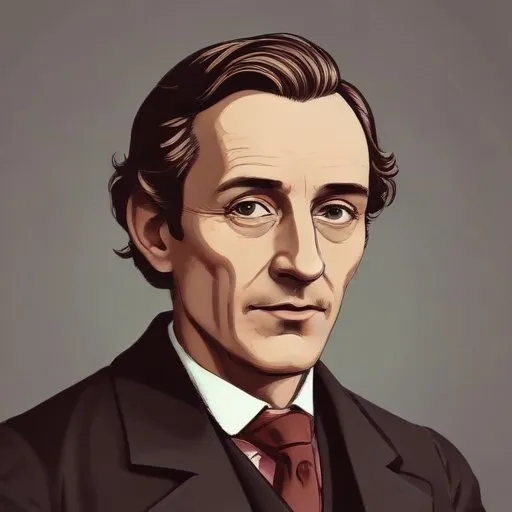
Johann Wilhelm Ritter: The Pioneering Chemist and Philosopher
A Trailblazer in the Realm of Electrochemistry
Johann Wilhelm Ritter, a German chemist, physicist, and philosopher, made groundbreaking contributions to the fields of electrochemistry and galvanism, earning him a lasting legacy in the annals of scientific history. His pioneering work on the decomposition of water by electricity and the discovery of electroplating paved the way for future innovators, cementing his status as a true pioneer in the realm of scientific inquiry.
Early Life and Formative Years
Born on December 16, 1776, in Samitz (Zamienice), near Haynau (Chojnów) in Silesia, then part of Prussia (now in Poland), Ritter's fascination with science began at the tender age of 14. As an apprentice to an apothecary in Liegnitz (Legnica), he developed a deep interest in chemistry, setting the stage for a lifetime of experimentation and discovery.
A Self-Taught Scientist and Philosopher
Ritter's academic pursuits led him to the University of Jena, where he began studying medicine in 1796. However, his true passions lay in the realm of scientific research, which he pursued with unbridled enthusiasm and dedication. As a self-taught scientist, Ritter conducted extensive experimental research in chemistry, electricity, and other fields, earning him recognition and respect from his contemporaries.
Influences and Associations
Ritter was deeply influenced by the German Romantic movement and counted among his acquaintances some of the most prominent intellectual figures of his time, including
Johann Wolfgang von Goethe,
Alexander von Humboldt,
Johann Gottfried Herder, and
Clemens Brentano. His philosophical outlook was shaped by the ideas of
Friedrich Wilhelm Joseph Schelling, the leading proponent of the Naturphilosophie movement.
Electrochemical Breakthroughs
Ritter's seminal research on galvanic phenomena led him to interpret the physiological effects observed by
Luigi Galvani and other researchers as resulting from electricity generated by chemical reactions. Although his theories were not widely accepted during his lifetime, they laid the foundations for modern understanding of electrochemistry. In 1800, Ritter discovered the decomposition of water by electricity, independently of
William Nicholson and Anthony Carlisle's similar findings. He also measured the amounts of hydrogen and oxygen produced in the reaction, providing valuable insights into the electrochemical process.
The Discovery of Electroplating
Ritter's groundbreaking work on electrochemistry culminated in the discovery of electroplating, a process that would revolutionize industries and transform the manufacturing landscape. His findings paved the way for the development of new technologies and spurred further research into the mysteries of electrochemistry.
Legacy and Impact
Johann Wilhelm Ritter's contributions to the fields of electrochemistry and galvanism have had a lasting impact on scientific progress. His pioneering work inspired future generations of scientists, and his discoveries continue to influence modern technologies. As a testament to his influence, Ritter's legacy endures as a beacon of innovation and intellectual curiosity.
Personal Milestones and Key Life Events
- 1776: Born on December 16 in Samitz (Zamienice), near Haynau (Chojnów) in Silesia, then part of Prussia (now in Poland)
- 1790: Begins apprenticeship with an apothecary in Liegnitz (Legnica)
- 1796: Begins studying medicine at the University of Jena
- 1800: Discovers decomposition of water by electricity
- 1802: Builds his first electrochemical battery
- 1810: Dies on January 23 in Munich
Philosophical Contributions and Beliefs
Ritter's philosophical outlook was deeply influenced by the Naturphilosophie movement, which emphasized the unity and interconnectedness of all natural phenomena. His work reflects a profound appreciation for the mysteries of nature and a commitment to understanding the underlying principles governing the natural world.
Trivia and Fun Facts
- Ritter was a prolific writer, publishing numerous papers and articles on his scientific research.
- He was known for his exceptional skill in constructing scientific instruments, which enabled him to conduct his groundbreaking research.
- Ritter's work on electroplating paved the way for the development of modern electroplating technologies, which are still widely used today.
FAQ
What is Johann Wilhelm Ritters most significant scientific contribution?
Johann Wilhelm Ritters most significant scientific contribution was his discovery of the element potassium in 1800, which he isolated from caustic potash.
What was Johann Wilhelm Ritters role in the development of electrochemistry?
Johann Wilhelm Ritter was a pioneer in the field of electrochemistry, and his work laid the foundation for the development of modern electrochemical theories and practices.
What were Johann Wilhelm Ritters philosophical interests?
Johann Wilhelm Ritter was deeply interested in philosophy, particularly in the areas of Naturphilosophie and Romanticism, and saw his scientific work as a way to explore and understand the natural world.
What was Johann Wilhelm Ritters education and training?
Johann Wilhelm Ritter received his education and training in medicine and natural sciences at the University of Jena, and went on to study and work with leading scientists of the time, including Alexander von Humboldt.
How did Johann Wilhelm Ritters work influence later scientists?
Johann Wilhelm Ritters work influenced later scientists, including Michael Faraday and Humphry Davy, who built on his discoveries and ideas to develop new theories and practices in electrochemistry.