


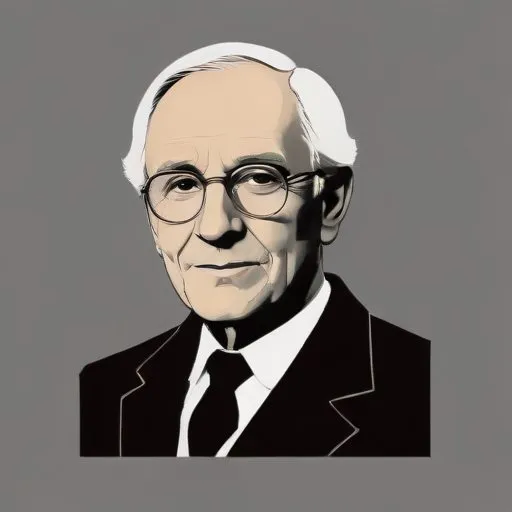
A pioneer in protein chemistry, he discovered the first amino acid sequence of an enzyme, revolutionizing our understanding of biological processes. His work paved the way for major advancements in biochemistry and medicine.
Stanford Moore, an American biochemist, revolutionized the field of biochemistry by shedding light on the intricate structure of ribonuclease, a crucial enzyme that plays a vital role in various biological processes. Alongside Christian B. Anfinsen and William Howard Stein, Moore was awarded the Nobel Prize in Chemistry in 1972 for his groundbreaking work on the structure and catalytic activity of ribonuclease.
Born on September 4, 1913, Moore attended Peabody Demonstration School, now known as University School of Nashville. He graduated summa cum laude from Vanderbilt University in 1935, where he was a member of Phi Kappa Sigma. Moore then pursued his doctoral degree in Organic Chemistry from the University of Wisconsin–Madison, which he completed in 1938.
In 1938, Moore joined the staff of the Rockefeller Institute, later Rockefeller University, where he spent his entire professional career. During World War II, he served in the government, but eventually returned to the university. Moore became Professor of Biochemistry in 1952, a testament to his dedication and expertise in the field.
One of Moore's most significant contributions was the development of the first automated amino acid analyzer in 1958, along with William H. Stein. This innovation facilitated the determination of protein sequences, paving the way for significant advancements in biochemistry. In 1959, Moore and Stein announced the first complete amino acid sequence of an enzyme, ribonuclease, which was later recognized in the Nobel Prize award.
The Nobel Prize in Chemistry in 1972 was a culmination of Moore's tireless efforts to understand the structure and function of ribonuclease. His work not only illuminated the chemical structure of the enzyme but also provided insights into its catalytic activity, significantly advancing the field of biochemistry.
Moore's legacy extends beyond his Nobel Prize. He inspired generations of biochemists and scientists, leaving behind a rich legacy of research and discovery. His work continues to influence the field, with his discoveries remaining a cornerstone of modern biochemistry.
In 1984, C.H. Hirs penned a heartfelt tribute to Moore, sharing personal recollections of his life and times. This poignant piece offers a glimpse into Moore's personality and character, highlighting his dedication to science and humanity.
Today, Moore's legacy lives on through his groundbreaking research, his influence on modern biochemistry, and the countless scientists he inspired throughout his career.
In conclusion, Stanford Moore's pioneering work on the structure of ribonuclease has left an indelible mark on the world of biochemistry. His contributions continue to inspire and inform scientists, solidifying his place as a towering figure in the history of science.
Born in 1922
Pioneering biochemist and academic who deciphered the genetic code, enabling the understanding of how DNA sequences determine amino acid sequences in proteins.
90 Years Old
A Nobel Prize-winning microbiologist and immunologist who discovered the first human oncogene, a gene that causes cancer, and made significant contributions to our understanding of cancer and the immune system.
94 Years Old
A Nobel Prize-winning microbiologist and academic who discovered restriction enzymes, revolutionizing genetic engineering and earning a Nobel Prize in Physiology or Medicine in 1978.
Born in 1916
Pioneering scientist who discovered the structure of DNA, revolutionizing our understanding of genetics and life itself.
98 Years Old
Discovered the structure of DNA, revolutionizing our understanding of genetics and earning a Nobel Prize. Pioneering work in molecular biology has far-reaching implications for medicine and beyond.
Born in 1920
A British scientist who contributed significantly to the discovery of the structure of DNA, providing high-quality X-ray crystallography images that helped James Watson and Francis Crick develop their famous model.
Born in 1916
A Nobel Prize-winning physicist and biologist who contributed significantly to the discovery of the structure of DNA, using X-ray crystallography to produce the first clear images of the molecule.
Born in 1901
Pioneering chemist and peace activist who won two unshared Nobel Prizes, one for chemistry and one for peace, for his groundbreaking work on the nature of the chemical bond and his tireless efforts to promote nuclear disarmament.
