


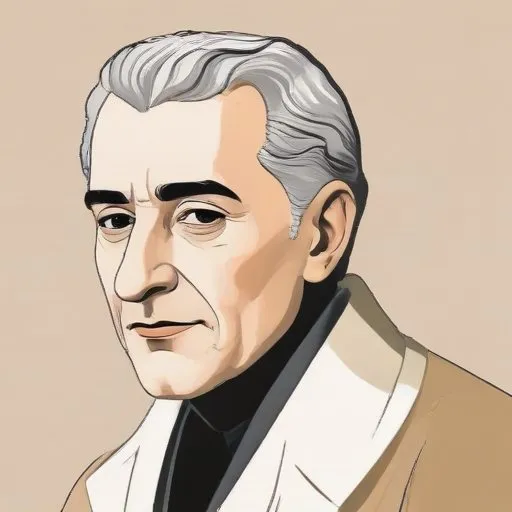
A French poet and author who delved into the mysteries of occultism and esotericism, producing influential works on mysticism and the Kabbalah. His writings continue to inspire modern spiritual seekers.
Stanislas de Guaita, a celebrated French poet and esotericist, is best known for his pivotal role in reviving the Rosicrucian Order, a mystical society that traces its roots back to the 17th century. Through his literary works and occult pursuits, de Guaita captivated the minds of fin-de-siècle Parisians, earning him a revered place in the history of European mysticism.
Born on April 6, 1861, in the castle of Alteville, Moselle, de Guaita hailed from a noble Italian family that had relocated to France. As a marquis, he was accustomed to a life of luxury, which he would later infuse into his literary and occult pursuits. De Guaita's education at the lyceum in Nancy laid the groundwork for his future interests, where he studied chemistry, metaphysics, and the Cabala.
In the 1880s, de Guaita published two collections of poetry, The Dark Muse (1883) and The Mystic Rose (1885), which garnered widespread acclaim. These works showcased his mastery of language and his fascination with the esoteric. De Guaita's poetry became a portal to the mystical, inspiring a generation of writers and artists to explore the realms of the unknown.
Influenced by the writings of Eliphas Lévi, a prominent French occultist, de Guaita became enamored with the teachings of Rosicrucianism. He joined forces with Joséphin Péladan, a fellow poet and occult enthusiast, to rebuild the Rosicrucian Brotherhood. Together, they recruited Gérard Encausse, also known as Papus, a Spanish-born French physician and occultist, to aid in their quest.
In 1888, de Guaita founded the Ordre kabbalistique de la Rose-Croix, a mystical society that aimed to resurrect the esoteric wisdom of the Rosicrucians. This organization attracted a devoted following of intellectuals and artists, who sought to unravel the mysteries of the universe through the lens of mysticism and the occult.
De Guaita's involvement in occult circles led to numerous disputes with other prominent figures in the world of esotericism. His luxurious apartment in Paris became a hotbed of debate and discussion, where poets, artists, and writers would gather to explore the boundaries of the unknown. Despite the controversies that surrounded him, de Guaita remained steadfast in his pursuit of mystical knowledge.
Stanislas de Guaita's contributions to the world of esotericism are immeasurable. Through his poetry, writings, and Rosicrucian activities, he kindled a flame of interest in mystical pursuits that continues to burn bright to this day. His life serves as a testament to the power of curiosity and the human desire to transcend the mundane.
De Guaita's legacy extends far beyond the boundaries of his own life. His influence can be seen in the works of subsequent occultists, writers, and artists who have drawn inspiration from his mystical pursuits. As a poet, esotericist, and Rosicrucian, Stanislas de Guaita remains an enigmatic figure, shrouded in mystery, yet radiating an aura of fascination that continues to captivate audiences to this day.
Born in 1808
A French Romantic poet and translator, known for his vivid and dreamlike writings that explored the realms of fantasy and the human psyche. His works often blurred the lines between reality and imagination.
Born in 1823
A 19th-century French poet and critic, known for his lyrical and expressive poetry, as well as his influential literary criticism that shaped the French Symbolist movement.
Born in 1821
A 19th-century literary mastermind who crafted exquisite poetry and art criticism, exploring the beauty and darkness of human experience.
Born in 1821
A pioneering realist novelist who crafted meticulous, psychologically nuanced portrayals of 19th-century French life, particularly in his iconic novel "Madame Bovary".
Born in 1840
A pioneering figure in naturalist literature, known for his influential novels that exposed social ills and championed reform, such as "Germinal" and "Nana".
Born in 1842
A French poet and critic who pioneered Symbolism, experimenting with language and form to evoke emotions and ideas, and is known for his enigmatic and influential poetry.
Born in 1844
A leading figure of the French Symbolist movement, known for his sensual and emotive poetry that explored themes of love, beauty, and the human condition.
