


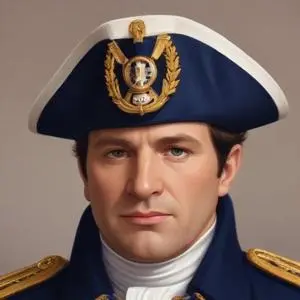
Led a successful naval campaign against the Barbary States, capturing several ships and earning a heroic reputation. Known for his bravery and tactical genius in the early 19th century.
Stephen Decatur, a name synonymous with bravery, leadership, and unwavering dedication, left an indelible mark on the United States Navy. This distinguished commodore is celebrated for his remarkable naval victories against the Barbary states, France, and Britain, cementing the United States' position as a rising power on the global stage.
Born on January 5, 1779, in Worcester County, Maryland, Decatur was destined for a life at sea. His father, Commodore Stephen Decatur Sr., a seasoned naval officer who served during the American Revolution, introduced his son to the world of ships and sailing from a young age. This early exposure kindled a passion in Decatur, which would eventually guide him towards a remarkable career in the U.S. Navy.
At just 19 years old, Decatur joined the U.S. Navy as a midshipman, following in his father's footsteps. His exceptional abilities and unwavering commitment earned him rapid promotions, making him the youngest man to reach the rank of captain in the history of the United States Navy at the age of 25.
Decatur's service in the U.S. Navy was characterized by acts of heroism and exceptional performance. He played a pivotal role in the Barbary Wars, the Quasi-War with France, and the War of 1812 with Britain. His numerous naval victories, including the capture of the USS Philadelphia and the defeat of the British frigate HMS Macedonian, solidified the United States' position as a formidable naval power.
Decatur's natural ability to lead and his genuine concern for the seamen under his command earned him the respect and admiration of his crew. He was renowned for his fair and compassionate treatment of his men, often going above and beyond to ensure their well-being and safety.
Decatur's success and reputation led to a life of luxury and influence in Washington, D.C. society. He built a grand home, known as Decatur House, on Lafayette Square, which became the epicenter of Washington's elite social circle. Decatur counted among his friends prominent figures, including President James Monroe, and was a respected member of the Board of Navy Commissioners.
Decatur's life was cut short in a duel with Commodore James Barron on March 22, 1820. The duel was sparked by Decatur's refusal to retract remarks he had made about Barron's conduct during the Chesapeake-Leopard affair in 1807. This tragic incident marked the end of a legendary career, leaving behind a legacy that continues to inspire generations of naval officers.
Decatur's influence on the U.S. Navy and modern society is immeasurable. He played a crucial role in establishing the United States as a dominant naval power, paving the way for future generations of naval officers. His bravery, leadership, and commitment to his country have made him an enduring symbol of American patriotism and heroism.
Stephen Decatur's unwavering spirit, leadership, and dedication to his country have cemented his place as one of the most revered figures in American naval history. His legacy continues to inspire generations, serving as a beacon of bravery and patriotism.
Born in 1785
American naval commander who led a decisive victory in the Battle of Lake Erie during the War of 1812, securing control of the Great Lakes and paving the way for the defeat of Native American and British forces in the Northwest.
Born in 1774
First commander of the USS Constitution, known for his victories in the War of 1812, particularly the capture of the HMS Java.
Born in 1630
A 17th-century minister, physician, and academic who made significant contributions to Harvard University, serving as its second president and playing a key role in its early development.
Born in 1801
Led the Union Navy to several victories during the American Civil War, including the Battle of Mobile Bay, famously declaring "Damn the torpedoes, full speed ahead!"
Born in 1794
Led a groundbreaking expedition to Japan in 1853, opening up the country to Western trade and commerce, and played a significant role in the modernization of Japan.
