


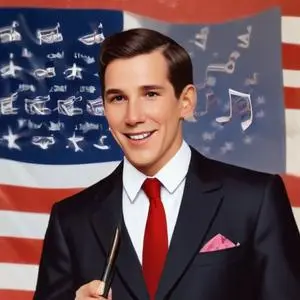
Wrote iconic American folk songs, including "Oh! Susanna" and "My Old Kentucky Home", that are still widely recognized and celebrated today.
Stephen Foster, hailed as the "Father of American Music," was a prolific composer who left an indelible mark on the country's musical landscape. With over 200 songs to his credit, including iconic titles like "Oh Susanna," "Camptown Races," and "Swanee River," Foster's work continues to captivate audiences to this day.
Born on July 4, 1826, in Lawrenceville, Pennsylvania, Foster grew up in a family of Ulster Scots and English descent. His parents, William Barclay Foster and Eliza Clayland Tomlinson Foster, encouraged his early interest in music, which led to him teaching himself to play the clarinet, guitar, flute, and piano.
Foster's education was marked by brief stints at private academies in Allegheny, Athens, and Towanda, Pennsylvania, where he studied English grammar, diction, the classics, and mathematics. However, it was his apprenticeship under Henry Kleber, a German-born music dealer in Pittsburgh, that exposed him to music composition and the works of Mozart, Beethoven, Weber, Mendelssohn, and Schubert.
Foster's compositions often drew inspiration from his surroundings, with songs like "Camptown Races" set in the small town of Athens, Pennsylvania. His music frequently featured themes of nostalgia, love, and social commentary, resonating with audiences of the time.
Foster's music transcended genres and generations, influencing the development of American popular music. His songs continue to be performed and adapted by artists across the country, ensuring his legacy as a cornerstone of American cultural heritage.
Foster's contributions also extended to the realm of education, as his songs were often used in schools to teach music and American history. His music has been featured in films, stage productions, and television shows, introducing his work to new audiences and solidifying his place in American popular culture.
Foster's personal life was marked by periods of financial struggle and illness, which affected his productivity and mood. Despite these challenges, he continued to compose music, often incorporating his own experiences and emotions into his work.
Controversies surrounding Foster's music, particularly his use of minstrelsy and racial stereotypes, have sparked ongoing debates about the cultural significance and problematic nature of his compositions. Despite these criticisms, Foster's music remains a testament to his artistic genius and the complexities of American history.
Foster's contributions to American music have been recognized through numerous honors and tributes. He was inducted into the Songwriters Hall of Fame in 1970, and his music has been featured in the National Museum of American History and the Library of Congress.
The Stephen Foster Memorial, located in Pittsburgh, Pennsylvania, stands as a testament to his legacy, featuring a museum and a collection of Foster's compositions and memorabilia.
Stephen Foster's remarkable career and enduring legacy have cemented his position as one of America's most beloved and influential composers. Through his music, Foster captured the essence of American life, weaving together themes of love, nostalgia, and social commentary to create a unique and lasting cultural legacy.
Born in 1854
Renowned composer and conductor of patriotic American marches, including "The Stars and Stripes Forever," which evokes feelings of national pride and nostalgia.
Born in 1819
A celebrated poet, essayist, and journalist who revolutionized American literature with his collection "Leaves of Grass", known for his free verse style and celebration of the human spirit.
Born in 1809
Led the United States through its Civil War and ultimately abolished slavery, leaving a lasting legacy in American history.
Born in 1777
A skilled orator and compromiser who played a crucial role in shaping the country's early development, particularly through his "American System" economic plan. He's also known for his numerous presidential bids and influential leadership in the Senate.
Born in 1782
A renowned lawyer and politician who served as the 14th United States Secretary of State, known for his exceptional oratory skills and influential role in shaping the country's early development.
Born in 1800
Abolitionist who led the raid on Harpers Ferry, a pivotal event that helped spark the American Civil War, fighting to end slavery through radical action.
Born in 1811
Wrote influential abolitionist novels, including "Uncle Tom's Cabin", which humanized the horrors of slavery and fueled the anti-slavery movement.
