


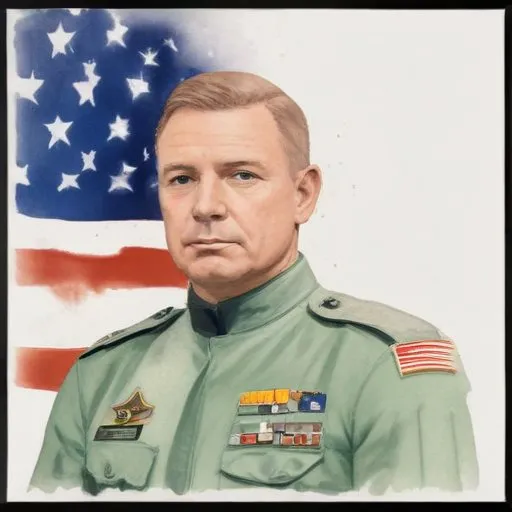
A decorated military pilot and astronaut who flew on the Apollo 14 mission, conducting the first scientific experiments on the Moon's surface. He's also known for taking seeds to space, which later grew into "Moon Trees" back on Earth.
As one of the 24 men who traveled to the Moon, Stuart Roosa's name is etched in the annals of space exploration history. This American aeronautical engineer, smokejumper, and NASA astronaut etched his mark on the Apollo 14 mission, orbiting the Moon 34 times as the Command Module Pilot.
Born on August 16, 1933, in Durango, Colorado, Roosa grew up in Claremore, Oklahoma, with his parents, Dewey and Lorine Roosa. He attended Justus Grade School and Claremore High School, graduating in 1951. Roosa's academic pursuits led him to Oklahoma State University and the University of Arizona, before earning a Bachelor of Science degree in aeronautical engineering with honors from the University of Colorado Boulder in 1960.
Raised amidst the rugged landscapes of Oklahoma, Roosa's affinity for adventure led him to become a smokejumper with the U.S. Forest Service. In 1953, he bravely dropped into at least four active fires in Oregon and California, earning his stripes as a seasoned firefighter. His aerial exploits continued as he graduated from the Aviation Cadet Program at Williams Air Force Base, Arizona, receiving his flight training commission in the U.S. Air Force.
Roose's remarkable career trajectory took him to the U.S. Air Force Aerospace Research Pilot School Class 64C, where he honed his skills as an experimental test pilot at Edwards Air Force Base in California. Before being selected for the astronaut class of 1966, he served as a maintenance flight test pilot at Olmstead Air Force Base, Pennsylvania, flying F101 Voodoo aircraft, and later as a fighter pilot at Langley Air Force Base, Virginia, where he flew F84F Thunderstreak and F100 Super Sabre aircraft.
From January 31 to February 9, 1971, Roosa commanded the Apollo 14 mission, orbiting the Moon in the Command Module Kitty Hawk, while Alan Shepard and Edgar Mitchell descended onto the lunar surface. During this historic mission, Roosa conducted experiments from orbit, cementing his place among the space exploration elite.
Roose's extraordinary life was punctuated by numerous personal milestones, including being one of the 24 men to travel to the Moon. His bravery, expertise, and commitment to space exploration have left an indelible mark on the scientific community. Roosa's legacy extends beyond his extraordinary achievements, inspiring generations of space enthusiasts and explorers.
Stuart Roosa's remarkable journey, marked by bravery, expertise, and a thirst for adventure, has secured his place in the pantheon of space exploration legends. His contributions continue to inspire and motivate, serving as a testament to human ingenuity and the boundless potential of the human spirit.
96 Years Old
First person to walk on the Moon during the Apollo 11 mission, marking a historic milestone in space exploration.
96 Years Old
Second man to walk on the Moon during the Apollo 11 mission, a pioneering astronaut and advocate for space exploration.
96 Years Old
Led the third manned mission to land on the Moon, Apollo 12, and became the third person to walk on its surface. Known for his bold and fearless approach to space exploration.
94 Years Old
One of the 12 humans to walk on the Moon during NASA's Apollo program, known for his moonwalk during Apollo 12 and later becoming a painter, capturing the beauty of space through art.
98 Years Old
Commander of the Apollo 13 mission, known for his heroic efforts in saving his crew after an explosion occurred on board. He's an iconic figure in space exploration history.
95 Years Old
Astronaut and pilot who flew on Apollo 13, famously uttering "Houston, we've had a problem" during the mission's critical malfunction. He played a crucial role in saving the crew from disaster.
92 Years Old
Astronaut and engineer who flew on the Apollo 13 mission, known for his bravery and ingenuity during the mission's critical failure. He also flew on the Enterprise during the Approach and Landing Tests.
