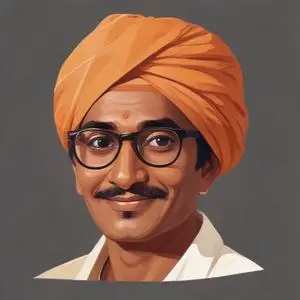
Subramania Bharati: The Revolutionary Poet of Tamil Literature
A Pioneer of Modern Tamil Poetry and Indian Independence
Subramania Bharati, fondly known as Bharathi or Bharathiyaar, was a Tamil writer, poet, journalist, and Indian independence activist who left an indelible mark on Tamil literature and India's struggle for freedom. Born in 1882, he is celebrated for his patriotic songs composed during the Indian Independence movement, which continue to inspire generations.
A Life of Passion and Purpose
Bharati's early life was marked by a passion for learning and a desire to reform society. Born in the village of Ettayapuram in Tirunelveli district, he received his early education in Tirunelveli. Later, he spent time in Varanasi, where he was exposed to Hindu theology and new languages. This eclectic background had a profound impact on his writing, which would eventually reflect his concerns for social and religious reform.
A Writer and Reformer
Bharati's writing was a reflection of his commitment to social reform. He fought for the emancipation of women, against child marriage, and vehemently opposed the caste system. His poetry and journalism were infused with a sense of purpose, aimed at awakening the Indian people to the need for freedom and social change.
Awards and Honors
Bharati's contributions to Tamil literature were recognized early on. In 1949, his works were nationalized, a testament to his impact on Indian literature and culture.
Major Works
Bharati's literary output was remarkable, with works spanning political, social, and spiritual themes. Some of his notable works include:
- Panjali Sabatham
- Kannan Paatu
- Kuyil Paatu
- Paapa Paatu
- Chinnanchriu Kiliye
- Vinayagar Nanmanimalai
- Tamil translations of Patanjali's Yoga Sutra and Bhagavat Gita
Exile and Persecution
Bharati's activism and writing did not go unnoticed by the British colonial authorities. In 1908, an arrest warrant was issued, forcing him to flee to French-controlled Pondicherry, where he lived in exile for nearly a decade.
Personal Life and Tragedy
Bharati's personal life was marked by tragedy. He was attacked by an Indian elephant, which he had fed daily, at the Thiruvallikeni Parthasarathy Temple. He died a few months later, on September 11, 1921, at the age of 39.
Legacy
Subramania Bharati's legacy extends far beyond his remarkable literary output. He remains an icon of Indian independence, a champion of social reform, and a beacon of inspiration for generations of writers, poets, and activists. His poetry and songs continue to inspire and educate, a testament to his enduring impact on Tamil literature and Indian culture.
FAQ
What was Subramania Bharatis role in Indian journalism?
Subramania Bharati was a pioneering journalist and editor who played a key role in promoting Indian independence and social reform through his writings.
What type of poetry did Subramania Bharati write?
Subramania Bharati wrote patriotic and inspirational poetry that aimed to awaken national consciousness and promote social change in India.
How did Subramania Bharati influence the Indian independence movement?
Subramania Bharatis writings and activism had a significant impact on the Indian independence movement, inspiring many to join the struggle for freedom.
What were Subramania Bharatis views on Indian culture?
Subramania Bharati believed in the importance of preserving Indian culture and promoting national pride, and his writings reflected this.
What is Subramania Bharatis legacy in Indian literature?
Subramania Bharatis legacy in Indian literature is that of a visionary poet and journalist who inspired generations to fight for independence and social change.