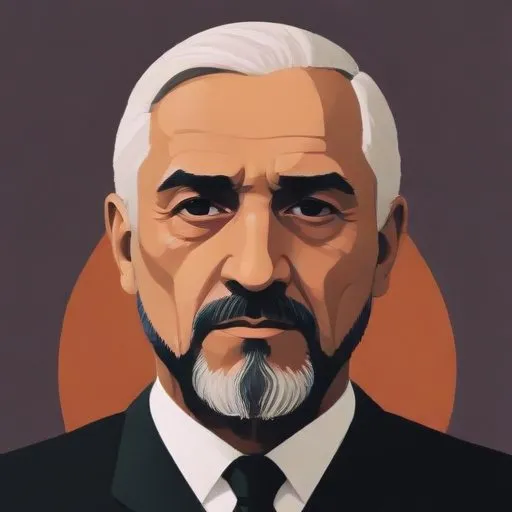
Sulejman Tihi: The Unsung Hero of Bosnian Politics
A Leader in Turbulent Times
Sulejman Tihi was a Bosnian politician who served as the 4th Bosniak member of the Presidency of Bosnia and Herzegovina from 2002 to 2006, bringing a sense of hope and stability to a nation ravaged by war. As a member and later president of the Party of Democratic Action (SDA), Tihi played a pivotal role in shaping the country's political landscape during a period of great turmoil.
Early Life and Education
Born on November 26, 1951, in Bosanski amac, Tihi graduated from the Faculty of Law at the University of Sarajevo in 1975. He returned to his hometown, where he worked as a judge, prosecutor, and lawyer, earning a reputation for his fairness and dedication to justice.
The Bosnian War: A Personal Struggle
When the Bosnian War broke out in April 1992, Tihi's life took a dramatic turn. He was captured by Serb soldiers and subjected to torture in three concentration camps in Bosnia and Serbia. Despite this harrowing experience, Tihi emerged with a strengthened resolve to fight for his country's freedom and democracy.
Rise to Prominence
In 1990, Tihi became a founding member of the SDA, a party committed to promoting democratic values and unity among Bosniaks. He quickly rose through the ranks, becoming the party's president in 2001. Two years later, he was elected Bosniak member of the Bosnian Presidency, serving from 2002 to 2006.
A Legacy of Leadership
Tihi's presidency was marked by his efforts to rebuild and reconcile a war-torn nation. He participated in numerous constitutional reform talks, including the Prud Agreement between 2008 and 2009. After leaving the presidency, he continued to serve as a member of the national House of Peoples from 2007 until his passing in 2014.
Personal Milestones and Tragedy
Tihi's life was marked by both personal and professional triumphs, as well as tragedy. He battled health issues, including cancer, before passing away on September 25, 2014, at the age of 62. He was laid to rest in his hometown of Bosanski amac two days later, surrounded by family, friends, and admirers.
Legacy and Impact
Sulejman Tihi's life was a testament to the power of resilience and dedication. Through his leadership and service, he inspired a generation of Bosnians to strive for a brighter future. Today, his legacy continues to inspire and motivate those working towards a more united and prosperous Bosnia and Herzegovina.
- Key positions held: 4th Bosniak member of the Presidency of Bosnia and Herzegovina (2002-2006), President of the Party of Democratic Action (SDA), Member of the national House of Peoples (2007-2014)
- Notable achievements: Participated in constitutional reform talks, including the Prud Agreement, worked towards reconciliation and rebuilding in post-war Bosnia and Herzegovina
- Personal struggles: Captured and tortured during the Bosnian War, battled health issues, including cancer, before passing away in 2014
FAQ
What is Sulejman Tihićs role in Bosnian politics?
Sulejman Tihić was a prominent Bosnian lawyer, judge, and politician who served as the President of the Federation of Bosnia and Herzegovina from 2002 to 2006. He was a key figure in the countrys post-war reconstruction effort.
What is Sulejman Tihićs stance on Bosnian unity?
Sulejman Tihić was a strong advocate for Bosnian unity and worked to promote reconciliation and cooperation between the countrys different ethnic groups.
What is Sulejman Tihićs experience as a judge?
Sulejman Tihić has extensive experience as a judge, having served on the Constitutional Court of Bosnia and Herzegovina and the Supreme Court of the Federation of Bosnia and Herzegovina.
What is Sulejman Tihićs role in the Bosnian War?
Sulejman Tihić played a significant role in the Bosnian War, serving as a negotiator and mediator between the different warring factions. He was instrumental in brokering several key ceasefires and peace agreements.
What is Sulejman Tihićs legacy in Bosnia and Herzegovina?
Sulejman Tihićs legacy in Bosnia and Herzegovina is one of statesmanship and dedication to the countrys reconstruction and development. He is widely respected for his commitment to democracy, human rights, and the rule of law.