


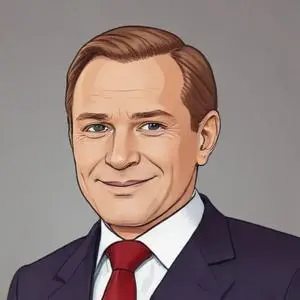
A Swedish politician who served as Prime Minister from 1946 to 1969, leading the country through a period of significant social and economic reform. He's known for his progressive policies and strong leadership.
Tage Erlander, the Swedish politician and statesman, is best known for his remarkable 23-year tenure as the Prime Minister of Sweden from 1946 to 1969, during which he transformed the country into one of the world's most advanced welfare states.
Under his leadership, Sweden's "Swedish Model" reached its peak, with Erlander's pragmatic and moderate approach paving the way for a comprehensive social welfare system, universal health insurance, and a growing public sector.
Born on June 13, 1901, in Rånstad, Sweden, Erlander grew up in a poor family and went on to study at Lund University.
In 1930, he was elected to Lund's municipal council, and two years later, he became a member of the Riksdag, Sweden's parliament.
Erlander's political career took a significant turn in 1944 when he became a member of the World War II coalition government.
Following the death of Prime Minister Per Albin Hansson in October 1946, Erlander unexpectedly rose to the leadership, becoming the head of the government and leader of the Social Democratic Party.
Erlander's moderation and self-irony earned him approval from the liberal-conservative opposition, allowing him to implement reforms such as:
Notably, Erlander stopped short of introducing widescale nationalizations and kept tax levels below the average OECD levels at the time.
For most of his time in power, Erlander ran a minority government of the Social Democrats.
From 1951 to 1957, he formed a coalition with the Farmers League, and despite losing the majority in the 1956 general election, he remained in power due to the Social Democrats' majority in the upper house.
A snap election in 1958 reversed this, allowing Erlander to maintain his position.
Erlander's uninterrupted 23-year tenure as head of the government remains the longest in Sweden and in any modern Western democracy.
His commitment to social welfare and pragmatic approach have had a lasting impact on Swedish politics and society, earning him a reputation as one of the most significant politicians in Swedish history.
Today, Erlander's legacy continues to influence Swedish politics, and his reforms serve as a model for other countries striving to create a more equitable society.
99 Years Old
A Swedish statesman who served as Prime Minister of Sweden from 1969 to 1976 and 1982 to 1986, known for his progressive policies and international diplomacy. Assassinated in 1986, his murder remains unsolved.
91 Years Old
A Swedish economist and politician who served as the Prime Minister of Sweden from 1986 to 1991 and again from 1994 to 1996, known for his social democratic policies and economic reforms.
77 Years Old
The 31st Prime Minister of Sweden, serving from 1996 to 2006, known for leading the country through a period of economic reform and social change. He's also recognized for his efforts to strengthen the European Union.
69 Years Old
The leader of Sweden's Social Democratic Party, serving as Prime Minister from 2014 to 2021, known for his efforts to balance economic growth with social welfare and environmental protection.
77 Years Old
Served as Prime Minister of Sweden from 1991 to 1994, known for his efforts to reform the Swedish economy and his role in international diplomacy. Led the country's accession to the European Union.
Born in 1899
A Swedish economist and politician who won the Nobel Prize for developing the Heckscher-Ohlin model, which explains international trade and economic growth.
