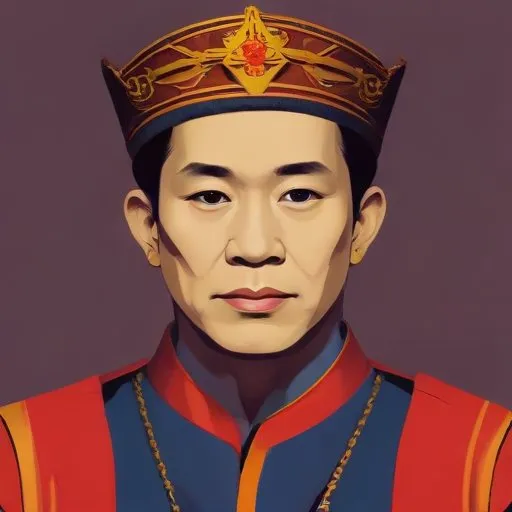
Tự Đức

Tự Đức

Tự Đức was born on September 22nd, 1829

Full Name: Tự Đức
Profession: Emperor
Nationality: Vietnamese
Birth Year: 1829
Death Year: 1883
Place of Birth: Huế, Vietnam
Reign: 1848-1883
Notable Event: Franco-Vietnamese War

Written by: Grace Lee Grace Lee

Tự Đức: The Confucian Emperor of Vietnam

Tự Đức, also known as Nguyễn Phúc Hồng Nhậm, was the fourth emperor of the Nguyễn dynasty of Vietnam, ruling from 1847 to 1883. He is best known for his commitment to Confucianism and his opposition to foreigners and innovation, earning him the nickname "The Confucian Emperor."

Early Life and Accession

Tự Đức was born on September 22, 1829, as the son of Emperor Thiệu Trị. He succeeded his father as emperor in 1847, but his accession was met with resistance from his elder half-brother, Prince Hồng Bồ, who had been bypassed for the throne.

Reign and Challenges

Tự Đức's reign was marked by a series of natural disasters and epidemics, including a cholera epidemic that struck Vietnam and Cambodia in 1849, claiming the lives of an estimated 600,000 to 800,000 people. The royal archives report that the epidemic was followed by periods of heavy rainfall, droughts, and typhoons, which ravaged the country.

Despite these challenges, Tự Đức remained committed to his Confucian values, which guided his policies and decisions. He was known for his strict adherence to tradition and his resistance to foreign influence, which led to conflicts with European powers.

Conflict with Prince Hồng Bồ

Tự Đức's decision to bypass his elder half-brother, Prince Hồng Bồ, for the throne led to a bitter rivalry between the two. Prince Hồng Bồ plotted rebellion against Tự Đức, gathering support from Confucianists who were angered by the bypass, as well as L dynasty supporters.

Legacy

Tự Đức's reign lasted for 36 years, making him one of the longest-reigning emperors of the Nguyễn dynasty. Despite facing numerous challenges, he remained committed to his Confucian values, which continue to shape Vietnamese culture and society.

Today, Tự Đức is remembered as a complex figure, whose commitment to tradition and opposition to foreign influence continue to influence Vietnamese identity and politics.

Personal Milestones and Key Life Events

Philosophical Contributions and Beliefs

Tự Đức's commitment to Confucianism was unwavering, and he saw it as the foundation of Vietnamese culture and society. He believed in the importance of education, morality, and social hierarchy, and his policies reflected these values.

Impact on Modern Society

Tự Đức's legacy continues to shape Vietnamese identity and politics. His commitment to Confucianism has influenced Vietnamese values and culture, and his resistance to foreign influence has contributed to Vietnam's independence and sovereignty.

Timeline
1829
Born in Hue
Tự Đức was born on September 22, 1829, in Hue, Vietnam, to the Nguyễn dynasty.
1848
Became Emperor of Vietnam
Tự Đức became the emperor of Vietnam, ruling the country for over 30 years and overseeing significant reforms and modernization efforts.
1862
Signed Treaty with France
Tự Đức signed a treaty with France, ceding several provinces to the French and recognizing French protectorate over Vietnam.
1874
Begun Reforms
Tự Đức began a series of reforms aimed at modernizing Vietnams government, education, and economy.
1883
Died in Hue
Tự Đức passed away on July 19, 1883, in Hue, leaving behind a legacy as one of Vietnams most important emperors.
Tự Đức

Tự Đức Quiz

What was the primary achievement of Tự Đức in unifying Vietnam?

Score: 0/5
FAQ
What were Tự Đứcs major reforms during his reign?
Tự Đức implemented several major reforms during his reign, including the modernization of the Vietnamese army, the establishment of a new system of taxation, and the promotion of education and infrastructure development.
What was Tự Đứcs response to French colonization?
Tự Đức initially attempted to resist French colonization, but ultimately signed the Treaty of Hué in 1863, which established French protectorates over southern Vietnam. He later attempted to resist French expansion, but was ultimately forced to sign the Treaty of 1874, which ceded further territory to France.
What was Tự Đứcs relationship like with the French?
Tự Đứcs relationship with the French was complex and tumultuous, marked by periods of resistance and cooperation. He was ultimately forced to accept French domination, but continued to promote Vietnamese independence and sovereignty.
What was Tự Đứcs impact on Vietnamese culture?
Tự Đức was a patron of the arts and literature, and his court attracted many prominent scholars and writers. He also promoted the development of Vietnamese culture, including the establishment of the Imperial Academy and the promotion of Confucianism.
How did Tự Đứcs reign impact the development of modern Vietnam?
Tự Đứcs reign marked the beginning of modern Vietnams struggle for independence and self-determination. His efforts to modernize Vietnam and resist French colonization paved the way for later nationalist movements and the eventual reunification of North and South Vietnam.

Related People:

Võ Nguyên Giáp

Born in 1911

A renowned Vietnamese general and politician who played a crucial role in the Vietnam War, leading the North Vietnamese army to victory against the US and South Vietnam. He's revered as a national hero for his military strategies and patriotic spirit.

Born in 1906

Vietnam's second prime minister, a key figure in the country's early years, known for his role in shaping the nation's government and politics. He played a crucial part in Vietnam's struggle for independence and unity.