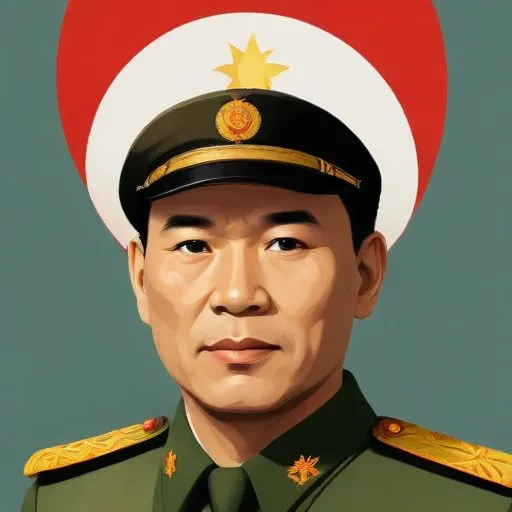
Pham Van Dong: The Visionary Leader of Vietnam
A Life Dedicated to Independence and Unity
Pham Van Dong was a Vietnamese politician who left an indelible mark on the country's history, serving as the Prime Minister of North Vietnam from 1955 to 1976 and later as the Prime Minister of reunified Vietnam from 1976 to 1987. With a tenure spanning over 30 years, he is the longest-serving Prime Minister of Vietnam, earning him a revered position among the country's leaders.
Early Life and Revolutionary Roots
Born on March 1, 1906, in Quang Ngai Province, central Vietnam, Pham Van Dong hailed from a family of civil servants. His early life was shaped by the anti-colonial sentiments of his time, and at the age of 18, he participated in a school sit-in to mourn the death of the revered patriot Phan Chu Trinh. This experience sparked his interest in the Communist Party and the struggle for Vietnamese independence.
Dong's revolutionary journey began in 1926, when he traveled to Guangzhou, China, to attend a training course led by Nguyen Ai Quoc, later known as Ho Chi Minh. He soon became a member of the Vietnamese Revolutionary Youth League, the precursor to the Communist Party of Vietnam (CPV). His dedication to the cause led to his arrest in 1929, and he was sentenced to ten years in prison. However, he was released in 1936 under the general amnesty granted by the French government.
Rise to Power and Leadership
Upon his release, Dong began operating in Hanoi, and by 1940, he had risen to prominence as a key member of the CPV. His leadership skills and commitment to the revolutionary cause earned him the respect of Ho Chi Minh, who became his mentor and close associate. In 1955, Dong was appointed Prime Minister of North Vietnam, a position he held until 1976, when he became the Prime Minister of reunified Vietnam.
Reunification and Economic Development
Dong played a crucial role in reunifying North and South Vietnam, following the fall of Saigon in 1975. As Prime Minister, he oversaw the country's post-war reconstruction and economic development, focusing on agriculture, industry, and infrastructure. His leadership during this period laid the foundation for Vietnam's modernization and growth.
Philosophical Contributions and Beliefs
Pham Van Dong's philosophical contributions were deeply rooted in Marxist-Leninist ideology, which emphasized the importance of class struggle and the role of the working class in shaping society. He believed in the principle of democratic centralism, which combined the principles of democracy and centralism to achieve collective leadership and decision-making.
Personal Milestones and Key Life Events
- 1925: Participated in a school sit-in to mourn the death of Phan Chu Trinh
- 1926: Attended a training course led by Ho Chi Minh in Guangzhou, China
- 1929: Arrested and sentenced to ten years in prison
- 1936: Released from prison under general amnesty
- 1940: Rose to prominence as a key member of the CPV
- 1955: Appointed Prime Minister of North Vietnam
- 1976: Became Prime Minister of reunified Vietnam
- 1987: Retired as Prime Minister under the presidency of Le Duc Anh and Nguyen Van Linh
Influence on Modern Society
Pham Van Dong's legacy extends beyond his political career. He played a significant role in shaping Vietnam's modern society, economy, and culture. His commitment to education, healthcare, and social welfare has had a lasting impact on the country's development.
Quotes and Memorable Sayings
- "The revolution is not only a struggle for independence and democracy but also a struggle for socialism."
- "We must build a strong and united Vietnam, where all people can live happily and equally."
Legacy and Historical Context
Pham Van Dong's legacy is inextricably linked to Vietnam's struggle for independence and reunification. He worked tirelessly to build a strong and united Vietnam, and his contributions to the country's development and growth are still felt today. As a close associate of Ho Chi Minh and a key player in the CPV, Dong's life and career reflect the tumultuous history of Vietnam's 20th century.
FAQ
What was Phạm Văn Đổngs role in Vietnamese politics?
Phạm Văn Đổng was a key figure in Vietnamese politics, serving as the 2nd Prime Minister of Vietnam and playing a crucial role in the countrys struggle for independence.
What were Phạm Văn Đổngs achievements as Prime Minister?
During his tenure as Prime Minister, Phạm Văn Đổng implemented a range of reforms, including land reform, education reform, and economic development initiatives.
Did Phạm Văn Đổng serve in the Vietnamese army?
Phạm Văn Đổng served in the Vietnamese army during the First Indochina War, where he fought against French colonial forces.
What was Phạm Văn Đổngs relationship with Ho Chi Minh?
Phạm Văn Đổng was a close ally and friend of Ho Chi Minh, the founder of modern Vietnam, and the two men worked together to achieve independence for their country.
What is Phạm Văn Đổngs legacy in Vietnamese history?
Phạm Văn Đổngs legacy in Vietnamese history is that of a patriot and statesman, who dedicated his life to the service of his country and people.