


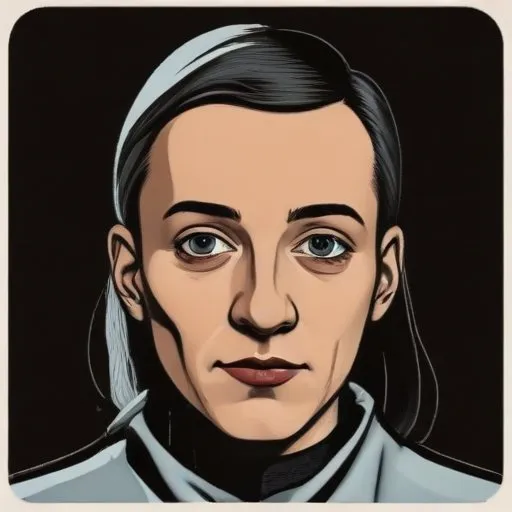
A Flemish Baroque painter, known for his dramatic and emotive depictions of mythological and biblical scenes, often featuring intense lighting and vivid colors.
Theodoor Rombouts was a renowned Flemish painter, celebrated for his captivating Caravaggesque genre scenes that depicted lively, dramatic gatherings, as well as his poignant religiously-themed works. He is regarded as the primary and most original representative of Flemish Caravaggism, a style that emerged in response to the influential work of Caravaggio.
Born on July 2, 1597, in Antwerp, Belgium, Rombouts was the son of Bartholomeus Rombouts, a wealthy tailor, and Barbara de Greve. He received his initial training in painting from Frans Franchois van Lanckvelt in 1608. Later, he studied under the tutelage of Abraham Janssens and possibly Nicolas Rgnier in Antwerp.
In 1616, Rombouts embarked on a journey to Rome, where he remained until 1625. During his time in the Eternal City, he was recorded in the Roman parish of Sant'Andrea delle Fratte, alongside two other Flemish painters, Francesco Tornelli Tournier and Robert d'Orteil. It is believed that he may have met the Caravaggist Bartolomeo Manfredi during a visit to Florence and even worked for Cosimo II de Medici. In 1622, he also traveled to Pisa, further enriching his artistic experiences.
Upon his return to Antwerp in 1625, Rombouts became a master of the prestigious Guild of St. Luke. This marked a significant milestone in his career, as it established him as a respected artist in his community.
In 1627, Rombouts married Anna van Thielen, a member of a noble family from the Mechelen area. As her family was not from Antwerp, Rombouts had to obtain a dispensation from the Antwerp City Council to wed her outside Antwerp, in order to retain his Antwerp citizenship rights. The couple had a daughter in the following year. Anna's brother, Jan Philip van Thielen, became Rombouts' pupil in 1631, although he would eventually specialize in still-life painting.
Between 1628 and 1630, Rombouts served as deacon of the Guild of St. Luke in Antwerp. During this period, he collaborated with other artists on the decorations for the Joyous Entry of Cardinal-Infant Ferdinand in 1635.
Theodoor Rombouts' contributions to the world of art are immeasurable. His innovative style, which blended the dramatic lighting of Caravaggio with the genre scenes of Flemish painting, left an indelible mark on the art world. Today, he is recognized as one of the most important Flemish painters of his era, and his works continue to inspire and captivate art lovers around the world.
Theodoor Rombouts' remarkable life and artistic journey serve as a testament to the power of creativity, innovation, and dedication. His contributions to the world of art continue to inspire and delight, ensuring his place as one of the most beloved and respected Flemish painters of all time.
Born in 1577
A renowned Flemish painter and diplomat, famous for his vivid and emotive Baroque-style masterpieces, particularly his lush nudes and dramatic altarpieces.
Born in 1599
A renowned Flemish-English painter and etcher, famous for capturing the essence of 17th-century European aristocracy through his exquisite portraits, characterized by dramatic lighting and subtle emotional depth.
