


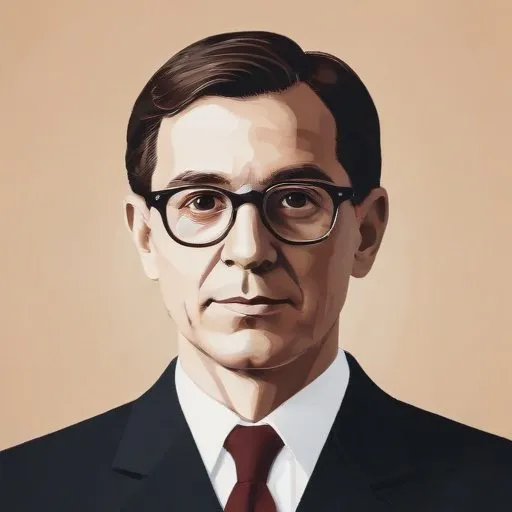
A chemical engineer, patent attorney, and writer who explored the intersection of science and fiction, predicting futuristic concepts like e-books and credit cards. Known for his pioneering science fiction stories and futuristic ideas.
Theodore L. Thomas was a multifaceted individual, renowned for his groundbreaking work as a chemical engineer and patent attorney, as well as his foray into the realm of science fiction, penning over 50 short stories and collaborating on two novels with the esteemed Kate Wilhelm.
Thomas's writing career spanned from the early 1950s to the late 1970s, during which he explored the intersection of science, technology, and human experience through his works. His unique blend of technical expertise and imagination earned him recognition within the science fiction community, including a 1967 Nebula Award nomination for Best Short Story, "The Doctor," and a Hugo Award nomination.
Thomas's science fiction oeuvre includes notable collaborations with Kate Wilhelm, such as "The Clone" (1965) and "The Year of the Cloud" (1970). His short stories, published in esteemed magazines like Astounding Science Fiction, Fantasy and Science Fiction, and If, showcased his ability to craft compelling narratives that probed the boundaries of human knowledge and the consequences of technological advancements.
Thomas's writing often reflected his fascination with the human condition, the role of science in society, and the moral implications of technological progress. His stories frequently explored the tensions between individual freedom and collective responsibility, as well as the consequences of playing with the fundamental building blocks of life.
Through his work, Thomas subtly questioned the notion of scientific objectivity, highlighting the inherent biases and assumptions that underlie even the most rigorous scientific inquiry. His narratives often blurred the lines between science fact and fiction, inviting readers to reexamine their assumptions about the nature of reality itself.
Born on April 13, 1920, Theodore L. Thomas grew up in an era of rapid scientific and technological advancement, an environment that would later influence his writing. Although little is known about his personal life, his professional accomplishments and literary contributions speak to a life dedicated to exploring the intersection of science, technology, and humanity.
Thomas's passing on September 24, 2005, marked the end of an era, but his literary legacy continues to inspire new generations of science fiction enthusiasts and writers.
Theodore L. Thomas's contributions to science fiction have left an indelible mark on the genre. His exploration of the human condition, technological ethics, and the consequences of scientific progress continue to resonate with readers today, offering a unique window into the complexities of the human experience.
As we navigate the complexities of the 21st century, Thomas's works serve as a reminder of the importance of responsible scientific inquiry, the need for nuanced consideration of technological advancements, and the power of human imagination to shape the future.
Theodore L. Thomas's remarkable journey as a chemical engineer, patent attorney, and science fiction author has left an enduring impact on the literary and scientific communities. His legacy serves as a testament to the transformative power of human imagination, inspiring future generations to explore the infinite possibilities at the intersection of science, technology, and human experience.
Born in 1912
A renowned chemist and academic who discovered and isolated ten transuranic elements, including plutonium, and was a leading figure in the development of nuclear energy. His work had a profound impact on our understanding of the periodic table and the properties of atomic nuclei.
Born in 1893
A pioneering scientist who discovered deuterium, a heavy isotope of hydrogen, and later contributed to the discovery of many other elements, revolutionizing our understanding of the universe.
Born in 1901
A pioneer in nuclear physics, known for leading the team that developed the first nuclear reactor and playing a crucial role in the development of the atomic bomb.
Born in 1918
A brilliant physicist and engineer who pioneered quantum mechanics and famously explained complex concepts in simple terms, making science accessible to all.
Born in 1901
Pioneering chemist and peace activist who won two unshared Nobel Prizes, one for chemistry and one for peace, for his groundbreaking work on the nature of the chemical bond and his tireless efforts to promote nuclear disarmament.
Born in 1901
Invented the cyclotron, a type of particle accelerator, revolutionizing nuclear physics and paving the way for major breakthroughs in medicine, energy, and materials science.
Born in 1904
Leading the development of the atomic bomb during World War II, this brilliant mind made groundbreaking contributions to theoretical physics, pushing the boundaries of human understanding.
Born in 1906
A renowned physicist and Nobel laureate who made groundbreaking contributions to our understanding of the universe, particularly in the fields of nuclear physics and astrophysics.
