


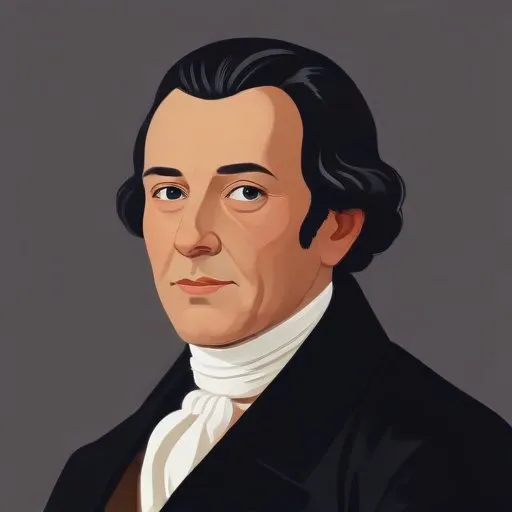
A prominent historian and author who wrote extensively on British history, particularly the reign of Queen Anne, and was a key figure in the development of the British Museum's manuscript collection.
Thomas Birch, a notable English historian, is best known for his meticulous and thorough approach to historical research, as well as his unconventional fishing methods. Born on November 23, 1705, in Clerkenwell, Birch's contributions to the field of history and his quirky personality have left an indelible mark on the annals of British intellectual history.
Birch's early life was marked by a strong desire for knowledge, which often took precedence over his family's business interests. As a Quaker, he did not attend university, but his passion for learning led him to pursue a career in the Church of England. He was ordained as a deacon in 1730 and a priest in 1731, eventually becoming a strong supporter of the Whig party.
Birch's Whig sympathies earned him the favor of Philip Yorke, later Lord Chancellor and first Earl of Hardwicke, which significantly contributed to his subsequent preferments. Throughout his career, Birch held various benefices in different counties, eventually settling in London. He was elected a fellow of the Royal Society in 1735 and became its secretary from 1752 to 1765, during which time he played a crucial role in promoting historical research.
Birch's love for fishing was legendary, and his unorthodox methods often raised eyebrows. Dressed in a tree-like costume, complete with fake branches and a fishing rod disguised as a spray of blossoms, he would stand by the side of a stream, waiting for unsuspecting fish to take the bait. This eccentric approach to angling earned him a reputation as a master of disguise and deception.
Birch was a prolific writer and correspondent, engaging with prominent figures of his time, including Samuel Johnson. Although Horace Walpole questioned his taste and judgment, Birch's historical works remain a testament to his dedication and erudition. His publications reflect his meticulous research and attention to detail, making him a respected figure in the field of history.
Birch's bequest to the British Museum, including his books and manuscripts, has greatly enriched the institution's collection. His legacy extends beyond his writings, as his contributions to the field of history have inspired generations of scholars. His unique blend of intellectual curiosity and whimsical eccentricity has cemented his place in the pantheon of British intellectual history.
Thomas Birch's remarkable life, a blend of intellectual rigor and eccentric whimsy, continues to inspire and fascinate historians and scholars to this day.
Born in 1737
Wrote "The History of the Decline and Fall of the Roman Empire", a monumental work that shaped the field of historiography and remains a classic in the study of ancient civilizations.
Born in 1711
A Scottish Enlightenment thinker who developed influential ideas on morality, ethics, and human nature, and is considered one of the most important figures in the history of Western philosophy.
Born in 1721
A Scottish historian who wrote influential works on the history of Scotland, America, and India, shaping the way people understood these regions and their past.
Born in 1643
A Scottish bishop, historian, and theologian who wrote influential works on the English Reformation and served as a close advisor to King William III. He's most known for his historical writings and ecclesiastical reforms.
Born in 1643
An Anglican priest and historian who wrote extensively on the history of London and its churches, producing detailed and influential works that remain valuable resources for scholars today.
77 Years Old
A South African-born British journalist and politician who wrote for The Times and presented BBC's Great Lives, known for his witty and insightful commentary on politics and culture.
