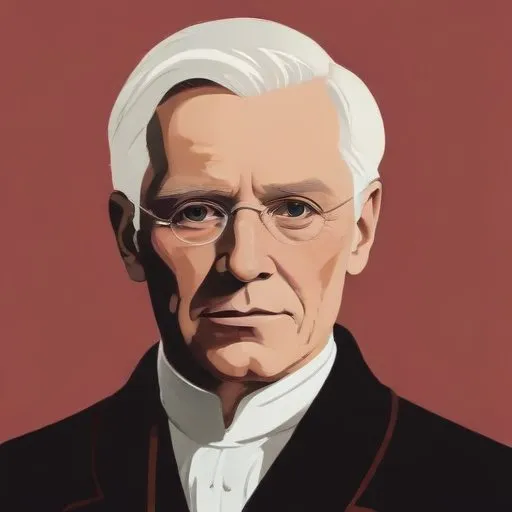
Thomas Blackwell: The Pillar of the Scottish Enlightenment
A Pioneer in Classical Scholarship
Thomas Blackwell, the younger, was a stalwart figure in the Scottish Enlightenment, renowned for his groundbreaking contributions to classical scholarship, history, and literature. His works, which include the seminal
An Enquiry into the Life and Writings of Homer and
Memoirs of the Court of Augustus, cemented his status as a luminary of the 18th century intellectual landscape.
Early Life and Education
Born on August 4, 1701, in Aberdeen, Scotland, Thomas Blackwell was the son of Rev. Dr. Thomas Blackwell and Christian Johnston. He received his early education at the Grammar School of Aberdeen and later pursued Greek and philosophy at Marischal College, where he graduated with an M.A. in 1718. This academic foundation would lay the groundwork for his future endeavors as a classical scholar.
Academic Career and Influences
Blackwell's academic career was marked by rapid ascent. He was appointed to the chair of Greek at Marischal College in 1723 and later became the college's principal in 1748. As an educator, he mentored several notable figures, including Principal George Campbell, Robert Chambers, Alexander Gerard, and
James Beattie. His intellectual circle also extended to James Macpherson, Lord Monboddo, and Adam Ferguson, all of whom were influenced by his ideas.
Major Works and Contributions
Blackwell's magnum opus,
An Enquiry into the Life and Writings of Homer, published in 1735, is a testament to his erudite scholarship. In this groundbreaking work, he posited that Homer's genius was a product of his environment and cultural inheritance. This innovative perspective sparked a new wave of interest in classical literature and mythology.
Other notable works include
Letters Concerning Mythology (1748) and
Memoirs of the Court of Augustus (1753-1763), which further solidified his reputation as a master of classical studies.
Personal Life and Legacy
In 1751, Blackwell married Barbara Black, with whom he had no children. However, the couple took Alexander Fordyce, Barbara's brother, under their wing and educated him.
Thomas Blackwell's life was cut short by a consumptive illness, which claimed his life in Edinburgh on March 6, 1757. His remains were interred in Greyfriars Churchyard.
Impact on Modern Society
Blackwell's contributions to classical scholarship and the Scottish Enlightenment have had a lasting impact on modern society. His ideas on the importance of cultural context and environmental influences on artistic genius continue to resonate in fields such as literature, art, and anthropology.
Philosophical Contributions and Beliefs
Thomas Blackwell's work was underpinned by a deep understanding of the interconnectedness of human experience. He believed that cultural and environmental factors played a significant role in shaping human creativity and achievement. This nuanced perspective has had a profound influence on our understanding of the creative process and the role of context in shaping artistic expression.
Historical Context and Legacy
Blackwell's life and work are inextricably linked to the Scottish Enlightenment, a period of intellectual and cultural transformation that saw the emergence of thinkers such as
David Hume,
Adam Smith, and Lord Kames. His legacy serves as a testament to the power of human curiosity and the importance of interdisciplinary approaches to understanding the human experience.
In the words of Thomas Blackwell, "The highest wisdom is to understand that all men are mad, and that the best of them are only less mad than the others."