


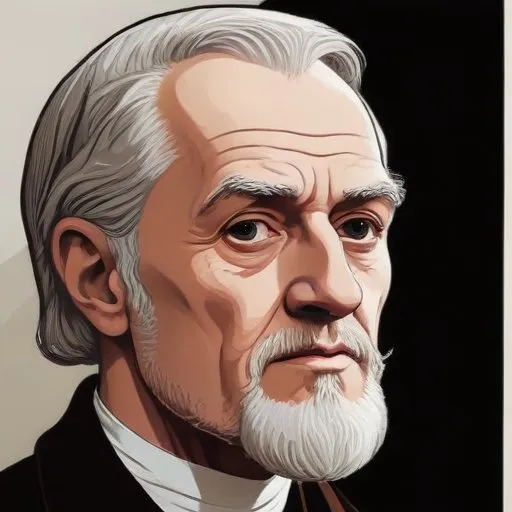
A 17th-century Presbyterian minister who wrote influential books on theology and philosophy, particularly on the nature of sin and redemption. His works remain widely read and studied in Reformed Christian circles today.
Thomas Boston, a renowned Scottish Presbyterian church leader, theologian, and philosopher, is best known for his influential works that continue to shape Scottish Christianity to this day. His most celebrated book, Human Nature in Its Fourfold State, is considered one of the religious classics of Scotland, offering profound insights into human nature and the nature of God.
Boston was born on March 17, 1676, in Duns, Scotland, to John Boston and Alison Trotter, both devout Covenanters. He was educated at the University of Edinburgh, where he developed a strong foundation in theology and philosophy. In 1697, he was licensed by the Presbytery of Chirnside, marking the beginning of his ministerial career.
Boston served as minister of the small parish of Simprin in Berwickshire, where he made a significant impact on the lives of his congregation. He later became minister of Ettrick in Selkirkshire, where he continued to spread his message of unconditional grace and redemption. His theological contributions are most notable in his defense of The Marrow of Modern Divinity, a work that emphasized the unconditional freeness of the Gospel.
The discovery of The Marrow of Modern Divinity in 1704 sparked a controversy that would shape the course of Scottish Christianity. Boston, along with James Hog of Carnock, advocated for the book's teachings, which emphasized the unconditional nature of God's grace. This led to a heated debate with the Moderate party, who opposed the book's views. Boston's subsequent writings, including his edition of The Marrow with his own notes, further solidified his position as a leading theologian of his time.
Boston's autobiography, written in a humble and introspective tone, offers a unique glimpse into 17th-century Scottish life. His personal story is marked by a deep sense of piety and amiability, earning him the respect and admiration of his contemporaries. Today, his legacy continues to inspire generations of theologians, philosophers, and Christians around the world.
Thomas Boston's remarkable life and legacy serve as a testament to the power of faith, theology, and philosophy. His contributions continue to enrich our understanding of God and humanity, inspiring generations to come.
Born in 1509
A French pastor and theologian who played a key role in the Protestant Reformation, shaping Christian theology and influencing Western civilization. He's famous for his teachings on predestination and his role in establishing Calvinism.
Born in 1545
A 16th-century Scottish theologian and scholar who played a key role in the Scottish Reformation and was a strong advocate for Presbyterianism. He's known for his debates with King James VI of Scotland and his contributions to the development of the Presbyterian Church of Scotland.
