


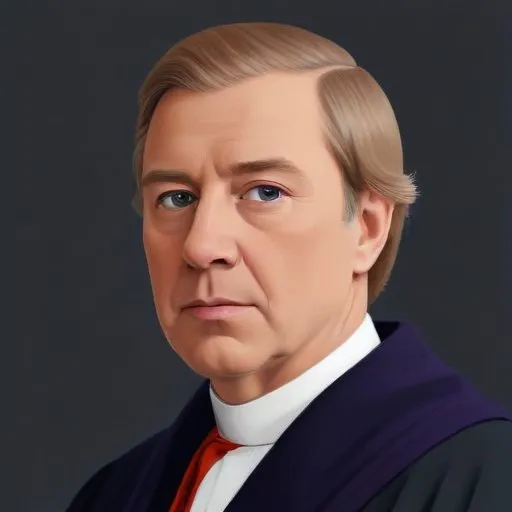
A powerful nobleman who served as Earl Marshal of the United Kingdom, known for his involvement in the Ridolfi Plot to assassinate Queen Elizabeth I. He was eventually executed for treason.
Thomas Howard, 4th Duke of Norfolk, is perhaps best known for his role in the Ridolfi plot, a conspiracy against Queen Elizabeth I, which ultimately led to his execution. This English nobleman and politician lived a life marked by high offices, family drama, and treasonous intrigue.
Thomas Howard was born on March 10, 1536 (or 1538, as some sources claim), at Kenninghall, Norfolk, to Henry Howard, Earl of Surrey, and Lady Frances de Vere. He was the first or second of five children, and his family was steeped in nobility and politics.
Upon his father's execution in 1547, Thomas became the heir to the dukedom of Norfolk. This led to his rapid rise through the ranks of English politics, with Queen Elizabeth I appointing him to various high offices.
In 1570, Thomas became embroiled in the Ridolfi plot, a conspiracy to overthrow Queen Elizabeth I and replace her with Mary, Queen of Scots. The plot was discovered, and Thomas was arrested, tried, and found guilty of treason.
Execution and Legacy: Thomas Howard, 4th Duke of Norfolk, was executed on June 2, 1572. His legacy is marked by his bravery, cunning, and loyalty, as well as his ultimate downfall due to his involvement in the Ridolfi plot.
Thomas' family life was marked by drama and tragedy. His father's execution had a profound impact on him, and his own marriage to Mary FitzAlan was childless.
Thomas Howard, 4th Duke of Norfolk, may have lived over 400 years ago, but his impact on modern society can still be felt. His story serves as a cautionary tale about the dangers of political intrigue and the consequences of treason.
Through his life, Thomas Howard, 4th Duke of Norfolk, left an indelible mark on English history, a testament to the complexities and drama of the Tudor era.
Born in 1574
An English explorer and cartographer who mapped the New World and created innovative navigational tools, contributing significantly to the development of modern cartography.
Born in 1516
The first queen to rule England in her own right, Bloody Mary tried to restore Catholicism, earning her notorious reputation for burning hundreds of Protestants at the stake.
Born in 1457
First Tudor king of England, who ended the Wars of the Roses and established a strong, centralized government, bringing stability and prosperity to the country.
Born in 1489
Leader of the English Reformation, instrumental in creating the Church of England and authoring the Book of Common Prayer.
