


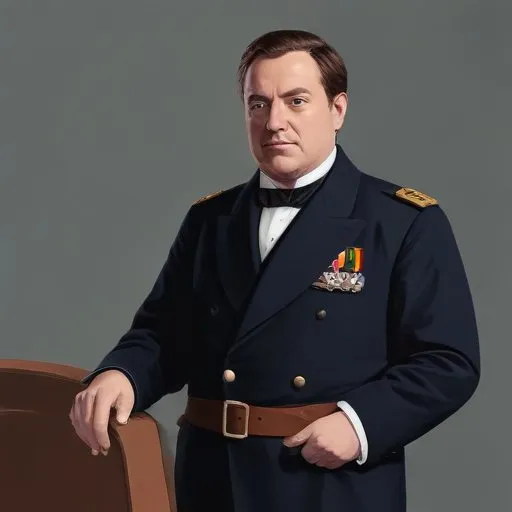
A prominent 17th-century politician who served as Treasurer of the Navy, known for his influential role in English politics and naval affairs during the Restoration period.
Thomas Osborne, 1st Duke of Leeds, was a prominent English Tory politician and peer who left an indelible mark on England's history. He was the leading figure in the English government for roughly five years in the mid-1670s and again in the early 1690s, shaping the country's fate with his influential decisions.
Osborne was born on February 20, 1632, to Sir Edward Osborne, Baronet of Kiveton, Yorkshire, and his second wife Anne Walmesley. His family's fortunes were made by his great-grandfather, Sir Edward Osborne, Lord Mayor of London, who rescued his employer's daughter from a river, earning her hand in marriage.
Osborne's father, a staunch Royalist, served as Vice President of the Council of the North. Thomas succeeded to the baronetcy and estates in Yorkshire on his father's death in 1647. He married Lady Bridget, daughter of Montagu Bertie, 2nd Earl of Lindsey, and began his political career.
During the reign of Charles II of England, Osborne rose to become the leading figure in the English government, serving as Lord Treasurer from 1673 to 1679. He played a crucial role in shaping the country's economic and foreign policies, earning both praise and criticism for his decisions.
Osborne's rise to power was marred by allegations of corruption and scandal. He was impeached in 1679 and imprisoned in the Tower of London for five years, until James II of England acceded in 1685. Despite his fall from grace, Osborne remained a significant figure in English politics.
In 1688, Osborne was one of the Immortal Seven who invited William of Orange to depose James II during the Glorious Revolution. This pivotal event marked a significant turning point in English history, and Osborne's role in it cemented his place in the annals of time.
Osborne's personal life was marked by controversy and scandal. He was known for his cunning and ambition, but also for his unwavering loyalty to the monarchy. He died on July 26, 1712, leaving behind a legacy that continues to shape England's history.
Osborne's life and legacy are a testament to the complex and often tumultuous nature of English politics during the 17th century. His influence on the English government and his role in shaping the country's fate continue to inspire and intrigue historians and scholars to this day.
Osborne's contemporaries, including figures like Charles II and James II, often viewed him as a cunning and ruthless politician. However, his unwavering loyalty to the monarchy and his role in shaping England's fate set him apart from his peers.
Osborne's legacy continues to shape England's politics and society. His role in the Glorious Revolution and his influence on the English government have had a lasting impact on the country's development and growth.
55 Years Old
Australian rules football legend who played 137 games and coached three teams, including the Melbourne Football Club, leading them to a premiership in 1964.
