


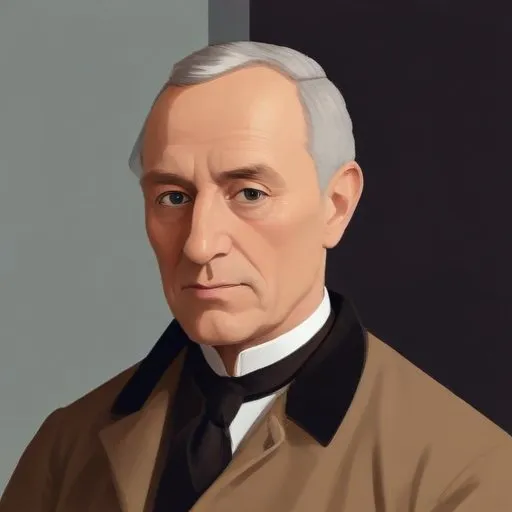
A pioneering naturalist and writer who documented Welsh history and wildlife, particularly birds, in extensively detailed and beautifully illustrated works. His writings remain essential references for ornithologists and historians today.
Thomas Pennant, a renowned Welsh naturalist, traveller, writer, and antiquarian, left an indelible mark on the scientific community of his time. His meticulous observations and recordings of the natural world, as well as his passion for collecting art and antiquities, solidified his position as a prominent figure in the 18th century.
Born on June 14, 1726, at his family estate, Downing Hall, near Whitford, Flintshire, Wales, Pennant was destined for a life of exploration and discovery. His innate curiosity about the natural world led him to observe and record the geography, geology, plants, animals, birds, reptiles, amphibians, and fish around him.
Pennant's writings, including British Zoology, History of Quadrupeds, Arctic Zoology, and Indian Zoology, showcased his remarkable talent for scientific observation and documentation. Despite never venturing beyond continental Europe, his works garnered significant attention and influenced the writings of notable figures like Samuel Johnson.
Pennant's travels took him to Scotland and various parts of Britain, where he meticulously documented his experiences. His travelogues, accompanied by vibrant colour plates, offered the British public a glimpse into previously unknown regions. Each tour began at his home, Downing Hall, and detailed the route, scenery, local customs, and wildlife encounters.
Accompanied by his loyal servant, Moses Griffith, Pennant traversed the countryside on horseback. Griffith's sketches of their encounters were later transformed into illustrations, enriching Pennant's travelogues.
Pennant's amiable nature earned him a large circle of friends, and he continued to pursue his passions well into his sixties. His good health and gentle spirit allowed him to live a fulfilling life, passing away at the age of 72 at Downing Hall.
The Pennants, a family of Welsh gentry, had established a modest estate at Bychton by the 17th century. Thomas's father, David Pennant, played a significant role in shaping his son's early life and interests.
Today, many of Pennant's collected works can be found at the National Library of Wales, a testament to his enduring legacy. His contributions to the fields of natural history, antiquarianism, and travel writing continue to inspire and educate generations of scholars and enthusiasts.
Thomas Pennant's remarkable life and achievements serve as a testament to the power of curiosity, dedication, and passion. His contributions to the scientific community continue to inspire and educate, solidifying his position as one of the most notable figures of the 18th century.
Born in 1720
A pioneering naturalist who meticulously recorded and studied the behaviors of birds and other wildlife in their native habitats, laying the groundwork for modern ecology and conservation.
Born in 1707
Developed the system of binomial nomenclature, which is still used today to classify and name living organisms. This system has had a profound impact on the fields of biology, ecology, and conservation.
Born in 1785
A pioneering ornithologist and artist, famous for meticulously illustrating and documenting North American bird species in his iconic book "The Birds of America". His work remains a cornerstone of ornithology and wildlife art.
Born in 1809
Developed the theory of evolution through natural selection, revolutionizing our understanding of life on Earth. This groundbreaking idea transformed the fields of biology, ecology, and beyond.
Born in 1823
A pioneering naturalist who discovered evolution through natural selection, independently of Charles Darwin, and contributed significantly to the field of biogeography.
Born in 1744
A French soldier, biologist, and academic who developed a theory of inheritance of acquired characteristics, proposing that organisms adapt to their environment and pass on those traits to their offspring.
Born in 1766
A pioneering figure in American ornithology, credited with creating the first comprehensive guide to North American birds, featuring his own illustrations. His work remains a foundation for modern bird studies.
