


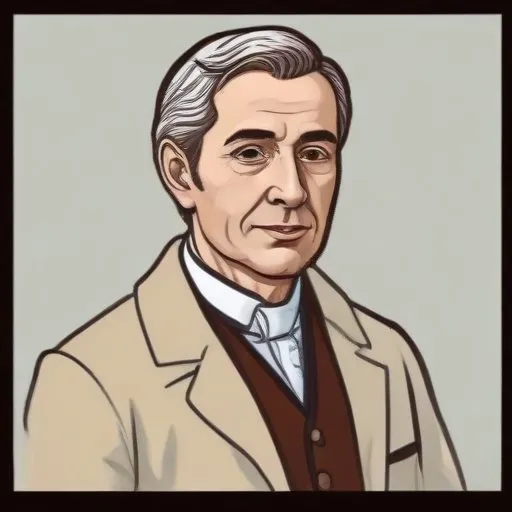
Pioneering 17th-century anatomist who mapped the brain's blood vessels and coined the term "neurology," making significant contributions to the field of neuroscience.
Thomas Willis, a renowned English physician, is known for his groundbreaking contributions to the fields of anatomy, neurology, and psychiatry. His work, particularly in the discovery of the cerebellum's function, has had a profound impact on our understanding of the human brain and nervous system.
Born on January 27, 1621, in Great Bedwyn, Wiltshire, England, Willis was the son of a steward of the manor. He graduated with a Master of Arts degree from Christ Church, Oxford in 1642, and later obtained his Bachelor of Medicine degree in 1646.
During the English Civil War, Willis was a royal physician to King Charles I and later maintained an Anglican position, with an Anglican congregation meeting at his lodgings. His marriage to Mary Fell, daughter of Samuel Fell, dean of Christ Church, further solidified his connections to the royal family.
In the 1640s, Willis employed Robert Hooke as an assistant, which marked the beginning of a fruitful collaboration. Hooke would later become a prominent figure in the scientific community, and their relationship played a significant role in shaping Willis' scientific pursuits.
Willis' most notable contribution lies in his discovery of the cerebellum's function. Through meticulous observations and experiments, he demonstrated that the cerebellum is responsible for motor coordination and balance. This breakthrough has had far-reaching implications in the fields of neurology, psychology, and neuroscience.
He was also a founding member of the Royal Society, a prestigious organization dedicated to the advancement of scientific knowledge. His work, particularly in the fields of anatomy and neurology, earned him a reputation as one of the most influential scientists of his time.
Willis' work has had a lasting impact on modern society. His discoveries have led to a deeper understanding of brain function, paving the way for advancements in neurology, psychology, and neuroscience. His contributions have also influenced the development of medical treatments for various neurological disorders.
Willis was a strong advocate for the importance of empirical observation and experimentation in scientific inquiry. He believed that the natural world could be understood through meticulous observation and the application of reason. His philosophical stance has had a lasting impact on the development of scientific thought.
Through his work, Willis demonstrated a deep reverence for the natural world and a commitment to understanding its intricacies. His legacy serves as a testament to the power of human curiosity and the importance of pursuing knowledge for its own sake.
Willis was elected a Fellow of the Royal Society in 1660, a testament to his pioneering work in the field of anatomy and neurology. His contributions have been recognized and celebrated by the scientific community, solidifying his place as one of the most influential scientists of the 17th century.
Today, Thomas Willis is remembered as a pioneer in the field of neurology, whose groundbreaking discoveries have had a profound impact on our understanding of the human brain and nervous system. His legacy continues to inspire scientists, researchers, and medical professionals around the world.
Born in 1624
A 17th-century doctor who pioneered the field of epidemiology, studying and documenting the natural history of diseases to develop more effective treatments. He's considered the "English Hippocrates" for his contributions to the field of medicine.
Born in 1633
A 17th-century diarist and politician who chronicled his daily life, including significant historical events like the Great Fire of London, in a candid and detailed manner. His diary is a valuable historical resource and a window into the past.
Born in 1632
A 17th-century thinker who laid the groundwork for modern democracy, arguing that governments derive their power from the people and that individuals have inherent rights to life, liberty, and property.
Born in 1627
Pioneering scientist who discovered Boyle's Law, which describes the relationship between pressure and volume of gases, and laid foundations for modern chemistry.
