


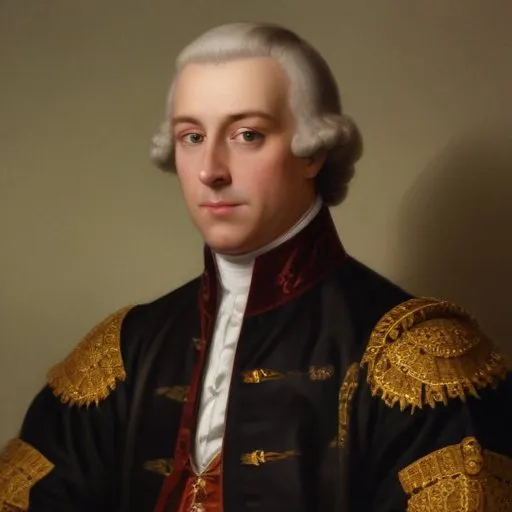
A nobleman who held significant power during the reign of King Richard II of England, known for his involvement in the Lords Appellant rebellion against the king. He was eventually executed for treason.
Thomas le Despenser, 1st Earl of Gloucester, is remembered as a fierce and unrelenting champion of royal privilege, who challenged the authority of King Henry IV and sparked a rebellion that would shape the course of English history.
A member of the powerful Despenser family, Thomas was a prominent nobleman and military leader, known for his unwavering loyalty to the royal family and his unshakeable dedication to the preservation of noble privilege.
Born around 1373, Thomas le Despenser was the son of Edward le Despenser, a loyal supporter of King Richard II. Growing up in a family deeply entrenched in royal politics, Thomas was groomed for greatness from a young age. He quickly rose through the ranks, becoming a trusted advisor and military leader, distinguishing himself in battles against the Welsh and the French.
In 1399, King Richard II was deposed by his cousin, Henry Bolingbroke, who seized the throne and became King Henry IV. Thomas le Despenser, loyal to the deposed king, refused to acknowledge Henry's authority, sparking a rebellion that would last for several years.
Thomas's defiance was driven by his conviction that the nobility's power and privilege were being eroded by the new king's centralized authority. He rallied a significant force of supporters, including other noble families and discontented knights, and launched a series of military campaigns against Henry IV's forces.
Thomas le Despenser's rebellion was motivated by a deep-seated belief in the importance of noble privilege and the need to check the power of the monarch. He advocated for a decentralized system of governance, where noble families held significant influence and authority, rather than a centralized state controlled by the king.
His actions were also driven by a sense of honor and loyalty, demonstrating his commitment to upholding the traditional values of medieval chivalry.
Thomas le Despenser's rebellion marked a turning point in English history, highlighting the tensions between the nobility and the monarchy. His actions sparked a wider movement of resistance against Henry IV's authority, contributing to the development of a more decentralized system of governance in medieval England.
Though his rebellion ultimately failed, Thomas le Despenser's legacy serves as a testament to the enduring power of noble privilege and the importance of challenging authority in the pursuit of justice and freedom.
Born in 1284
The king whose disastrous reign led to his eventual deposition and mysterious death, remembered for his alleged homosexual relationships and power struggles with nobles.
Born in 1367
The last king of the House of Plantagenet, deposed in a coup, known for his extravagance and tyranny, leading to his downfall and the rise of the Lancastrian dynasty.
Born in 1340
A powerful and wealthy medieval English nobleman, known for his immense influence on English politics and his role in the Hundred Years' War. He was also a patron of the arts and a founder of Trinity College, Cambridge.
Born in 1133
King of England from 1154 to 1189, known for establishing a strong centralized government, reforming the English church, and his tumultuous relationships with Thomas Becket and his sons.
Born in 1386
Led a victorious English army in the Battle of Agincourt, a major English victory in the Hundred Years' War, and was a popular king who strengthened the English monarchy.
