


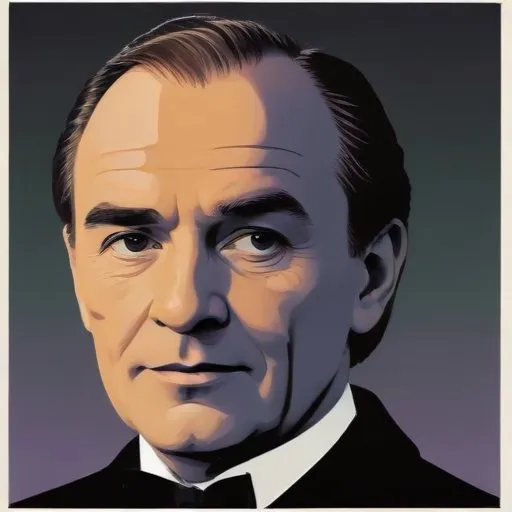
A renowned historian and author who has written extensively on European history, politics, and culture, particularly focusing on the Cold War era and its aftermath.
Timothy Garton Ash, a British historian, author, and commentator, has dedicated his career to understanding and narrating the complexities of Europe's modern history, with a particular focus on Central and Eastern Europe. Through his meticulous research and insightful writing, he has shed light on the region's tumultuous past, from the former Communist regimes to the Revolutions of 1989 and the transformation of the former Eastern Bloc states into member states of the European Union.
Born on 12 July 1955, Garton Ash was destined to become a scholar of European affairs. His father, John Garton Ash, was a Royal Artillery officer in the British Army during World War II, and his experiences likely influenced Timothy's fascination with history and politics. Educated at Sherborne School and Exeter College, Oxford, Garton Ash later pursued postgraduate studies in Berlin, where he was under surveillance by the Stasi, an experience that would later inspire his book, The File.
Garton Ash's writing has been characterized by its depth and nuance, earning him recognition as a leading authority on European history and politics. As Foreign Editor of The Spectator and a columnist for The Independent, he has shared his expertise with a broad audience. His academic affiliations, including a fellowship at St Antony's College, Oxford, have provided a platform for his research and teaching.
Garton Ash's 1997 book, The File, is a personal and piercing account of his experience being surveilled by the Stasi during his time in East Berlin. The book is both a gripping narrative and a searing indictment of the Communist regime's totalitarian tactics. As he reflects on his own encounters with the secret police, Garton Ash provides a unique perspective on the nature of freedom and democracy.
Garton Ash's work is underpinned by a commitment to democratic values and a passion for understanding the intricacies of human freedoms. He has written extensively on the challenges of balancing individual liberties with collective well-being, and his thoughts on the subject have been influential in shaping the contours of modern European politics.
Garton Ash's impact on modern society extends beyond the realm of academia. His writings have informed policy debates, inspired new generations of scholars, and contributed to a greater understanding of the complexities of European history and politics. His work has also fostered a deeper appreciation for the resilience and diversity of European cultures.
Timothy Garton Ash's remarkable career has left an indelible mark on our understanding of Europe's recent past. Through his tireless efforts to illuminate the complexities of history, he has inspired a new generation of scholars, policymakers, and engaged citizens. As a chronicler of Europe's turbulent century, Garton Ash has cemented his place as one of the most important historians of our time.
As we reflect on his body of work, we are reminded of the enduring importance of understanding our shared European heritage. Timothy Garton Ash's contributions serve as a testament to the power of rigorous scholarship, intellectual curiosity, and a commitment to the values of democracy and human freedom.
96 Years Old
A billionaire investor and philanthropist who made a fortune through savvy market trades and now uses his wealth to support progressive causes and democratic ideals. Known for his generous donations to liberal politicians and social justice organizations.
90 Years Old
A Czech poet, playwright, and politician who led the country's transition from communism to democracy, and is known for his advocacy of human rights and individual freedom.
Born in 1925
The first female Prime Minister of the United Kingdom, serving from 1979 to 1990, known for her conservative policies and leadership during the Falklands War.
Born in 1911
The charismatic leader who championed conservative policies, helped end the Cold War, and is often credited with restoring American pride and optimism. He's also remembered for his folksy, actor-honed communication style.
95 Years Old
The last leader of the Soviet Union, who introduced reforms that led to the end of the Cold War and the collapse of communism, earning a Nobel Peace Prize. He's known for his policies of glasnost and perestroika, which transformed the Soviet Union and the world.
74 Years Old
A renowned expert on international relations and democracy, known for his provocative "end of history" theory, which posits that liberal democracy is the final form of human government.
99 Years Old
A renowned author and academic who wrote extensively on political science, international relations, and cultural clashes, particularly in his influential book "The Clash of Civilizations".
