


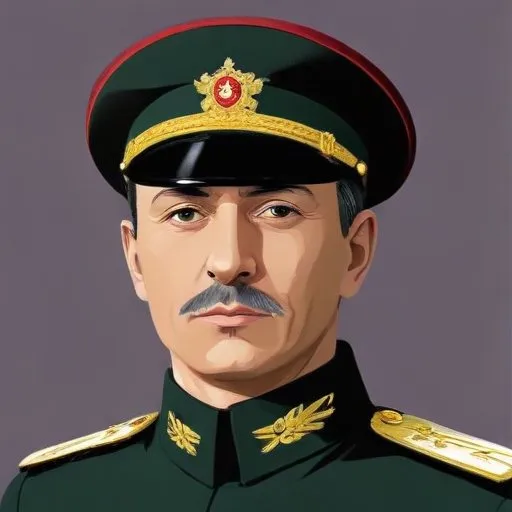
A Russian general and pilot who played a crucial role in the Soviet Union's military aviation development, particularly during World War II. He's known for his bravery and tactical genius in aerial battles.
Timur Apakidze, a renowned Russian major general of Georgian ethnicity, is best known for his exceptional skills as a fighter pilot, flight specialist, and founder of the modern Russian Naval Aviation. His remarkable career marked a significant turning point in the history of Russian military aviation, cementing his position as a national hero.
Born on March 4, 1954, in Tbilisi, Georgian SSR, to a Russian mother and a Georgian father from the noble Georgian house of Apakidze, Timur's early life was marked by a strong sense of determination and purpose. After moving to Leningrad with his mother at the age of one, he attended school and later enrolled in the Leningrad Nakhimov Naval School. His exceptional skills didn't go unnoticed, and he was soon noticed by the chief commander of the academy, who telegraphed Admiral Sergey Gorshkov about Apakidze's exceptional skills, requesting his return to the fleet as soon as he had finished flight school.
In 1971, Apakidze began serving in the Soviet military as a naval aviator, and soon became a cadet of the Yeysk Higher Military Aviation School. His remarkable career saw him rise through the ranks, earning promotions and accolades along the way. By 1975, he was assigned to the 846th Separate Guards Naval Attack Aviation Regiment VP Chkalov of the Baltic Fleet, where he later became deputy commander for flight training. His innovative approach to pilot training, including introducing hand-to-hand combat training for pilots, set him apart as a visionary leader.
Apakidze's prowess as a fighter pilot earned him recognition as the best Soviet, then Russian fighter pilot, between the late 1980s and early 1990s. He studied shipborne aviation techniques at the Center of Naval Aviation and went on to command the 100th Fighter Regiment in Nikolayev. His expertise and dedication paved the way for modern Russian Naval Aviation, earning him the esteemed title of Hero of the Russian Federation.
Apakidze's innovative approach to pilot training and his emphasis on hand-to-hand combat skills reflect his deep-seated belief in the importance of adaptability and self-reliance in the face of uncertainty. His exceptional leadership and vision have inspired generations of pilots and military personnel, cementing his legacy as a pioneering figure in Russian military aviation.
Timur Apakidze's groundbreaking contributions to Russian Naval Aviation have had a lasting impact on modern society. His legacy continues to inspire and motivate new generations of pilots, military personnel, and leaders, serving as a testament to the power of dedication, innovation, and vision. As a national hero, Apakidze's influence extends beyond the military, serving as a beacon of hope and inspiration for people from all walks of life.
Apakidze's remarkable life was marked by numerous milestones, including his graduation from the Yeysk Higher Military Aviation School and his appointment as commander of the 100th Fighter Regiment. His exceptional career was filled with achievements, promotions, and accolades, solidifying his position as a leading figure in Russian military aviation.
Timur Apakidze's remarkable life and legacy serve as a testament to the power of dedication, innovation, and vision. As a pioneering figure in Russian military aviation, his influence continues to inspire and motivate new generations, cementing his position as a national hero and a true legend in the world of military aviation.
Born in 1896
A Soviet military leader who played a crucial role in defeating Nazi Germany in World War II, and later became a key figure in Soviet politics.
Born in 1896
A Soviet military leader who played a crucial role in several key battles, including the Battle of Stalingrad and the capture of Berlin, earning him the highest military honors. He was a skilled strategist and tactician who helped turn the tide of the war in favor of the Allies.
Born in 1897
A Soviet military leader who played a crucial role in the Eastern Front of World War II, leading the Red Army to several key victories.
