


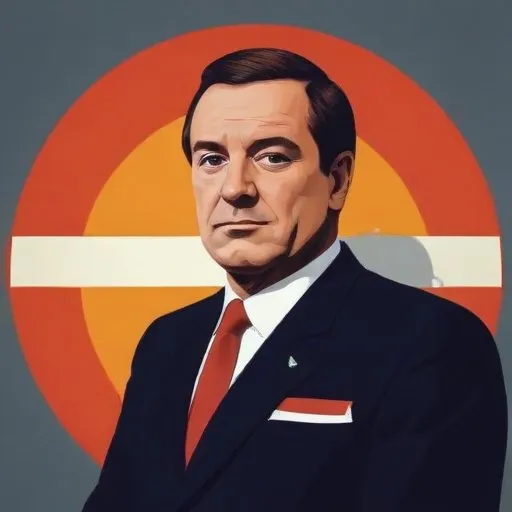
Governor-General of the Dutch East Indies, overseeing the colony's administration and development during the early 20th century, known for his role in maintaining Dutch control and implementing reforms.
Tony Lovink, also known as Antonius Hermanus Johannes Lovink, was a Dutch diplomat who served as the last High Commissioner of the Crown in the Dutch East Indies from May 1949 to December 1949. During this significant period, the Dutch East Indies declared its independence from the Netherlands and was renamed Indonesia.
Born on July 12, 1902, Tony Lovink was the son of Hermanus Johannes Lovink, a former Member of Parliament and mayor of Alphen. Lovink's early life and education set the stage for his future in diplomacy. In May 1942, he arrived in London from the Japanese-occupied Dutch East Indies, where he became the secretary-general of the Department of General Warfare of the Dutch government in exile.
In May 1949, Lovink succeeded Beel as the High Commissioner of the Crown in the Dutch East Indies. However, he did not always act happily in this position, and he did not stay in Indonesia after the transfer of sovereignty in December 1949, as initially intended.
After his tenure as High Commissioner, Lovink served as the Dutch Ambassador to Canada, where he was also the dean of the Corps Diplomatique. He later served as Ambassador to Australia and again to Canada in 1960. Lovink continued to live in Canada after he resigned in 1967.
Tony Lovink's legacy is marked by his significant role in the transition of the Dutch East Indies to Indonesia. Although his tenure as High Commissioner was brief, it was a critical period in the country's history. Lovink's diplomatic career spanned several decades and multiple countries, showcasing his dedication to international relations and diplomacy.
Tony Lovink's life and career were shaped by the tumultuous period of World War II and the subsequent decolonization of the Dutch East Indies. His experiences in London and the Dutch East Indies during this time influenced his perspective on international relations and diplomacy.
Although Tony Lovink's philosophical contributions are not well-documented, his actions as High Commissioner and Ambassador reflect a commitment to diplomacy and international cooperation. His experiences in the Dutch East Indies and Indonesia likely shaped his views on colonialism, independence, and self-determination.
Tony Lovink's life and legacy serve as a reminder of the complexities of international relations and the importance of diplomacy in times of transition and change.
Born in 1894
Governor-General of the Dutch East Indies during World War II, known for his attempts to re-establish Dutch colonial rule in Indonesia, leading to the Indonesian National Revolution.
Born in 1902
First Vice President of Indonesia, instrumental in the country's fight for independence from the Netherlands, and a key figure in shaping Indonesia's early years.
Born in 1901
Led Indonesia to independence from the Netherlands, serving as the country's first president and implementing a policy of nationalization and industrialization. He's known for his charismatic leadership and vision for a unified Indonesia.
