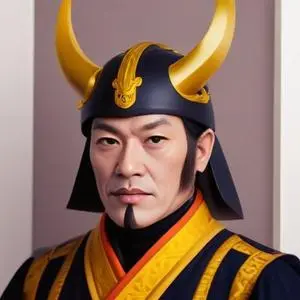
Toyotomi Hideyori: The Rightful Heir to Japan's Unification
The Son of a Legend
Toyotomi Hideyori, born on August 28, 1593, was the son and designated successor of
Toyotomi Hideyoshi, the general who first united all of Japan. As the rightful heir to his father's legacy, Hideyori's life was marked by power struggles, conflicts, and a quest to reclaim his birthright.
Early Life and Succession Crisis
Hideyori's birth created a potential succession problem, as his father had already designated a nephew, Hidetsugu, as his heir. To avoid this crisis, Hideyoshi exiled Hidetsugu to Mount Kya and eventually ordered him to commit suicide in 1595. This brutal move ensured that Hideyori would be the sole heir to the Toyotomi clan.
A Childhood of Contrasts
As a child, Hideyori was surrounded by opulence and grandeur, yet he was also witness to the brutal machinations of his father's regime. Despite this, he showed a penchant for calligraphy, practicing phrases that wished for peace throughout the world. This dichotomy would shape his later life, as he struggled to navigate the treacherous waters of Japanese politics.
The Battle for Osaka Castle
After his father's death in 1598, Hideyori's fate was decided by the five regents who ruled in his place. However,
Tokugawa Ieyasu seized control in 1600, following his victory at the Battle of Sekigahara. Hideyori's arranged marriage to Senhime, Ieyasu's granddaughter, was a desperate attempt to mitigate Toyotomi clan dissension and plotting.
A Threat to Tokugawa Rule
As Hideyori grew older, he became a rallying point for samurai who opposed Ieyasu's rule. Ieyasu viewed the young daimyō as a potential threat, and tensions escalated when Hideyori built a temple in Kyoto, which Ieyasu saw as a veiled attempt to curse him and the Tokugawa clan.
The Siege of Osaka Castle
In 1614, Ieyasu ordered Hideyori to leave Osaka Castle, but the young daimyō refused, summoning samurai to gather within the castle walls. This sparked a brutal siege that would ultimately seal Hideyori's fate.
Death and Legacy
On June 4, 1615, Toyotomi Hideyori died, marking the end of the Toyotomi clan's reign. His legacy is a testament to the complex and often brutal nature of Japanese politics during the Sengoku period. Despite his tragic fate, Hideyori remains an important figure in Japanese history, a symbol of the relentless pursuit of power and the unyielding spirit of a rightful heir.
Philosophical Contributions and Beliefs
Through his calligraphy, Hideyori expressed a deep desire for peace and harmony in the world. This sentiment reflects the complex and often contradictory nature of his life, as he struggled to reconcile his own desires with the brutal realities of his father's legacy.
Historical Context and Impact
Hideyori's life was marked by the tumultuous transition from the Sengoku period to the Edo period, which saw the rise of the Tokugawa shogunate. His story serves as a poignant reminder of the human cost of political ambition and the transience of power in a rapidly changing world.
Personal Relationships and Anecdotes
Despite his short life, Hideyori formed close bonds with those around him, including his wife, Senhime, and his loyal samurai retainers. These relationships humanize a figure often relegated to the annals of history, revealing a complex and multifaceted individual driven by both ambition and vulnerability.