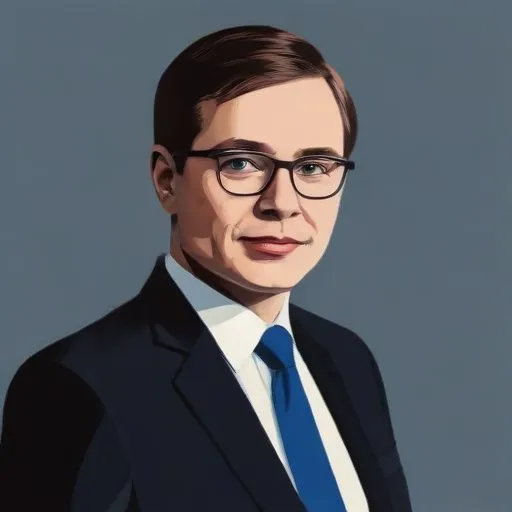
Tunne Kelam: The Fearless Estonian Politician Who Dared to Defy the Soviet Regime
A Champion of Independence and Human Rights
Tunne Kelam is a name synonymous with courage and defiance in the face of oppression. As a former Member of the European Parliament (MEP) from Estonia, Kelam is renowned for his unwavering commitment to restoring independence to his homeland, which was under Soviet occupation for nearly five decades. His unrelenting pursuit of freedom and human rights earned him the reputation of a hero and a symbol of resistance against the Soviet regime.
A Humble Beginning
Born on July 10, 1936, in Estonia, Kelam's early life was marked by a passion for history and education. He graduated from Tallinn 2. Secondary School in 1954 and went on to study history at the University of Tartu from 1954 to 1959. After completing his studies, Kelam worked as a senior researcher at the State Central Archives in Tartu and later as a senior scientific editor of the Estonian Soviet Encyclopaedia in Tallinn.
A Call to Action: The Memorandum to the UN
In 1972, Kelam prepared a memorandum to the United Nations on behalf of two underground citizens' groups, pleading for assistance to evacuate Soviet occupation forces and organize free elections. This courageous act, which was smuggled out of the country, sparked international interest and attention, but also led to severe repercussions from the KGB, including loss of employment and intense surveillance.
The Underground Resistance
Despite the risks, Kelam continued to operate half-underground, organizing unofficial opposition groups and secretly passing information about human rights violations in Soviet-occupied Estonia to the West. For over a decade, he lived under strict KGB surveillance, working as a nightshift worker on a state poultry farm from 1979 to 1987.
The Birth of a New Era: Estonian Independence
By the late 1980s, Kelam had become one of the leading advocates for restoring independence to Estonia. In August 1988, he co-founded the Estonian National Independence Party (ERSP), the first non-Communist political party on Soviet territory. This milestone marked the beginning of a new era for Estonia, paving the way for its eventual independence in 1991.
A Life Dedicated to Public Service
Kelam's unwavering commitment to public service has earned him numerous accolades and recognition. He has served as a member of the Estonian Parliament, advocating for democratic values and human rights. As an MEP, he has continued to promote European integration and cooperation, championing the cause of Eastern European countries seeking to join the European Union.
Legacy and Impact
Tunne Kelam's remarkable journey is a testament to the power of courage, resilience, and determination. His tireless efforts to restore independence to Estonia have inspired generations, and his unwavering commitment to human rights has made a lasting impact on the international community. Today, Kelam remains an icon of hope and freedom, a shining example of the transformative power of individual action.
- Early life and education: Graduated from Tallinn 2. Secondary School in 1954, studied history at the University of Tartu from 1954 to 1959
- Notable works: Prepared a memorandum to the UN in 1972, co-founded the Estonian National Independence Party (ERSP) in 1988
- Awards and recognition: MEP from Estonia, served as a member of the Estonian Parliament
- Philosophical contributions: Advocated for democratic values, human rights, and European integration
As we reflect on Kelam's remarkable journey, we are reminded that even in the darkest of times, courage, determination, and a commitment to justice can bring about transformational change.
FAQ
What was Tunne Kelams role in Estonian politics?
Tunne Kelam is an Estonian journalist and politician who served as a member of the European Parliament from 2004 to 2019, representing the Estonian Reform Party.
How did Tunne Kelam contribute to Estonian independence?
As a journalist and activist, Tunne Kelam played a key role in promoting Estonian independence during the countrys struggle for self-determination in the late 1980s and early 1990s.
What were Tunne Kelams priorities in the European Parliament?
In the European Parliament, Tunne Kelam focused on issues related to human rights, democracy, and European integration, working to promote EU values and principles.
How did Tunne Kelam promote European-Estonian relations?
As an MEP, Tunne Kelam worked to strengthen ties between Estonia and the European Union, promoting greater economic and cultural cooperation between the two.
What is Tunne Kelams legacy in Estonian politics?
Tunne Kelams legacy in Estonian politics is marked by his tireless advocacy for democracy, human rights, and European values, and his contributions to Estonias integration into the European Union.