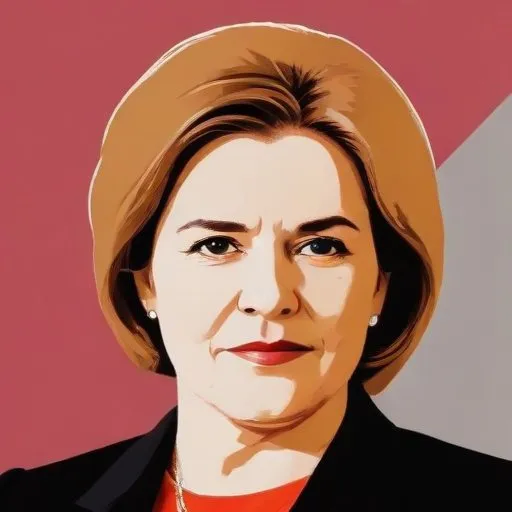
Ursula Plassnik: A Trailblazing Austrian Diplomat and Politician
A Leading Figure in Austrian Politics
Ursula Plassnik is a renowned Austrian diplomat and politician, best known for serving as the Foreign Minister of Austria from 2004 to 2008. During her tenure, she played a pivotal role in shaping Austria's foreign policy and fostering diplomatic relations with international partners.
Educational Background and Early Career
Born on May 23, 1956, in Klagenfurt, Austria, Plassnik grew up in a social democratic family. She pursued her higher education at the University of Vienna, where she earned a law degree in 1978. She further augmented her academic credentials with a postgraduate Certificate of Advanced European Studies from the College of Europe in Bruges, Belgium.
Rise to Prominence in Austrian Politics
Plassnik's entry into politics began in 1997 when she became the cabinet chief for Vice-Chancellor
Wolfgang Schüssel. She remained in this position until 2000, during which time she forged a strong bond with Schüssel and became his trusted confidante. Her loyalty and dedication earned her the opportunity to serve as Austria's ambassador to Switzerland from 2000 to 2004.
Tenure as Foreign Minister of Austria
On October 18, 2004, Plassnik was appointed Foreign Minister of Austria, a position she held until December 2008. During her tenure, she worked tirelessly to promote Austria's interests on the international stage, fostering dialogue and cooperation with various nations.
Philosophical Contributions and Beliefs
Plassnik is known for her staunch support of European integration and her commitment to promoting human rights and democracy worldwide. Her diplomatic approach has been characterized by a strong emphasis on dialogue, diplomacy, and cooperation.
Personal Milestones and Key Life Events
- In 1971-1972, Plassnik was an exchange student at the Foxcroft School in Middleburg, Virginia, USA.
- In 1997, she became cabinet chief for Vice-Chancellor Wolfgang Schüssel.
- In 2000, she refused an offer to work for the Council of Europe to remain in Austria and support Schüssel.
- In 2004, she became Austria's Foreign Minister, serving until 2008.
- In 2016, she was appointed Austrian ambassador to Switzerland, a position she held until 2021.
Influence on Modern Society
Plassnik's contributions to Austrian politics and diplomacy have had a profound impact on modern society. Her commitment to promoting human rights, democracy, and European integration has inspired a new generation of diplomats and politicians.
Career Highlights and Major Works
- Foreign Minister of Austria (2004-2008)
- Ambassador to Switzerland (2000-2004, 2016-2021)
- Cabinet Chief for Vice-Chancellor Wolfgang Schüssel (1997-2000)
Legacy and Impact on Austrian Politics
Ursula Plassnik's remarkable career has left an indelible mark on Austrian politics and diplomacy. Her dedication to promoting Austria's interests on the international stage has cemented her position as one of the most respected and trailblazing diplomats in Austrian history.
FAQ
What was Ursula Plassniks role in Austrian politics?
Ursula Plassnik served as the Foreign Minister of Austria from 2004 to 2008, and was the first woman to hold the position.
What were Ursula Plassniks priorities as Foreign Minister?
Ursula Plassniks priorities as Foreign Minister included strengthening ties with the European Union, promoting Austrian business interests abroad, and addressing global security challenges.
What was Ursula Plassniks stance on European integration?
Ursula Plassnik was a strong supporter of European integration and worked to advance Austrias role within the European Union.
Did Ursula Plassnik have any notable diplomatic achievements?
Yes, Ursula Plassnik played a key role in negotiating the Berlin Declaration, which marked the 50th anniversary of the Treaty of Rome and set the stage for further European integration.
What is Ursula Plassnik doing now?
After leaving politics, Ursula Plassnik has remained active in international affairs, serving as a diplomat and advisor to various organizations and businesses.