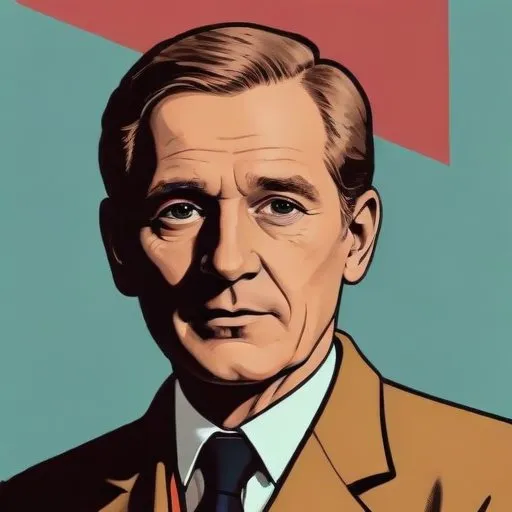
V. Gordon Childe: The Pioneering Archaeologist Who Revolutionized Our Understanding of European Prehistory
A Life Dedicated to Uncovering the Secrets of the Past
Vere Gordon Childe, a renowned Australian archaeologist, is best known for his groundbreaking work in the field of European prehistory, which earned him the title of "the first exponent of Marxist archaeology in the Western world." Throughout his illustrious career, Childe authored an impressive 26 books, leaving an indelible mark on the field of archaeology.
Early Life and Academic Pursuits
Born on April 14, 1892, in Sydney, Australia, to a middle-class English migrant family, Childe's fascination with the ancient world began at a young age. He pursued his passion for classics at the University of Sydney, and later, at the University of Oxford, where he delved deeper into classical archaeology. During his time at Oxford, Childe became an ardent socialist, actively campaigning against the First World War, which he saw as a conflict benefiting only the imperial powers at the expense of Europe's working class.
A Turbulent Career Path
Upon his return to Australia in 1917, Childe's socialist activism prevented him from pursuing an academic career. Instead, he worked as the private secretary of
John Storey, a prominent politician, and later joined the radical labor organization, Industrial Workers of the World. In 1921, Childe emigrated to London, where he became the librarian of the Royal Anthropological Institute and embarked on a journey to explore Europe's prehistory.
Pioneering Contributions to Archaeology
Childe's most significant contribution to the field of archaeology was the introduction of the concept of an "archaeological culture" to the British archaeological community. This revolutionary idea posited that a recurring assemblage of artifacts could demarcate a distinct cultural group. Through his extensive research and publications, Childe shed light on the complexities of European prehistory, paving the way for future generations of archaeologists.
Academic Appointments and Excavations
From 1927 to 1946, Childe held the esteemed position of Abercromby Professor of Archaeology at the University of Edinburgh, during which he oversaw numerous excavations in Scotland and Northern Ireland. His most notable excavation was that of the Neolithic Orkney, which provided valuable insights into the lives of ancient societies. Later, from 1947 to 1957, Childe served as the director of the Institute of Archaeology, London, further solidifying his reputation as a leading authority in the field.
Legacy and Impact
Childe's pioneering work in Marxist archaeology and his introduction of the concept of an archaeological culture have had a profound impact on the field of archaeology. His contributions have inspired generations of archaeologists, shaping our understanding of European prehistory and its complexities. As a testament to his dedication and groundbreaking research, Childe's legacy continues to inspire and educate scholars and enthusiasts alike.
Major Works and Publications
- The Dawn of European Civilization (1925)
- The Aryans: A Study of Indo-European Origins (1926)
- The Most Ancient East: The Oriental Prelude to European Prehistory (1928)
- New Light on the Most Ancient East (1934)
- The Prehistory of European Society (1958)
Personal Life and Anecdotes
Despite his esteemed academic career, Childe's personal life was marked by turmoil. His socialist activism and critiques of the Labor Party led to controversy and criticism. However, his unwavering dedication to his craft earned him the respect of his peers, and his contributions to the field of archaeology continue to be celebrated to this day.
Conclusion
V. Gordon Childe's remarkable life and career serve as a testament to the power of dedication and intellectual curiosity. His groundbreaking research and pioneering contributions to the field of archaeology have left an indelible mark on our understanding of European prehistory, inspiring generations of scholars and enthusiasts alike.
FAQ
What were V. Gordon Childes most significant contributions to archaeology?
V. Gordon Childe made groundbreaking contributions to archaeology, including the development of the urban revolution theory and the discovery of the Indus Valley Civilization.
How did V. Gordon Childes work influence the field of archaeology?
V. Gordon Childes work revolutionized the field of archaeology, shifting the focus from artifact collection to understanding the social and cultural context of ancient societies.
What was V. Gordon Childes approach to understanding ancient civilizations?
V. Gordon Childe pioneered a holistic approach to understanding ancient civilizations, combining archaeological evidence with linguistic, anthropological, and historical analysis.
What is V. Gordon Childes legacy in Australian archaeology?
V. Gordon Childe is recognized as one of the founders of Australian archaeology, inspiring generations of archaeologists and shaping the discipline in Australia and beyond.
Did V. Gordon Childes work extend beyond archaeology?
Yes, V. Gordon Childes work also had a broader impact, influencing fields such as anthropology, sociology, and history, and contributing to a deeper understanding of human societies and cultures.