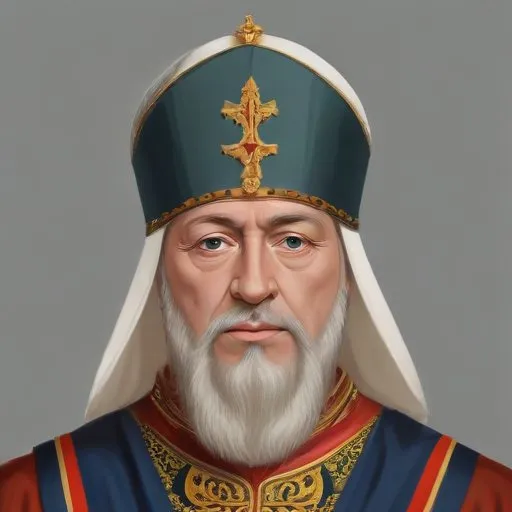
Vasili III of Russia: The Grand Prince of Moscow and Unifier of Russia
A Life of Conquest and Consolidation
Vasili III Ivanovich, Grand Prince of Moscow and all Russia, is renowned for his relentless pursuit of territorial expansion and consolidation of power during his reign from 1505 to 1533. He successfully annexed several key regions, including Pskov, Ryazan, and Smolensk, and strengthened Russian influence in Kazan and the Volga region.
Early Life and Accession
Born on March 25, 1479, Vasili was the son of Ivan III and Sophia Paleologue. He was christened with the name Gavriil, but later took the name Vasili. Following the death of his father in 1505, Vasili ascended to the throne and embarked on a mission to fulfill his father's ambitions.
Military Campaigns and Annexations
Vasili's military campaigns were marked by brilliance and cunning. He annexed Pskov in 1510, the appanage of Volokolamsk in 1513, the principalities of Ryazan in 1521, and Novgorod-Seversky in 1522. His most notable achievement was the capture of Smolensk, a strategic fortress of Lithuania, after a two-year siege from 1512 to 1514. This victory was largely facilitated by the aid of Prince Mikhail Glinski, a rebel Lithuanian prince who provided Vasili with artillery and engineers.
Foreign Affairs and Diplomacy
Vasili maintained the policies initiated by his father, focusing on consolidating territorial gains and strengthening Russian influence in the region. He received an emissary from the Iranian Safavid Empire in 1521, sent by Shah Ismail I, who sought to construct an Irano-Russian alliance against the common enemy, the Ottoman Empire. Vasili also established Russian influence on the Volga, and in 1531-1532, he placed the pretender Cangali khan on the throne of the Khanate of Kazan.
Domestic Policies and Controversies
Vasili's domestic policies were marked by authoritarianism and intolerance towards dissent. Several nobles were either exiled, sentenced, or executed for criticizing his policies. This ruthless approach earned him a reputation as a strong, but also feared, leader.
Legacy and Impact
Vasili III's reign had a profound impact on Russian history. He consolidated Russian territories, strengthened the country's influence in the region, and established a strong foundation for future Russian rulers. His military campaigns and annexations paved the way for Russia's emergence as a powerful nation. Despite his authoritarian tendencies, Vasili is remembered as a shrewd and effective leader who Unified Russia and set the stage for its future growth.
Timeline of Major Events
- 1479: Born on March 25 in Moscow
- 1505: Ascended to the throne after the death of his father, Ivan III
- 1510: Annexed Pskov
- 1512-1514: Captured Smolensk after a two-year siege
- 1513: Annexed the appanage of Volokolamsk
- 1521: Annexed the principalities of Ryazan
- 1522: Annexed Novgorod-Seversky
- 1531-1532: Placed the pretender Cangali khan on the throne of the Khanate of Kazan
- 1533: Died on December 3 in Moscow
FAQ
Who was Vasili III of Russia?
Vasili III of Russia was the Grand Prince of Moscow from 1505 to 1533. He was the son of Ivan III and played a significant role in shaping Russias history.
What was Vasili III of Russia known for?
Vasili III of Russia was known for his efforts to consolidate power and centralize the government. He also strengthened the Russian Orthodox Church and promoted education.
What were Vasili III of Russias policies towards the nobility?
Vasili III of Russia implemented policies to limit the power of the nobility, including the abolition of the office of the Patriarch of Moscow and the creation of a new ecclesiastical hierarchy.
What were Vasili III of Russias foreign policy achievements?
Vasili III of Russia achieved significant foreign policy successes, including the annexation of the Principality of Ryazan and the signing of a treaty with the Crimean Khanate.
How did Vasili III of Russias reign impact Russian history?
Vasili III of Russias reign marked a significant turning point in Russian history, laying the foundation for the future growth and development of the Russian Empire.