


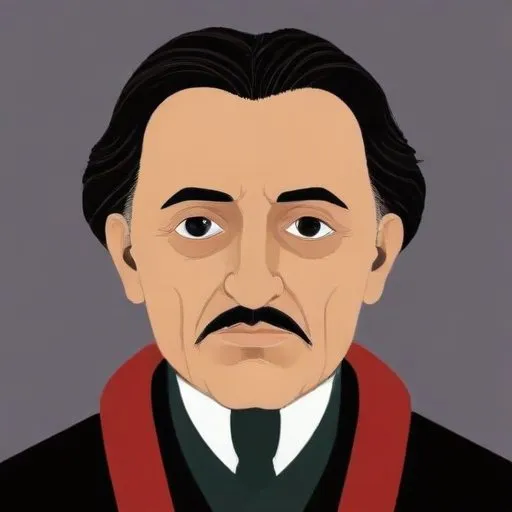
A prominent figure in Serbian literature, known for his unique and imaginative poetry that explores the human condition, blending myth and reality.
Vasko Popa is renowned for his evocative and powerful poetry, which has left an indelible mark on the literary world. As a Yugoslav poet, he is celebrated for his unique blend of modernist and folkloric elements, weaving together the rich cultural heritage of his native Serbia and Romania.
Born on June 29, 1922, in the village of Grebenac, Yugoslavia (present-day Serbia), Popa was part of a Banat Romanian family. His early fascination with poetry began during his high school days, where he wrote his first poems in Romanian. This initial spark would eventually ignite a lifelong passion for the craft.
During World War II, Popa fought as a partisan and was imprisoned in a German concentration camp in Bekerek (today Zrenjanin, Serbia). This tumultuous period would deeply influence his writing, as he began to explore themes of struggle, hope, and resilience. After the war, Popa graduated from the University of Belgrade Faculty of Philosophy in 1949, solidifying his foundation in Romanian literature.
Popa's first major verse collection, Kora (Bark, 1953), marked the beginning of his remarkable literary journey. This was followed by a string of critically acclaimed works, including Nepoinpolje (NoRest Field, 1956), Sporedno nebo (Secondary Heaven, 1968), and Vuja so (Wolf Salt, 1975). His anthology of Serbian folk literature, Od zlata jabuka (Apple of Gold, 1978), showcased his deep appreciation for his cultural heritage.
Popa's contributions to literature earned him numerous accolades, including the prestigious Brankos award for poetry in 1957. He was also elected as a member of the Serbian Academy of Sciences and Arts in 1972. His work has been recognized globally, with his Collected Poems, 1943-1976 being translated into English in 1978, featuring an introduction by renowned poet Ted Hughes.
Vasko Popa's passing on January 5, 1991, left a void in the literary world, but his poetry continues to inspire generations. His unique voice, shaped by the tumultuous experiences of his life, remains a testament to the power of words to transcend time and borders. As a celebrated poet, editor, and cultural advocate, Popa's legacy illuminates the rich cultural tapestry of the Balkans, ensuring his work will continue to resonate with readers for years to come.
Born in 1893
A renowned Croatian literary figure, celebrated for his diverse and influential works that explored the human condition, social critique, and philosophical themes.
Born in 1898
A renowned Serbian poet and academic, celebrated for her lyrical and introspective works that explore themes of love, nature, and national identity. Her poetry is characterized by its musicality and emotional depth.
Born in 1922
A prominent figure in Serbian literature, known for his unique and imaginative poetry that explores the human condition, blending myth and reality.
