


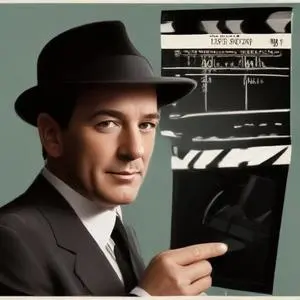
Acclaimed filmmaker behind iconic movies like "Gone with the Wind" and "The Wizard of Oz", leaving an indelible mark on Hollywood's Golden Age.
Victor Fleming is revered as one of the most iconic film directors in Hollywood's Golden Age, with two of his most celebrated works, Gone with the Wind and The Wizard of Oz, still enchanting audiences today.
Born on February 23, 1889, in La Cañada Flintridge, California, Fleming's path to cinematic greatness was far from conventional. Before venturing into filmmaking, he worked as a car mechanic, which sparked his mechanical aptitude, a skill that would later serve him well in the film industry.
Fleming's early life was filled with adventure and exploration. During World War I, he served in the photographic section of the United States Army and even acted as chief photographer for President Woodrow Wilson in Versailles, France.
Fleming's journey in filmmaking began in 1918, when he taught at Columbia University's School of Military Cinematography, training over 700 soldiers in the art of filmmaking. This experience not only honed his skills but also led to collaborations with renowned directors, including Allan Dwan and D.W. Griffith.
As a cinematographer, Fleming worked on numerous silent films, often starring Douglas Fairbanks, and later transitioned to directing. His first film, released in 1919, marked the beginning of a remarkable career that would span over three decades.
Fleming's most notable achievement came with the release of Gone with the Wind, for which he won the Academy Award for Best Director in 1939. This iconic film, along with The Wizard of Oz, has been listed in the top 10 of the American Film Institute's 2007 AFIs 100 Years...100 Movies list.
Fleming's direction also earned recognition for the talented actresses who worked with him, including Vivien Leigh, who won the Best Actress Oscar, and Hattie McDaniel, who won for Best Supporting Actress. Olivia de Havilland also received a nomination under his direction.
Fleming's influence on filmmaking is undeniable. He is remembered for his exceptional knowledge of camera angles and lenses, as well as his ability to bring out the best in his actors. His robust attitude and love of outdoor sports earned him the reputation of being a "man's director," yet he also proved an effective director of women.
Fleming's legacy extends beyond his films, as he played a significant role in shaping the film industry as a whole. His work continues to captivate audiences, inspiring new generations of filmmakers and enthusiasts alike.
Fleming's life was marked by both personal and professional milestones. He married Clara Strasburger in 1921, and the couple had two daughters together.
Fleming passed away on January 6, 1949, leaving behind a cinematic legacy that continues to mesmerize audiences today.
"I think the really good director is the one who can get the best out of people, who can get them to do things they thought they couldn't do." - Victor Fleming
This quote encapsulates Fleming's approach to filmmaking, highlighting his exceptional ability to bring out the best in his actors and crew members.
Fleming's remarkable life and legacy serve as a testament to his innovative spirit, creative vision, and dedication to the art of filmmaking.
Born in 1901
A legendary actor who epitomized Hollywood's Golden Age, starring in iconic films like "Gone with the Wind" and charming audiences with his rugged, debonair persona.
Born in 1913
A talented actress who won two Academy Awards for her iconic portrayals of Southern belles in "Gone with the Wind" and "A Streetcar Named Desire".
Born in 1922
Iconic actress and singer who starred in classic movies like "The Wizard of Oz" and belted out unforgettable tunes like "Over the Rainbow".
Born in 1900
Academy Award-winning star of Hollywood's Golden Age, known for iconic on-screen partnership with Katharine Hepburn and memorable roles in classics like "Inherit the Wind" and "Guess Who's Coming to Dinner".
Born in 1907
A legendary actress who won four Academy Awards and starred in iconic films like "The Philadelphia Story" and "On Golden Pond", known for her fierce independence and spirited on-screen presence.
Born in 1905
A legendary actress who captivated audiences with her iconic performances on the silver screen, earning her the title of Hollywood's first female superstar.
Born in 1904
Debonair leading man of Hollywood's Golden Age, starring in iconic romantic comedies and dramas, known for suave charm and witty banter.
Born in 1897
Acclaimed filmmaker behind iconic movies like "It's a Wonderful Life" and "Mr. Smith Goes to Washington", known for heartwarming, socially conscious storytelling.
